Showing posts sorted by relevance for query london. Sort by date Show all posts

Hereafter (2010)

Drama directed by Clint Eastwood. 

Matt Damon stars as George Lonegan, a psychic who has chosen to no longer give readings. But then he’s brought into contact with a French journalist (Cécile de France) and a London schoolboy (played by the twins Frankie and George McLaren), both of whom have had close brushes with death. 

It’s an extremely unusual film that’s in no way typical of Clint Eastwood’s usual themes or narrative style. The three threads take a long time to join up. For most of the time we follow their stories in parallel, wondering how they can possibly come together. It’s oddly lit, too. Some of that is down to the poor English weather, but even the sections in San Francisco seem strangely washed out. It’s not clear if this was an aesthetic choice or some kind of technical failing.

Bryce Dallas Howard appears as a possible love interest for Matt Damon, while Derek Jacobi has a surprise cameo as himself doing a reading at the London Book Fair in Alexandra Palace. 

It’s strange and quirky, with neat details. Matt Damon is a Charles Dickens fan. Best of all, it doesn’t try to explain or glorify the supernatural gift. Instead, it’s a fact of life that Lonegan feels burdened by. And that makes it all so much more believable.

Sense and Sensibility (1995)

Superb historical drama adapted by Ang Lee from Jane Austen’s classic 1811 novel.

Sisters Elinor and Marianne are played wonderfully by Emma Thompson and a young Kate Winslet. Hugh Grant, Greg Wise and Alan Rickman portray the men they fall in love with. As these relationships play out, in London and Devonshire, the story examines whether we should marry for love or for status.

It's hugely involving, with moments of wit and tenderness. Hugh Grant is incredibly charming as the shy and well-meaning Edward Ferrars. Alan Rickman, for once, doesn't seem typecast or obvious. He brings real subtlety to the role of Colonel Brandon. 

As well as the main leads, there are excellent performances by Imogen Stubbs, Gemma Jones, Hugh Laurie and Robert Hardy.

One of the greatest costumers.

Die Another Day (2002)


The fourth and final James Bond film starring Pierce Brosnan showed that the series was desperately in need of a rethink (which it would soon have with Daniel Craig). The sci-fi-tinged plot (an invisible car, a space laser like the Death Star in Star Wars) is possibly even more ludicrous than usual. There’s a bit where he’s wandering around in pyjamas and a Jesus beard after 14 months of being tortured. Halle Berry is blandly uninteresting as the female lead. John Cleese is an unfunny disaster as “Q”. There’s some awful dialogue (“Die, bitch!”). Madonna has a pointless cameo to demonstrate that she can’t act. There are cheesy slow-motion shots. And there’s a truly surreal moment when the soundtrack includes “London Calling” by The Clash. The sole redeeming feature is Judi Dench as “M”.

Sliding Doors (1998)


Intriguing romantic drama about a parallel-universe “What if?” life split in two. Gwyneth Paltrow and John Hannah are convincing in the lead roles, but the actors playing her cheating slimy boyfriend and his ludicrous mistress are terribly hammy. The boyfriend could have been evil but charming, but instead he’s just hopelessly unappealing so you have no idea why two women would like him so much – a major flaw. Plus, there’s a lot of swearing. On the plus side, Paltrow, an American, sustains an English accent. It’s set in west London and there are familiar landmarks aplenty. The potentially confusing mirror storylines work well in tandem and the film even manages a satisfying ending, which you would guess would be impossible. It “makes you think” as well as being entertaining.

The Painted Veil (2006)

Drama, brilliantly directed by John Curran, based on the 1925 novel by W. Somerset Maugham. 

Bacteriologist Walter Fane (Edward Norton) meets Kitty Garstin (Naomi Watts) in London and they quickly marry. Then Walter accepts a post in China, helping a village amid a cholera outbreak, forcing Kitty to go with him to punish her for her infidelity. 

It’s beautifully shot and extremely poignant. There’s a historical/political thread, but the main focus is on the couple’s complicated relationship and the way it evolves.

The script is subtle and nuanced. Likewise, the graceful and restrained-but-powerful performances.

Skyfall (2012)


The third Daniel Craig Bond film is not only his best, but also the best Bond film overall. Directed by Sam Mendes, it’s pretty much perfect. The witty and dry dialogue is so much stronger than in previous episodes. And it’s visually stunning. The opening sequence (before the mind-bending titles over the Adele song) is a stunning piece of extended action in Istanbul involving a car chase through a crowded market, a shoot-out, a motorbike chase over rooftops, an absurd episode involving an excavator, a fight on the roof of a moving train, and, most dramatically, Bond being shot “dead”.

I’ve heard fans say that this film humanises Bond too much, with his family backstory and the “psychological” dimension, but for me that only makes it better. There’s even the first hint of homoeroticism in a Bond film. The villain teases him, only for 007 to counter “What makes you think this is my first time?”

It’s ideally cast, introducing the new Q (Ben Whishaw) and Moneypenny (Naomie Harris) plus the new Chairman of Intelligence (Ralph Fiennes) and an impressively nasty villain called Raoul Silva (Javier Bardem). Rory Kinnear resumes his role as Bill Tanner, getting the part just right. And Judi Dench is wonderful as M. When she starts reading a poem by Tennyson as Bond runs through the London streets to save her (the film is also a British tourism brochure), it’s deeply stirring stuff.

The Look of Love (2013)

Biopic of pornographer Paul Raymond starring Steve Coogan and directed by Michael Winterbottom. 

It’s told in flashback, giving an often (deliberately) rather depressing view of the seedy side of London from the 1960s to the 1980s. The film focuses on three of Raymond’s relationships: with his wife Jean (played by Anna Friel), with his girlfriend Fiona Richmond (Tamsin Egerton) and with his daughter Debbie (Imogen Poots). It’s implied that the father/daughter relationship was the most meaningful for both parties, and there’s a poignancy in how that unfolds – despite (or because of) the shabby details around how Raymond made his money.

Overall, while it’s expertly done – and Coogan is as watchable as ever – it's a bleak and oddly unrewarding affair.

Shine (1996)

Moving biographical drama about the life of pianist David Helfgott. 

A child prodigy, he struggles with an abusive, controlling father and mental illness problems that are presumably not unrelated to his difficult family life. 

We see him as a boy (played by Alex Rafalowicz), a teenager (Noah Taylor) and as an older man (Geoffrey Rush). Each of these three actors tackles a complicated role brilliantly. 

John Gielgud is funny and charismatic as his London tutor, guiding him through the seemingly impossible feat that is playing Rachmaninoff’s third concerto.

For a film about mental illness, it’s surprisingly uplifting and joyous – especially after he meets Gillian, played by Lynn Redgrave. If there’s a criticism it’s that this later part of his life is rushed through. A shame that the focus is on the unhappier times, although you can understand why his formative experiences would be prioritised. Plus, this is a pitfall of biopics in general: how do you cram a life into two hours without ignoring substantial amounts of it?

The Wolfman (2010)

1891. A mysterious attack takes place in the woods...

This is a less-than-inspired retelling of the standard werewolf myth starring Anthony Hopkins, Benicio del Toro, Emily Blunt and Hugo Weaving. It’s a remake that didn’t need to be remade. 

There’s a lot of gore but very little dramatic tension, partly because you see way too much of the werewolf. No mystery or suspense can survive close-up scenes of a monster that looks slightly ridiculous.

A far better film is American Werewolf in London (1981), in which director John Landis addresses similar subject matter with wit and imagination.

Oliver! (1968)

Remarkable musical adapted from the stage show adapted from the Dickens novel. 

Mark Lester plays Oliver Twist, an orphan expelled from a workhouse who falls in with a London group of pickpocket urchins working for the complicated, enigmatic Fagin (Ron Moody). But Bill Sikes (Oliver Reed) threatens the safety of their little society with increasingly violent criminal behaviour.

Lester is an odd choice for the main part. He has a girlish voice and little star quality, but somehow he works because of the way the events of the story revolve around him. Far more impressive is Jack Wild as the charismatic Artful Dodger. And Shani Wallis is perfect as the conflicted Nancy, caught between loving Sikes despite everything and wanting to do what's right for Oliver.

The real star of the film is the music. The songs, by Lionel Bart, are distinctive and memorable, and I was amazed how many of them I already knew simply because of their place in popular culture.

It's also good to see Leonard Rossiter as Mr. Sowerberry, even though he has minimal on-screen time.

Without a Clue (1988)

Amusing and intelligent spin on Sherlock Holmes, starring Michael Caine as the famous detective. The twist is that this Holmes is a total buffoon – merely an actor hired by Dr. Watson (Ben Kingsley), and it’s Watson who has to do all the hard work of solving mysteries. But of course Holmes wins all the public adoration anyway, causing a degree of tension between the two. 

The plot deals with arch villain Moriarty's scheme to print fake bank notes. It’s mainly set in London but there’s an inconsequential detour to Lake Windermere, possibly just to get in some “tourist brochure” scenery.

Lysette Anthony is reasonably appealing as the young woman both Holmes and Watson are attracted to, but of course Leslie isn’t quite what she seems.

It’s very amiable and surprisingly funny, with quite a few laugh-out-loud moments based on Holmes’ ineptitude.

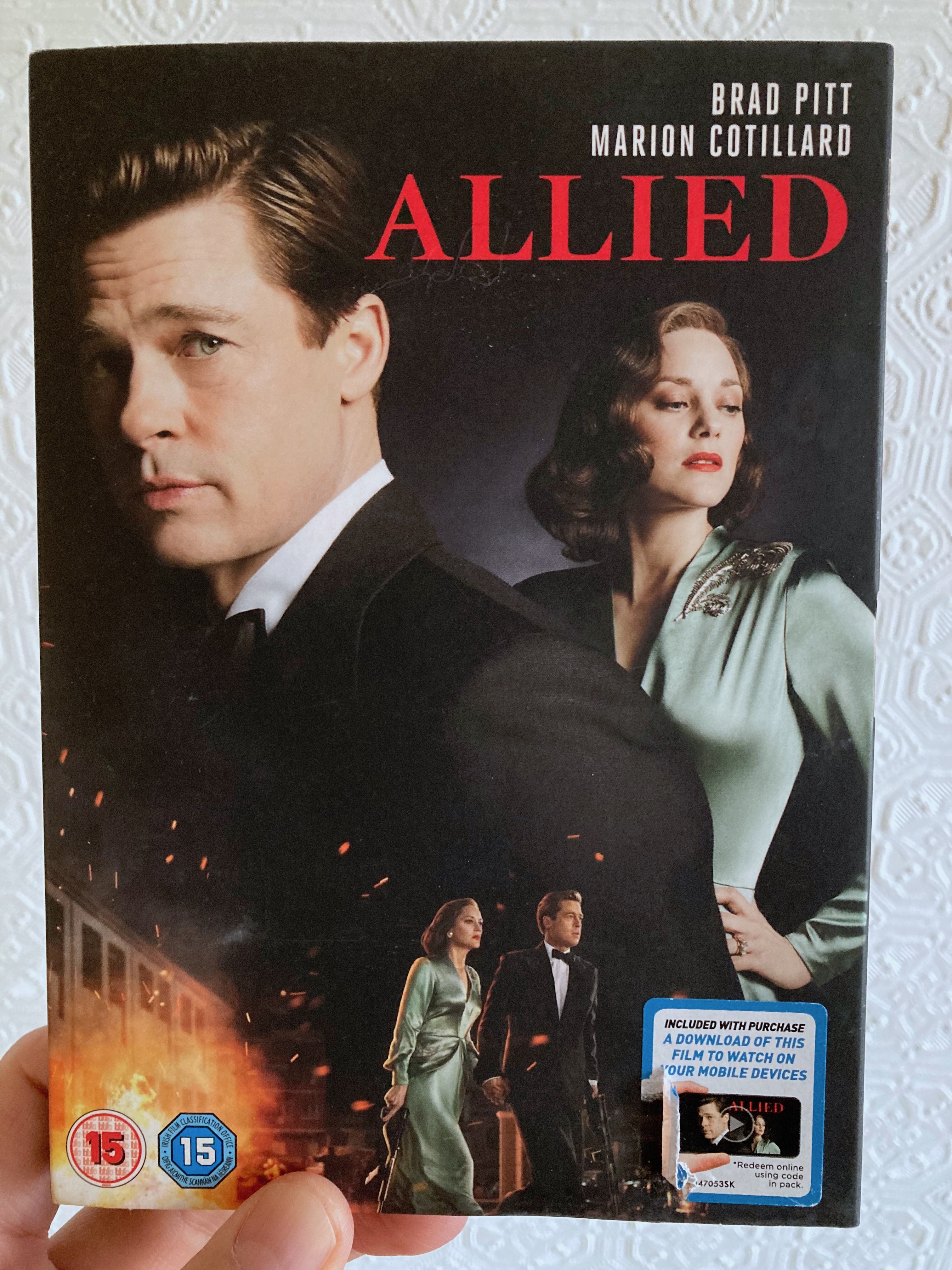
Allied (2016)

Entertaining wartime thriller directed by Robert Zemeckis. 

Brad Pitt and Marion Cotillard star as a Canadian intelligence officer and French resistance fighter. They fall in love, while pretending to be a married couple for a military mission in Casablanca. They move to London as the war continues, but is everything as it seems? 

Zemeckis brings his usual high quality of storytelling, and the narrative keeps you guessing until the end. Pitt is OK rather than spectacular (as usual), but Cotillard steals the show with a much more impressive, nuanced and well-rounded performance.

Flood (2007)

Disaster film. 

A storm surge causes flooding and mass destruction in London. Robert Carlyle has to save the city with the help of his estranged father (Tom Courtenay) and his estranged wife (Jessalyn Gilsig). 

It’s nice to see familiar locations such as the Thames Barrier, but unfortunately – despite moments of genuinely gripping drama – parts of the film are unintentionally funny. There’s something oddly stilted and false about the whole thing, with a TV-like quality to the way it’s filmed and directed. It’s like an extended episode of Casualty. Nigel Planer is especially awkward as a guilt-ridden forecaster for the Met Office.

Enjoyably daft as it is, you're left wondering how the film attracted so many relatively big names. David Suchet, Joanne Whalley and Tom Hardy also pop up with varying levels of success.

The End of the Affair (1955)

Adaptation of Graham Greene’s classic 1951 novel. During World War II, writer Maurice Bendrix (Van Johnson) goes to the party of London civil servant Henry Miles (Peter Cushing) and soon after begins an affair with his wife Sarah (Deborah Kerr). But when Bendrix is injured in a bombing, Sarah mysteriously removes herself from his life. 

This clever melodrama toys with becoming a noirish, Hitchcockian thriller – there’s an endearingly silly detective played by John Mills – but is really a film about religious faith and morality. 

A few things stand out as odd:

• The couple seem to go from meeting to being obsessively in love in no time at all, and yet there’s no real chemistry between them. What do they have in common? It’s as if a scene or two is missing, as their apparent attraction is never explained.
• When Bendrix first sees Sarah, she’s kissing another man. Who is he and why is this additional affair not explored further? Was it simply there to indicate that she was unhappily married?
• If Bendrix is American, why is he writing a book about the English civil service?

It was remade in 1999, with Ralph Fiennes and Julianne Moore in the lead roles.

Match Point (2005)

Excellent drama written and directed by Woody Allen. Critics were harsh on the fact that an American film set in London features some occasionally jarring turns of phrase (i.e., Londoners don’t call it "the" Tate Modern), but this in no way reduces the enjoyment.

Former tennis pro Chris (Jonathan Rhys Meyers) tries and fails to balance his relationships with his wife (Emily Mortimer) and mistress (Scarlett Johansson). In addition he wants to hang on to all the benefits of marrying into a wealthy family, who have secured him a lucrative career and given him a comfortable life. 

The film cleverly juggles major themes – the role of chance, ethics and love vs. desire – while evolving from a personal drama into a tense thriller in the second half. 

As with a lot of Woody Allen’s writing, there’s not a scene you could add or cut to improve the storytelling, so well-constructed is the escalating plot. Initially, I thought that Rhys Meyers was weak in the lead role, but as you find out what his character is capable of you begin to understand that the actor is playing the role perfectly. 

It’s a strong cast overall, with impressive performances by Brian Cox and Penelope Wilton, as Chris’s new in-laws, and Matthew Goode as their son Tom.

Denial (2016)

Gripping account of the high-profile London court case between US historian Deborah Lipstandt and David Irving, the Holocaust denier who filed a libel suit against her.

Based on Lipstandt's memoir, History on Trial: My Day in Court with David Irving, this film is presented from her point of view. She’s played, fairly convincingly, by Rachel Weisz. Irving is played by Timothy Spall, who – in a transfixing performance – alternates between character traits that seem almost charming, a bit mad and quite terrifying. Both of these actors do wonders with what must have been extremely difficult material. Tom Wilkinson and Andrew Scott (who was “C” in the Bond film Spectre) play her heavy-drinking barrister and clinical-but-brilliant solicitor.

It’s a taut legal drama in which the stakes are incredibly high: if Irving had won, it would have given Holocaust denial far greater cultural weight. It’s also a personal drama about a writer who has to let go of what she believes most strongly and place all her trust in her team to seek justice.

Hot Fuzz (2007)

Police Officer Nicholas Angel (Simon Pegg) is sent away from London, for being too good at his job and showing up his colleagues. Transferred to the sleepy village of Sandford, Gloucestershire, he expects a frustratingly quiet life with his amateurish partner Police Constable Danny Butterman (Nick Frost). But inevitably there’s far more going on there than he realises. 

This is a comedy from the same team behind Shaun of the Dead, and it's almost as sharp. Anyone who’s anyone in British acting/comedy pops up, including Bill Bailey, Jim Broadbent, Steve Coogan, Timothy Dalton, Martin Freeman, Stephen Merchant, Bill Nighy, Rafe Spall and Edward Woodward. 

It’s funny and silly, with a lot of jokes crammed in. Not all of them work, but there are enough that do to keep you entertained.

Career Girls (1997)

Brilliant comedy-drama written and directed by Mike Leigh. It tells the story of two student friends, played by Katrin Cartlidge and Lynda Steadman, who reunite after six years apart. 

They are complex characters, and the actors give astonishingly vivid performances to bring them to life. There’s so much twitchy energy when they’re on screen together that you don’t know where to look.

It would have been a masterpiece except for some plot problems. The pair keep bumping into people they knew years ago. This just doesn’t happen in a city as large as London. And for a story grounded in social realism, three major coincidences is two too many.

Broken (2012)

Bleak, disturbing and brilliant drama about the inhabitants of a cul-de-sac in north London. 

It’s presented from the perspective of Emily "Skunk" Cunningham (Eloise Laurence), a diabetic girl who witnesses a violent act committed by one neighbour on another. 

Various threads relating to three families – all “broken” in various ways – are expertly woven together. It becomes increasingly harrowing to the point that it’s almost unbearable to watch. In a way it’s like a particularly well-constructed episode of Brookside. 

Rory Kinnear is superb as a desperate, angry father with psychopathic episodes. Tim Roth is fully convincing as Skunk's solicitor father Archie. And Cillian Murphy is believable as the well-meaning teacher Mike. 

By the end you feel quite shaken.

Like Crazy (2011)


Starring Felicity Jones (of Star Wars: Rogue One fame), this is a refreshingly different love story. Its main selling point is the super-realist style that almost convinces you you’re watching a documentary. The highly believable scenes were mostly improvised and the result is a total lack of cliché. It’s particularly good at rendering moments of excruciating awkwardness. The male lead (Anton Yelchin) seems a little weak, but perhaps he’s meant to be. His other girlfriend is played by Jennifer Lawrence, who is as wonderful as ever. And the well-meaning London parents (who like a drink or three) are also completely convincing. It’s a sweet film that stays with you.