Showing posts with label Year: 2016. Show all posts

Bridget Jones's Baby (2016)

Directed by Sharon Maguire, this is the third instalment in the popular series adapted from Helen Fielding’s mega-selling novels. Renée Zellweger is once again a loveable, accident-prone neurotic who, in theory, we can all relate to. She finds out that she’s pregnant and has to work out which of two lovers is the father (hints of Mamma Mia). Is it charming lawyer Mark Darcy (Colin Firth) or charming mathematician Jack Qwant (Patrick Dempsey)?

There are enough laughs to make it work, and it’s certainly superior to the second film, while lacking the freshness of the first. Zellweger is so appealing that she’s worth watching even when it’s not hilarious. And Emma Thompson adds depth as Doctor Rawlings.

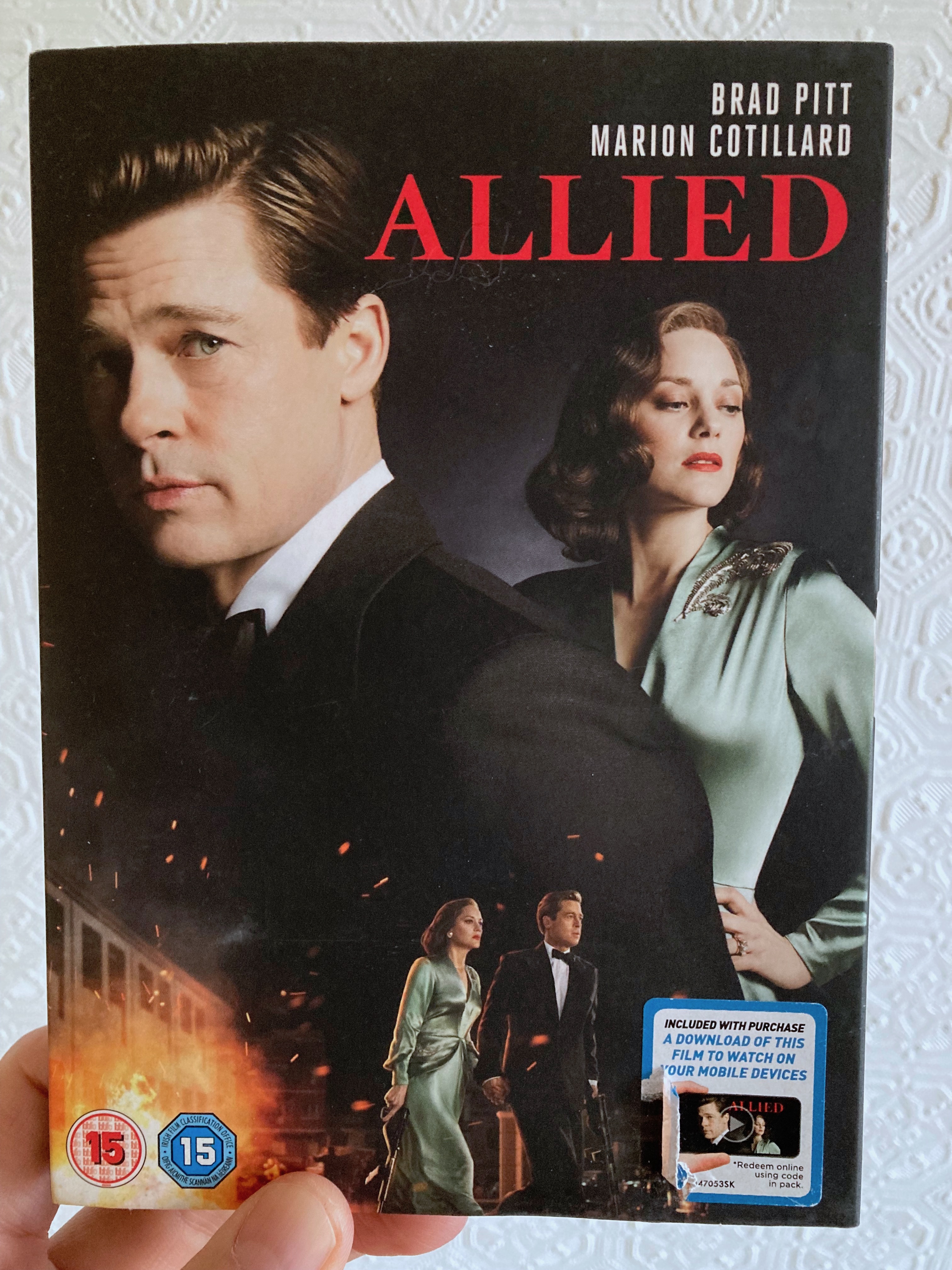
Allied (2016)

Entertaining wartime thriller directed by Robert Zemeckis

Brad Pitt and Marion Cotillard star as a Canadian intelligence officer and French resistance fighter. They fall in love, while pretending to be a married couple for a military mission in Casablanca. They move to London as the war continues, but is everything as it seems? 

Zemeckis brings his usual high quality of storytelling, and the narrative keeps you guessing until the end. Pitt is OK rather than spectacular (as usual), but Cotillard steals the show with a much more impressive, nuanced and well-rounded performance.

Café Society (2016)

Engaging comedy-drama written and directed by Woody Allen. 

It’s the 1930s. Bobby Dorfman (Jesse Eisenberg) goes to Hollywood and gets a job working for his Uncle Phil (Steve Carell). He falls in love with Phil’s secretary Veronica/Vonnie (Kristen Stewart), not realising that she’s already dating someone else – a married man Bobby knows all too well…

The various plot threads play out in a satisfying manner. The film is a slow-burning romance that sensitively explores the “what ifs” of love. 

It’s a fairly low-key film. There are some funny moments, often relating to Bobby’s gangster brother Ben (Corey Stoll). It’s good at showing the contrast between the cultures of California and New York. As always, Woody Allen does an expert job with the nuts and bolts of storytelling, pacing, characterisation and dialogue. 

Kristen Stewart is absolutely spot on as the much-in-demand and conflicted Vonnie.

Jackie (2016)

Directed by Pablo Larraín, this is a sort of biopic about the wife of John F. Kennedy in the days before and after his assassination. 

Like all the best biopics, it doesn’t attempt to cram a complete life story into two hours. Instead, it zooms in on one moment in that life and uses it to explore the character in depth. 

It’s impressionistic, without losing sight of dialogue and storytelling. Natalie Portman gives the performance of a lifetime as Jacqueline Kennedy. 

It’s sad and disturbing, perfectly capturing her mixture of shock, anger and loss.

Florence Foster Jenkins (2016)

Directed by Stephen Frears, this is the compelling true-life story of a wealthy New York heiress who was generally regarded as a terrible singer, yet who became a recording artist and even performed at Carnegie Hall because her social set encouraged and applauded her. 

Meryl Streep is excellent as Florence Foster Jenkins, singing technically challenging opera in a way that’s just about good enough to be credible but also strange enough to be surreally comic. 

Simon Helberg is ideally cast as Cosmé McMoon, a wildly talented pianist who – against his initial misgivings – agrees to work as her accompanist.

In what is perhaps his most fully rounded and satisfying role, Hugh Grant is remarkable as her lover and manager St. Clair Bayfield. The unusual nature of the couple's relationship and the depth of his feelings really came across. I was slightly wrong-footed because I thought the plot was leading to Bayfield being exposed for scamming Florence and promoting the whole "emperor's new clothes" circus around her efforts, but touchingly the film turns out to be a true love story after all.

Nocturnal Animals (2016)

An intelligent, compassionate drama directed by Tom Ford. 

Amy Adams, as usual, is absolutely perfect in the role of Susan Morrow, an L.A. art gallery owner leading a wealthy but shallow life. Out of the blue she is sent the manuscript of a novel written by her ex-husband Edward (Jake Gyllenhaal). Reading this narrative sets her off on a series of reflections on her own life. 

We also get to see the drama of the novel itself, in which the “fictionalised” Gyllenhaal and his fictionalised wife (Isla Fisher) and daughter are terrorised by a gang who force them off the road at night in West Texas. It’s harrowing stuff. 

A third thread explores how Susan and Edward came together and fell apart. 

The multiple connected stories are handled beautifully, with no confusion about what’s happening where or when. The transitions between the various plot lines are expertly realised, with the director finding images and motifs that mirror and echo each other. There’s emotional depth in the performances as well as some episodes as terrifying as any thriller. 

One point deducted for slightly intrusive music, and also for the horrible opening sequence of naked obese people dancing.

Money Monster (2016)

Tense and original thriller starring George Clooney as Lee Gates, the presenter of a finance-themed TV show. 

Gates is taken hostage, live on air, by a viewer who lost his money by following investment advice given on the programme. Julia Roberts, meanwhile, is the show’s producer, speaking into Lee’s ear and trying her best to keep him alive. 

Directed by Jodie Foster, this is a hugely entertaining film. Clooney and Roberts are at their best. The film does a good job of sustaining the tension, and the show-within-a-film device works extremely well.

Their Finest (2016)

Comedy drama.

A writer named Catrin Cole (Gemma Arterton) is hired by the Ministry of Information in 1940 to help create propaganda films during World War II. She faces sexism and other setbacks, has to deal with the ego of star actor Ambrose Hilliard (Bill Nighy), and develops an up-and-down creative relationship with her co-writer Tom Buckley (Sam Claflin). 

It’s subtle and witty, with the film-within-a-film aspect working extremely well. Initially it has the feel of a “Sunday night TV drama”, but it acquires depth as it develops. Arterton is excellent, conveying an emotional range that you might not expect after seeing her brief appearance as MI6 agent Strawberry Fields in the James Bond film Quantum of Solace.

The Nice Guys (2016)

Unusual comedy thriller directed by Shane Black. 

An inept private eye (Ryan Gosling) and a brutal enforcer (Russell Crowe) investigate a missing girl in late-1970s Los Angeles

It’s a strange film. The humour is as dark as it gets, with an uneasy violence behind it. Crowe’s character seems equally capable of cold-blooded murder and compassion, and that makes for an awkward mix – probably deliberately so. The emotional development, based around Gosling’s relationship with his teenage daughter, cones across as shallow and unconvincing.

The party section was especially well done, and the action is expertly presented, but overall – despite some genuine laughs – it’s little too slick to fully engage. And off-puttingly, a tubby Crowe looks uncannily like John Goodman throughout.

The Light Between Oceans (2016)

In the aftermath of World War I, Tom (Michael Fassbender) goes to work on a remote lighthouse on Janus Rock, off the coast of Australia. He marries a local woman (Alicia Vikander) but their wish to have children is thwarted when Isabel twice miscarries. Then they find a baby lost at sea and washed up on their beach. The decision to keep it and pretend it’s their own child rather than report the discovery becomes the defining moment of their lives. 

It’s a harrowing drama that’s brilliantly done. Both of the stars are entirely believable. You can feel their love for one another and their pain when things go wrong. Rachel Weisz is also excellent as the child’s actual mother. 

The landscapes look beautiful, with a special kind of light. The music, by Alexandre Desplat, is fitting for a story that’s – at various points – romantic, moving and emotional.

Eddie the Eagle (2016)

Good-natured comedy-drama telling the true story of Michael “Eddie” Edwards, a British ski jumper who represented his country at the 1988 Winter Olympics. 

Taron Egerton is endearing as the well-meaning, socially awkward anti-hero, who became an unlikely star despite – or because of – the fact that he came last. 

Hugh Jackman is his coach, a surprisingly wholesome alcoholic, and Jo Hartley and Keith Allen play his mother (supportive) and father (repressed). Improbably, Christopher Walken has a brief role too. 

There are funny and poignant moments and the film sidesteps having to deal with any of the more difficult topics it encounters (addiction, social disorders, etc), opting for a more lightweight, frothy approach. An idealised but enjoyable portrait.

Hidden Figures (2016)

Based on a true story, Hidden Figures focuses on three female mathematicians who worked for NASA during the Space Race. Despite their brilliance as individuals, their careers were stifled as a result of racial prejudice and segregation.

Taraji P. Henson, Octavia Spencer and Janelle Monáe star alongside Kevin Costner, who portrays the director of the Space Task Group. Meanwhile, Kirsten Dunst is oddly cast as an unsympathetic supervisor.

The film combines their stories with that of the space race itself, bringing to life the nail-biting events of John Glenn’s first American orbital spaceflight. 

There's no getting away from the seriousness of the subject matter, but there are funny and tender moments too.

Sing Street (2016)

In Dublin in the mid-1980s, a boy named Conor (Ferdia Walsh-Peelo) is sent to a new school because his parents – on the brink of separating – can no longer afford to keep him at the old one. At the Synge Street school, Conor is bullied by the headmaster as well as by the kids, but finds solace with a handful of friends with whom he forms a band. Mostly, he just wants to impress Raphina (Lucy Boynton), who he sees outside the school and immediately fancies. 

Written and directed by John Carney, this has the small-town charm and romance of Gregory’s Girl. It’s funny and endearing, and has you rooting for Conor from the very start. The music is terrific, too – both the original material that Conor writes with the band and also the records that his brother Brendan (Jack Reynor) “educates” him with (The Cure, Joe Jackson and so on). 

There are some priceless scenes, such as when the family watch and discuss Duran Duran on Top of the Pops, or when the band are encouraged to wear make-up to film a video. There’s also plenty of poignancy, and some of the school cruelty sections are unbearable. But without giving way to sentimentality, it resolves into a hugely satisfying and heartwarming conclusion.

Hacksaw Ridge (2016)

War film directed by Mel Gibson. It tells the true story of Desmond Doss, a conscientious objector who served as a medic in World War II. A Seventh-day Adventist Christian, Doss saved 75 lives during the Battle of Okinawa by returning again and again to tend to wounded US soldiers abandoned where they had fallen.

Andrew Garfield is sympathetic as the religious young man who will not compromise his principles by picking up a gun. Teresa Palmer and Hugo Weaving are watchable as Doss’s wife Dorothy and his troubled, alcoholic father. 

It’s compelling stuff. The battle scenes are brutal and all-too-convincingly real-looking. If there’s a flaw it’s that the Japanese are generally treated as a faceless enemy, although the film eventually addresses this by showing Doss helping victims on the other side as well. It’s not morally simplistic, either. The story addresses the irony that despite the strength of his principles, his life is nevertheless saved by men using guns. 

I didn't like the introduction of real interview footage at the very end. Either dramatise the story or make a documentary about it. Why blend the two? The same trick was used to equally jarring effect in Downfall. Also, on reading up on the story I was a little disappointed to learn that a key scene in which the young Doss nearly kills his father never actually happened. The facts are remarkable enough that there was no need to make things up.

Jason Bourne (2016)

Bourne again? 

The fifth instalment in the series and – as of 2021 – the final part. Jason (Matt Damon) is still at large, but thanks to the hacking by old pal Nicky Parsons (Julia Stiles) he now has extra information about his past – and an insight into what happened to his father. 

In many ways it’s the same film yet again, but it’s such a good film that it’s worth remaking. This time, Tommy Lee Jones plays the corrupt head of the CIA. There’s also stuff about internet privacy with a social media corporation called Deep Dream (led by Riz Ahmed), plus an ambitious young CIA tech wizard who may or may not be helping J.B. (Alicia Vikander as Heather Lee). 

Paul Greengrass directs again, delivering incredible action sequences. The car chase in Las Vegas is especially dynamic. 

If there’s a fault it’s that there’s little psychological development for Bourne. Yes, there’s a thread about his dad but he has even less dialogue than usual. I’d have liked him to have shared more of a relationship with Nicky, or at least some “meaningful” glances, but following the first film there seems to have been a conscious decision for the series to avoid romance. It makes sense plot-wise because Bourne can’t stay in the same place for a couple of minutes before men in cars and copters arrive to kill him. But it would still have been nice to give him the extra depth of reconnecting with the woman who loved him.

Morgan (2016)

Grisly sci-fi/horror drama directed by Ridley Scott’s son Luke. 

A “risk-management specialist” (Kate Mara) is sent to a scientific facility in a rural location where the L-9 artificial being has been created. This being (played by Anya Taylor-Joy) is a super-advanced augmented human but with a violent side that begins to cause problems when she turns on one of the staff. To complicate things further, those members of staff have personally invested in Morgan as their precious daughter and seem bewitched by her incredibly advanced development. 

Like Blade Runner, the film raises moral questions about the value of human life when it’s not entirely human. Unlike that innovative classic, it has a rather unpleasant aesthetic – a deliberate cold, nasty quality. It’s also extremely violent – which is kind of the point – but the later sections make for horrible viewing. Expertly made as it may be, I found it difficult to take much away from the film.

The Girl on the Train (2016)

A hysterically overwrought thriller adapted from Paula Hawkins’ bestselling novel. 

Emily Blunt plays an alcoholic divorcee who stares out of a train window and obsesses over two couples she passes. This obsession ultimately implicates her in a murder mystery for which she ends up the prime suspect. 

It’s a good idea, but it just doesn’t work. It’s excessively melodramatic, veering on the horror genre at points. Blunt walks around like a zombie, pale, trembling and rather frightening. While that makes sense in the light of her drink problem and the emotional state that caused it, it doesn’t make for a very appealing film and it adds to the ugly aesthetic all round. 

The “patchwork” approach to times and events is effective and just about comes together. The related device of only certain parts of the story being recalled owing to booze-induced blackouts also gives it a Hitchcockian dimension, allowing us to piece together what really happened at the same time as Blunt. But these elements are weakened by characters that just don’t convince. The behaviour of the bearded shrink (Édgar Ramírez) seems unlikely, somehow, and other characters’ motivations, such as those of Megan (Haley Bennett) are not fleshed out satisfactorily. 

The biggest flaw is this: of the four people she observes, Blunt is more obsessed with a pair of strangers than she is with her own ex and his new partner, who live two doors away. How could that be? She’s oddly oblivious to the interaction between the two couples, which is at the heart of the plot. 

But if you are seeking something trashy, gripping and escapist (and often I am), it will certainly keep you entertained.

La La Land (2016)

Remarkable musical directed by Damien Chazelle. 

Emma Stone and Ryan Gosling are just perfect as the young, ambitious Los Angeles dreamers who fall in love. He’s a jazz pianist who wants to open his own club. She’s an actress who writes a one-woman play and hopes to be a film star. 

The singing, dancing and choreography are a joy. I love the long shots that seem not to have any edits. The colours are bright and vivid. And the on/off relationship plot is strong. 

It’s not perfect. Arguably the “magic realism” goes too far on a couple of occasions and takes you too far out of the story, such as when they seem to start flying at the Griffith Observatory. And the two songs packed into the first 10 minutes set it up to be more of a musical than it ends up being, which makes it a little uneven. 

It’s certainly more emotional than a standard musical. It’s hugely romantic and ultimately a little sad, while also somehow being uplifting. It was incredibly fresh when it came out and it still feels just as fresh five years on.

Deepwater Horizon (2016)


Disaster film depicting the true-life events of the 2010 BP oil-rig explosion leading to 11 deaths and one of the world’s worst environmental disasters. As the closing text puts it: “The blowout lasted for 87 days, spilling an estimated 210 million gallons of oil into the Gulf of Mexico.”

It’s to the film’s credit that it doesn’t sensationalise these events. Mark Wahlberg plays the Chief Electronics Technician, with admirable restraint. Likewise, Kurt Russell as “Mr. Jimmy”, the Offshore Installation Manager. John Malkovich plays Donald Vidrine, one of the BP managers keen to cut corners despite the risk of compromising the rig’s safety. Gina Rodriguez is the likeable Dynamic Position Operator, who has to dive with Wahlberg over the burning ocean oil to safety. And Kate Hudson plays Wahlberg’s worried wife back home.

It’s a tense drama that also makes some good points about technical expertise coming into conflict with corporate might, but without getting bogged down in engineering detail or industry politics. An efficient, intelligent script builds character, offers flashes of wit and keeps the emphasis on the human side of the tragedy.

Arrival (2016)


Denis Villeneuve's philosophical sci-fi mind-bender has an emotional core that you might not expect from this genre.

Aliens arrive and park their huge egg-like ships at 12 strategic points hovering over the Earth. No one knows what they want nor why they are here. An army colonel (Forest Whitaker) recruits a world-class linguist (Amy Adams) and scientist (Jeremy Renner) to help the US military team understand the visitors’ motives and, ideally, communicate with them. That communication begins and a remarkable interchange is set in motion.

As if this wasn’t exciting enough, world tensions escalate as various nations panic about what’s generally considered to be a hostile invasion. But it transpires that the aliens are bringing something altogether different to humanity...

The film is extremely moving, with an interwoven plot about bereavement. It looks stunning, too. The aliens resemble tree-like creatures, but – unusually for a sci-fi film – the attempt to visualise the unimaginable doesn’t disappoint.

Adams and Renner had already worked together in American Hustle. They make for a good team.

The ending is sad but surprisingly satisfying.