Showing posts with label Year: 2015. Show all posts

The Lady in the Van (2015)

Nicholas Hytner’s adaptation of Alan Bennett’s memoir about an eccentric old lady who takes up residence on his Camden Town driveway. 

Alex Jennings plays Bennett. Maggie Smith is superb in the lead role, giving a suitably cantankerous and unlikable yet intelligent performance. I found the gimmick of two Alan Bennetts (as writer Alan talks to regular-guy Alan) an unwieldy distraction. Introducing the real Alan Bennett in a tricksy cameo at the end was further self-indulgent silliness. 

To the film's credit it doesn't sentimentalise the original material (there's plenty about toilet matters), and it reveals psychological depths that a lesser director might have ignored in favour of lazy farce. It also looks at middle-class guilt and how people behave when confronted by difficult situations that puncture the veneer of social normality.

I was pleased to see Rising Damp's Frances de la Tour as one of the neighbours.

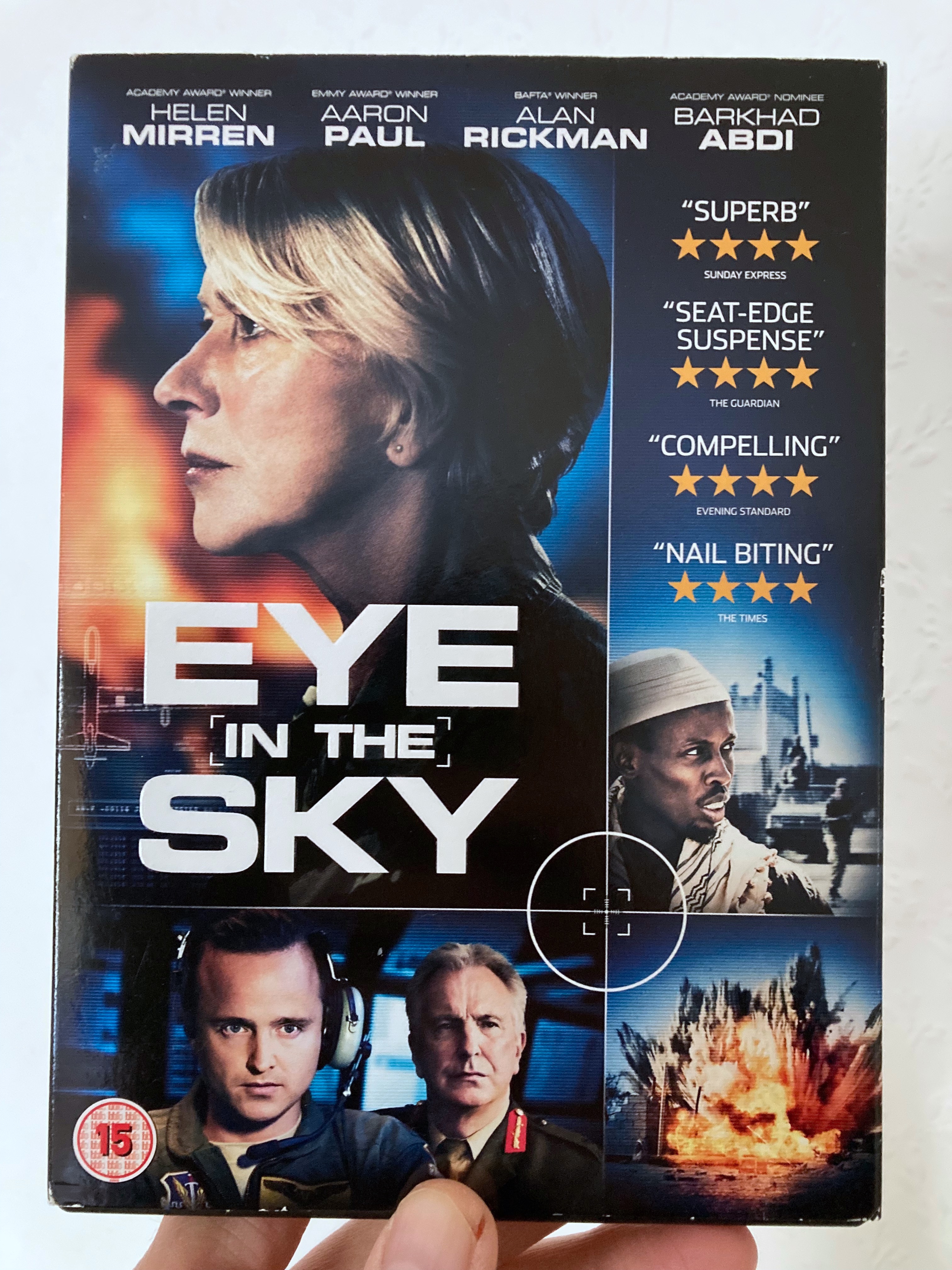
Eye in the Sky (2015)

Interesting thriller about drone warfare.

The story dwells on one single operation in Kenya – primarily focusing on the moral questions regarding whether or not an international anti-terrorist strike team should destroy a building in which suicide bombers are preparing an attack. A little girl who lives locally is selling bread for her mother within the proposed impact zone and would be harmed if the strike went ahead. But refusing to act might allow the loss of many more civilian lives.

It’s a little hammy – especially Alan Rickman, who only ever seems able to act one kind of character. In fact I wondered if it was drawn from a play, such is the oddly stagey way it’s written and filmed. 

Helen Mirren is passable as UK military intelligence officer Colonel Katherine Powell, but she doesn’t get to spark off anyone because – like the other stars – she’s filmed in isolation at a different location from everyone else. Perhaps it’s this “remote” feeling that denies the film dynamism. That said, the simple question of whether or not the little girl will be harmed keeps you hooked until the end.

Amy (2015)

Brilliant documentary directed by Asif Kapadia, piecing together the life and death of Amy Winehouse. As with his film Senna, there are no “talking heads” to provide a master narrative. Instead, it’s a mixture of home videos, archive footage and songs in performance. 

It’s fairly harrowing, as you might expect, to see this talented young singer so quickly spiral into the hell of fame and addiction. The saddest aspect is that she simply didn’t appear to have the support around her that she  so desperately needed. Her husband (Blake Fielder) was imprisoned for assaulting a pub landlord. Her father (Mitchell Winehouse) had abandoned her family when Amy was a child, then returned in the role of manager/Svengali after Amy’s success took off. You are encouraged to wonder how much these two individuals were steering her down the wrong path for their own gains. 

Does it teach you anything new about Amy Winehouse? Not really. But I’d never really considered the strangeness of her songwriting before. Seeing the lyrics spelled out on screen as she sings them reveals just how odd they are.

Slow West (2015)

Odd western directed by John Maclean.  

Kodi Smit-McPhee plays a young Scotsman searching for the woman he loves in the American West. He is guided by a bounty hunter played by Michael Fassbender. The premise is good and the two leads are intriguing, but something about the film doesn’t quite work. 

The characters could have been better drawn. Also, the situation didn’t ring true. Would there really have been a bounty in America for a crime committed in Europe? 

It’s not emotionally involving and probably not trying to be, either. There are a couple of welcome flashes of humour, and more of that would have been nice.

The Intern (2015)

Comedy drama by Nancy Meyers, with interesting adjustments to the same formula she used for Something’s Gotta Give and It’s Complicated

Robert De Niro is Ben, a 70-year-old retired widow who goes to work for an internet fashion business run by the brilliant young entrepreneur Jules (Anne Hathaway). He’s smart, wise and generous, and as her unlikely intern he eases her stress – helping her become more efficient in the office. Ultimately, he helps her with every aspect of her life – from childcare to marriage guidance. 

As always with Meyers, it’s an aspirational film obsessively focused on wealthy people and how they live. There are lovingly presented interiors of huge homes and office spaces where everything is new and expensive. The sun-dappled streets of New York also look immaculate (Meyers has a distinctive lighting style). There’s not a hint of true urban living, just as there’s virtually no one who isn’t white, rich and successful. This was made for people of a certain age and with a certain value system. 

It's slightly better than those two previous films, however, because the parts played by De Niro and Hathaway are well written, nicely observed and persuasively performed. But Rene Russo is oddly underused as the masseuse that Ben falls for. And a plot thread about Jules’ mother fizzles out completely after a silly interlude in which Ben and his colleagues break into her mother’s house to delete an e-mail sent to her in error. The other male characters are all awkward and self-consciously drawn. It’s as if an old person wanted to describe what young people are like. The strangest section comes in a hotel room scene (that seems to recall Lost in Translation) when Jules cries because she doesn’t want to be buried alone and the saintly Ben says she can be buried next to him and his former wife. It’s unclear whether this is meant to be touching or funny. I found it a little creepy. 

Despite and because of all of its jarring superficiality, The Intern is fascinating. Nancy Meyers is a highly skilled filmmaker, so it’s a shame she gets distracted by fancy kitchens.

Everest (2015)

Disaster/survival film about the true-life events of the 1996 Mount Everest disaster involving two climbing groups, led by Rob Hall (Jason Clarke) and Scott Fischer (Jake Gyllenhaal). Everything turns nasty when a storm blows in and the mountaineers find themselves badly underprepared. 

It’s an extremely tense drama that’s all the more affecting because these events actually happened. 

Josh Brolin plays Beck Weathers, who survives but loses his hands and nose to frostbite. Robin Wright plays his wife back home, hoping to coordinate a helicopter rescue attempt. 

Keira Knightley plays Rob Hall’s wife and does the “terrified spouse stuck at home” part better than most, probably because the role is fully developed and she’s given a character to explore. 

Also excellent is Emily Watson as Helen Wilton, the base camp manager. Her experience of the escalating horror conveys just what it must have been like to witness this nightmare and be powerless to stop it. 

The film doesn’t moralise or pass judgement on why the deaths occurred. Instead, it pieces together a narrative that lets you make up your own mind.

No Escape (2015)

Engineer Jack Dwyer (Owen Wilson) relocates to Southeast Asia with his wife Annie (Lake Bell) and two daughters. But soon after they arrive, they become trapped in local riots and a revolution. Certain to be murdered, they have no option but to attempt to flee.

It’s an exceedingly well-made action thriller that never lets up. There are some harrowing sequences and I will never forget the scene in which Jack – moments from being shot with his family and faced with an impossible choice – has to hurl his children between two buildings. 

Pierce Brosnan is excellent as the British intelligence agent who helps the Dwyers. He exudes charisma and charm, even with a silly London accent that makes him sound Australian. 

Director John Erick Dowdle favours jerky, semi-documentary edits that give the scenes a sense of urgency – although the effect may be overused. 

Critics complained that the film is xenophobic, but it's deliberately positioned from the Americans' perspective and as such conveys how terrifying such a situation might have seemed to them.

Brooklyn (2015)

Romantic drama adapted from a novel by Colm Tóibín. 

Eilis Lacey (Saoirse Ronan) lives in a small town in southeast Ireland until a priest (Jim Broadbent) arranges for her to travel to New York and begin a new life. There, she falls in love and begins to thrive  – until family matters bring her back to Enniscorthy in County Wexford, where she’s faced with various ethical and personal conflicts.

It’s a sweet and touching story. Ronan is highly engaging in the lead role. Julie Walters is superb as the owner of a Brooklyn boarding house. 

Ireland looks too sunny and dry to be entirely convincing. Possibly those were the scenes filmed in Canada. 

Simple, lucid storytelling makes it powerful and affecting. I was put off by learning that Nick Hornby was involved in the screenplay, but thankfully he doesn’t manage to mess it up.

A Walk in the Woods (2015)

Film version of Bill Bryson’s travel book about walking the Appalachian Trail. 

The author is played by Robert Redford and his friend (a wheezing former alcoholic) is played by Nick Nolte. Meanwhile, Emma Thompson plays Bryson’s wife left at home. 

It’s gently funny and wise, with some poignancy and melancholy. It’s probably intended for the older viewer. 

Redford is always easy to like, although his character doesn’t really develop. Nolte steals the show, with a performance that grows in depth as the film progresses. 

The scenery looks good and it makes you want to go walking, even if their bags never seemed to be heavy enough.

Ricki and the Flash (2015)

Excellent comedy-drama starring Meryl Streep as an impoverished rocker who finally reconnects with the children and ex-husband (Kevin Kline) she had become estranged from. 

It’s a study of class prejudice that expertly highlights social differences without offering simplistic solutions to the problem.

Streep is at her best, seeming to really relish the role. The band sections (during which she actually sings) are stirring and full of energy. 

Rick Springfield plays her bandmate and boyfriend Greg. 

Director Jonathan Demme directed Talking Heads in Stop Making Sense, so clearly knows how to film musicians. That skill pays off here as the performance sequences are watchable and dynamic.

Youth (2015)

Paolo Sorrentino drama set at a luxury spa hotel in Wiesen in the Swiss Alps, where wealthy and famous people rest, relax and pass the time doing as little as possible. 

What “plot” there is focuses on the interconnected stories of several characters, but primarily on a retired composer (Michael Caine) and his film director friend of 60 years (Harvey Keitel), who is attempting to write a final masterpiece. Rachel Weisz is the composer’s daughter and assistant, while Jane Fonda plays an elderly actress and Paul Dano is an actor only known for a novelty role as a robot. 

The film is a sort of meditation on growing old and what that process does to relationships of various sorts. Fittingly, the pace is glacially slow and that aspect means it certainly isn’t going to be to everyone’s taste. Likewise, the fairly bleak outlook has little good news to offer about reaching the age of 80. The ugly aesthetic doesn’t help much, either.

There are surreal, whimsical moments and flashes of humour. When Rachel Weisz’s husband leaves her for singer Paloma Faith (played by herself), we see the latter in a pop video sequence that turns out to be a dream. Another scene depicts a vision in which Harvey Keitel sees all the actresses he’s ever worked with, standing in a field.

As the film progresses, at its own particular rate, the threads begin to knit together and greater depths are revealed. “Emotions are all we’ve got,” says Keitel at one point.

Impressive, but difficult to love.

Sicario (2015)


Tense drug thriller starring Emily Blunt as an FBI agent who gets mixed up in a Mexican gang war beyond her comprehension. Benicio del Toro and Josh Brolin play the assassin and CIA agent she finds herself working with. In fact, she soon learns that she’s simply being used to grant legal authority to their actions.

It’s brutally violent and makes for uncomfortable watching. The two male leads are convincingly ruthless, but Blunt seems an odd choice and is slightly awkward as tough-but-sensitive Kate Macer – although that awkwardness may well be the point.

Director Denis Villeneuve gives even the grittiest scenes a panoramic lavishness, as he did in Arrival and Blade Runner 2049.

You are left despairing at the drug wars – a problem that only seems to escalate over time – and this grim, super-realist film is easier to admire than to enjoy.

Room (2015)

Extremely moving drama about a mother, Joy (Brie Larson), and her son, Jack (Jacob Tremblay), who are held captive in a tiny outhouse by an abductor. Joy was kidnapped seven years previously and later impregnated by her captor. This room is Jack’s entire world as a result of his being born and confined there. It is his only reality, but – thanks to Joy’s ingenious efforts to protect him from the true horror of their situation – it has become a sealed universe of play and learning. Every object in the room (or “Room”, as he calls it) takes on huge significance because space is so limited but time is so abundant. This is the opposite of the world beyond, of which Jack later observes: “I guess the time gets spread very thin like butter over all the world, the roads and houses and playgrounds and stores, so there’s only a little smear of time on each place, then everyone has to hurry on to the next bit.”

Room was adapted from the brilliant novel of the same name by Emma Donoghue, who also wrote the screenplay. The transition to screen is skilfully handled. The book is narrated by Jack, so we learn via his youthful perceptions how abusively they are being treated, and the child’s view of a miniature world is enthralling. The film doesn’t have this option, generally opting to show rather than tell, although you do hear occasional sections of Jack’s narration. Surprisingly, however, it does manage to recreate the oppressive feel of the novel.

Room is unbearably sad, especially since Jack demands so little from life beyond the love of his mother. You find yourself desperately rooting for the pair.

Ultimately, their story is both life-affirming and profound.

A Bigger Splash (2015)


Superb drama in which Tilda Swinton plays a pop star recovering from a throat operation in seclusion on an Italian island. Matthias Schoenaerts is her partner, a recovered alcoholic who survived a suicide attempt. Their lives are turned upside down again when the singer's former lover and promoter (Ralph Fiennes) arrives and moves in, bringing with him a girl who may or may not be his 22-year-old daughter (Dakota Johnson). Tensions soon develop, with far-reaching consequences for all four of them.

Ralph Fiennes’ performance is astonishing. Incredibly charismatic and bursting with energy in every frame, he absolutely nails it and never lets up. There’s a perfect scene in which he dances to “Emotional Rescue” by the Rolling Stones.

The film is beautifully and strikingly shot, with an unusual visual flair. Director Luca Guadagnino knows exactly what to linger on, when and for how long. It’s full of nuance. The diverse music is remarkable, too, throwing you into unexpected moods.

My only criticism is that I was never convinced by Tilda Swinton as a rock star. She doesn’t look right and she doesn’t project the kind of magnetism you would expect. You do see her in flashback, and there’s even a moment when she’s seen on stage, but you never learn what made her famous. The fact that she can only speak in rasping whispers, owing to her recent surgery, adds to the problem. She has little to project beyond contorted facial expressions. She’s certainly not a Chrissie Hynde. She’s not even an Annie Lennox.

Carol (2015)


Compelling drama set in the 1950s and adapted from Patricia Highsmith’s 1952 novel The Price of Salt.

Carol is going through a divorce and becomes besotted with a young female shop assistant. The two become friends and then more than friends. After Carol is denied custody of her daughter over Christmas, the pair take off on a road trip. But Carol’s estranged husband has other ideas...

Cate Blanchett is mesmerising in the lead role, making every glance or smile or gesture count. Rooney Mara is perfectly cast as the slightly awkward object of her desires. It’s both romantic and uneasy.

Todd Haynes’ film is beautifully shot, with several moments filmed through glass or given a dreamy, luxurious quality. Despite that, it functions as a gritty drama.

In the Heart of the Sea (2015)


The whaleship Essex was sunk in 1820 by a large sperm whale. That true story caught the imagination of Herman Melville, who published his masterpiece novel Moby-Dick in 1851. This film, adapted from the book of the same name by Nathaniel Philbrick, tells the story of the Essex in flashback as one of the few survivors of the ship recounts his tale to Melville.

Ron Howard’s direction is vivid and exciting. I’m not quite convinced by Chris “Thor” Hemsworth as Owen Chase. Is it his diction or just his difficulty with mastering the Nantucket accent that makes his garbled speech so hard to understand?

The film is able to sidestep ethical issues about whaling because they didn’t trouble anyone in the 1800s. It can’t avoid the topic of cannibalism, though, although it doesn’t go into the religious justifications for the deed that were referenced in Alive.

The visuals are striking. Often the film looks peculiarly coloured and dream-like. That’s not because the CGI is poor – in fact, it’s incredibly convincing. It’s because some of the scenes are lit in a way that just doesn’t feel “real”. But – given the flashback mechanism – you could argue that this is what vivid memories look like, given their intensity.

It’s a satisfyingly well-told story that never flags.

Spectre (2015)


The opening sequence in Mexico City is one of the most exciting and visually striking you will ever see, with a glorious long, uninterrupted take without edits that shows James Bond prowling among the masked people in the Day of the Dead parade, entering a hotel lobby with his girlfriend, taking the lift to another floor, entering his room, leaving the room (and the girl) and walking along the top edge of the building to assassinate a terrorist. This flows into a scene with collapsing buildings and a dizzying helicopter fight. And all this before the titles sequence.

As in Skyfall, which this is nearly the equal of, there’s dry humour and the character has been refined to a perfect crystalisation of what Bond is about. Daniel Craig – in his fourth appearance in the role – absolutely nails it.

It’s visually stunning and the pacing is expertly handled. The villain (Christoph Waltz as Blofeld) is convincingly creepy and the Bond girl (Léa Seydoux as Dr. Madeleine Swann) is refreshingly unimpressed by 007 – for a while, anyway, until she inevitably falls for him.

Aside from Bond’s invincibility, the only thing that doesn’t ring true is the big meeting of SPECTRE agents. Would such a top-secret organisation really put all of its members in one room?

Really looking forward to the follow-up.

Joy (2015)

Highly intelligent drama – with welcome flashes of subtle comedy – directed by David O. Russell, who also made the excellent Silver Linings Playbook and American Hustle with the same actors.

Joy (Jennifer Lawrence) invents a “miracle mop” that seems destined to transform her fortunes, but she has to deal with complex family matters and business sharks out to rip her off. Lawrence is as compelling as ever, while Robert De Niro, Bradley Cooper and Isabella Rossellini are all impressive in supporting roles.

It’s a testament to how well the film was made that a demonstration of mop functionality can work as the dramatic and emotional high point. It’s also to be applauded that the obvious Lawrence/Cooper romance option was not pursued, and a more nuanced relationship between the pair was explored instead.

Like Russell’s other films, music is hugely important and the late 1960s/early 1970s soundtrack selections (Stones, Buffalo Springfield, etc) were expertly chosen.

I also like the way the film offered a very unexpected twist to its narration about two thirds of the way through...

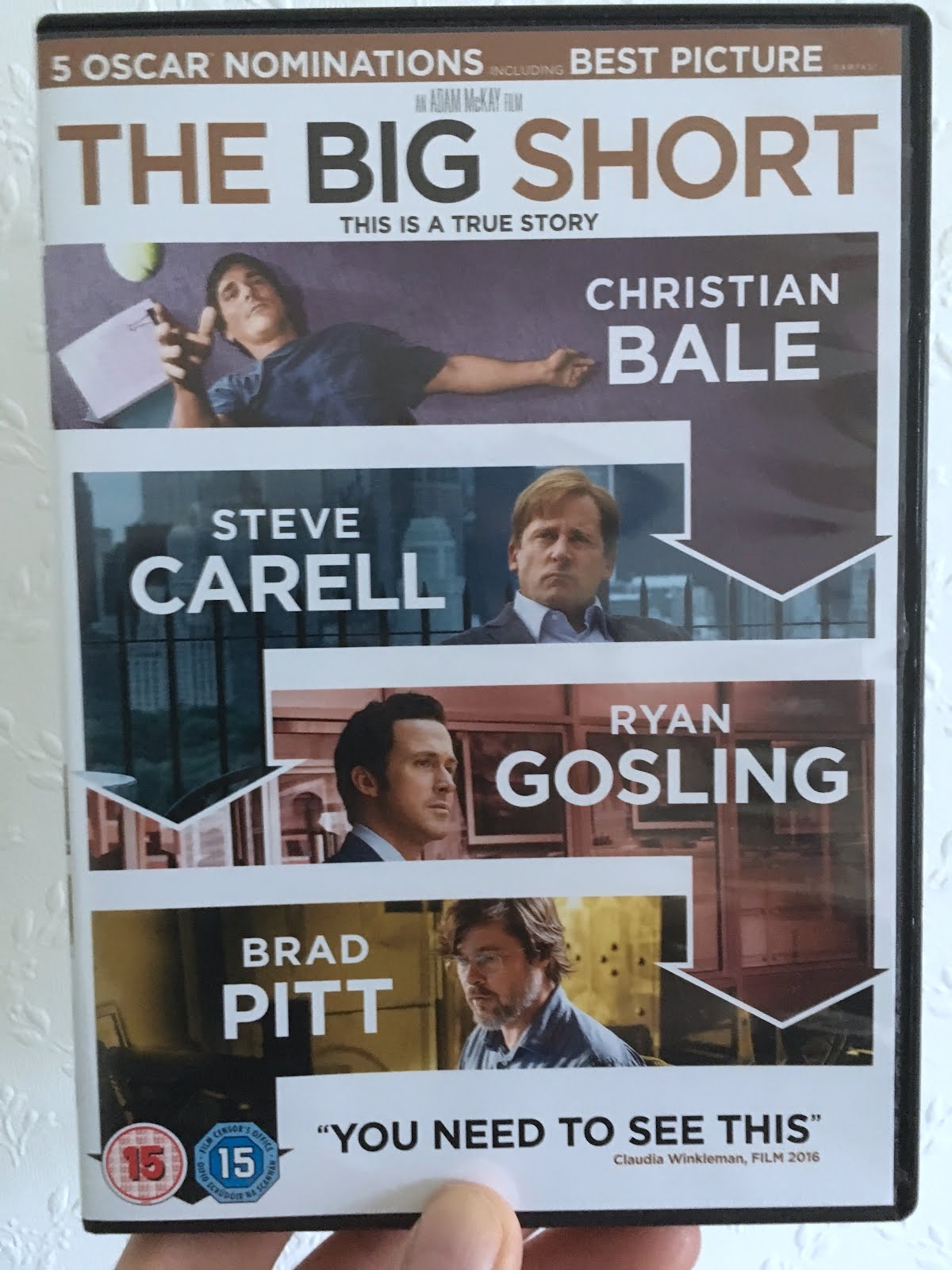
The Big Short (2015)


This highly stylised account of the investment schemes devised in the weeks leading up to the financial crisis of 2007–2008 follows three parallel narratives featuring individuals who stood to gain by the collapse of the US mortgage market.

Complex financial concepts are often hard to grasp, so the film – being somewhat self-conscious and postmodern – has this terminology explained by walk-on celebs (Margot Robbie, Anthony Bourdain, Selena Gomez, etc) talking direct to camera.

It’s not as compelling as The Wolf of Wall Street, which was personality-driven and had the huge advantage of starring Leonardo diCaprio. This film is more about a situation, with the characters seeming secondary to the way it unfolds. That said, the semi-crazed actions of Christian Bale (as Michael Burry) are the most watchable element. Steve Carell, Ryan Gosling and Brad Pitt are difficult to empathise with. That’s surely intentional, but it does make for a less engaging narrative.

Ultimately, I think I would have preferred to watch a well-made documentary about the same events or a fully fictional account that could structure the story in a more satisfying way.

The Revenant (2015)


Unrelentingly grim and bloody tale of North American frontiersman Hugh Glass (Leonardo DiCaprio) trying to survive against all the odds. It’s 1823, and desperate, isolated communities of trappers and hunters battle it out in the frozen wilds. Everything horrible you can imagine happening to Glass happens to him. He witnesses his wife’s murder. He’s attacked and badly maimed by a bear. He’s nearly smothered to death by a crazed colleague. He’s buried alive. He witnesses his son’s murder. He’s swept away in river rapids. He’s shot at. He falls off a cliff into a tree. And he has to sleep inside his dead horse (after pulling out the innards). Plus, he’s intent on exacting his revenge – whatever the cost.

It’s not exactly cheerful. But the film has a primal intensity that keeps you hooked. The scenery is stunning. And DiCaprio is watchable, even beneath the beard, blood, filth and fur. Ultimately, though, it’s too harrowing and brutal to constitute entertainment. It’s unclear what you’re meant to take away from it. I was left feeling troubled and disturbed.