Showing posts with label Year: 1995. Show all posts

The Net (1995)

Directed by Irwin Winkler, this is a trashy but enjoyable thriller starring Sandra Bullock as a geeky computer expert whose identity is stolen and erased. Jeremy Northam plays the villain who initially seduces her before trying to kill her. 

While it’s very basic in some ways, and we never really learn what the villains were planning to do, there are genuine thrills and surprises along the way. The fairground sequence is highly effective. And it was difficult to predict the ending. The filmmakers wrestle with how to make typing on a computer keyboard look exciting and just about make it work with fast edits and unusual close-ups. 

As always, Sandra Bullock is highly watchable.

While You Were Sleeping (1995)

Described as a romantic comedy, this OK film directed by Jon Turteltaub isn’t really funny at all. 

Sandra Bullock stars as Lucy, a Chicago Transit Authority token collector. She has a crush on a commuter, Peter (Peter Gallagher), who she sees every morning. One day he’s pushed in front of a train and she saves his life. He goes into a coma, and in a blaze of confusion she allows Peter’s family to believe she’s his fiancé. But then she starts falling in love with Peter’s brother (Bill Pullman). 

Whenever Bullock is on screen, she shines. Pullman is also pretty good. The problem is the ensemble case of family and friends – poorly drawn characters with too much screen time. It’s just not very well written. For example, when Peter’s actual fiancé shows up you expect all sorts of amusing misunderstandings, but that event is thrown away and a potentially interesting plot thread merely fizzles out.

The Scarlet Letter (1995)

Ludicrous adaptation of the classic 1850 novel by Nathaniel Hawthorne. You can virtually hear him turning in his grave.

Demi Moore is wildly miscast as Hester Prynne, who begins an affair with the Reverend Dimsdale (Gary Oldman) in a small settlers community in 1667 Massachusetts. Hester believes her cruel and abusive husband is dead – until he shows up (in the form of Robert Duvall). 

The film unnecessarily adds a plot about a war between the settlers and natives. It also adds a quite dodgy montage scene when the couple first consummate their relationship. Moore is absolutely out of her depth as an actor.

The DVD box has some weird marketing messages on it. Two of the quotes refer to "fun". The film is many things, but fun isn't one of them.

Sense and Sensibility (1995)

Superb historical drama adapted by Ang Lee from Jane Austen’s classic 1811 novel.

Sisters Elinor and Marianne are played wonderfully by Emma Thompson and a young Kate Winslet. Hugh Grant, Greg Wise and Alan Rickman portray the men they fall in love with. As these relationships play out, in London and Devonshire, the story examines whether we should marry for love or for status.

It's hugely involving, with moments of wit and tenderness. Hugh Grant is incredibly charming as the shy and well-meaning Edward Ferrars. Alan Rickman, for once, doesn't seem typecast or obvious. He brings real subtlety to the role of Colonel Brandon. 

As well as the main leads, there are excellent performances by Imogen Stubbs, Gemma Jones, Hugh Laurie and Robert Hardy.

One of the greatest costumers.

Seven (1995)

Atmospheric thriller directed by David Fincher. 

A serial killer embarks on a sequence of murders, each of which marks one of the seven deadly sins. Detectives Somerset and Mills (Morgan Freeman and Brad Pitt) try to catch him before he can complete the full cycle. 

It’s brilliantly shot, in a noirish manner. The constant rainfall, the grim urban settings and the claustrophobic streets all add atmosphere. Unexpectedly, and presumably for contrast, the film’s tense climax happens in wide-open spaces in bright sunlight. 

Gwyneth Paltrow plays Mills’ wife and is clearly going to have a more important function in the story. Kevin Spacey plays the “intelligent” killer – possibly partly influenced by Anthony Hopkins as the intellectual Hannibal Lector. 

The closing section is slightly far-fetched in the way that the killer is allowed to dictate the terms to the detectives. But it’s still a tense and compelling story that escalates to a satisfying conclusion.

French Kiss (1995)

Lame, tepid rom-com that’s neither romantic nor funny. 

Meg Ryan plays Kate, an extremely annoying American living in Canada. She flies to France after her oddly charmless fiancée ditches her for a French “goddess”. Kevin Kline plays Luc, a small-time French crook who offers to assist Kate in getting back her fiancée, but who – inevitably – falls in love with her. 

There’s a good idea for a film in there somewhere, but the characters’ actions simply don’t ring true. Also, the convoluted “crime” sub-plot fizzles out somewhat. You see a few French locations, but it doesn’t even work as a “tourist brochure” kind of film. It’s a teeny bit racist, too. 

It’s badly in need of a sharper, wittier script to make more of Ryan and Kline’s considerable talents.

Rob Roy (1995)

Scotland, 1713. A Highlands clan chief guided by principles of honour (Liam Neeson) is happily married to Jessica Lange, but a financial loan from the Marquess of Montrose (John Hurt) backfires when he’s double-crossed by a nasty nobleman (Tim Roth). 

It’s entertaining fluff – well directed and highly watchable – with a surprisingly intelligent script wrapped around the story’s various twists and turns. 

The landscapes look terrific if you don’t mind the soupy “traditional” music that’s played whenever you see them. 

Neeson has charm and gravitas. Lange just has charm and handles a difficult role with great skill. Roth is compelling as a horribly corrupt schemer.

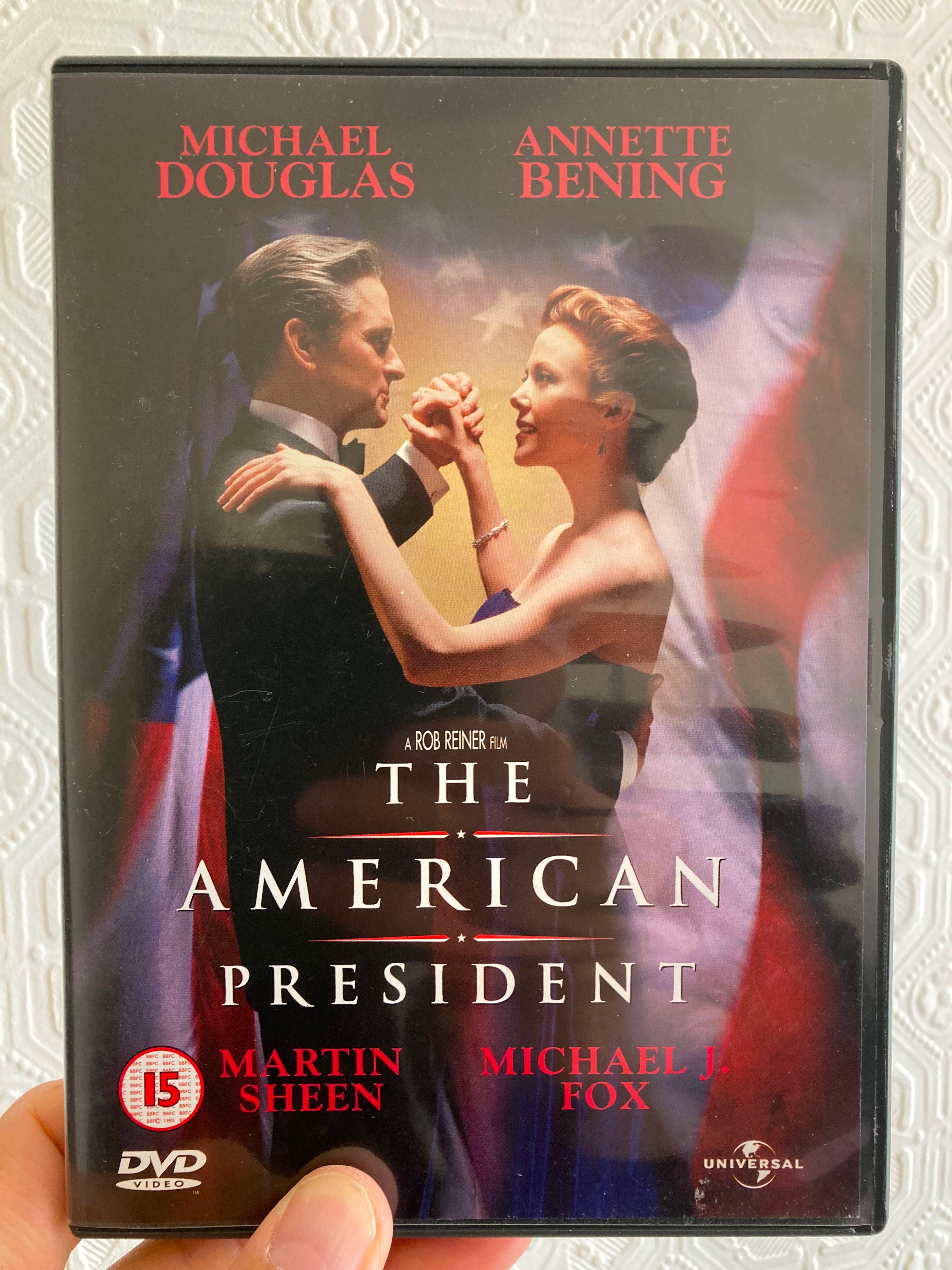
The American President (1995)

Directed by Rob Reiner, this is a charming film about the US President (Michael Douglas) attempting to balance the challenges of his job and his personal life. Annette Bening plays an environmental lobbyist who he falls in love with. Martin Sheen and Michael J. Fox play members of the presidential staff. And Richard Dreyfuss is the political opponent who tries to build a scandal around the new couple and their unexpected relationship. 

It works as drama and romance, with flashes of comedy. It’s also gently political and makes you wish that politics was that simple and idealistic today. 

All of the leads are on top form, and Douglas demonstrates once again that he's more versatile than people might think.

Copycat (1995)

An academic specialist on serial killers (Sigourney Weaver) lives a life of agoraphobic terror after being attacked by a psycho 13 months previously. But she has to face her worst fears when two San Francisco cops (Holly Hunter and Dermot Mulroney) seek her help in tracking down a brutal “copycat” killer. 

It’s tense and dramatic, and there’s a fairly major twist about two thirds in that I certainly didn’t see coming.

Weaver and Hunter are both excellent, but the latter is particularly strong and brings real depth to the role.

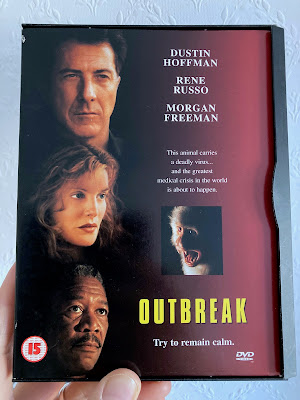
Outbreak (1995)

Disaster film detailing the outbreak of a deadly virus brought from Zaire to the USA by an infected monkey. Army virologist Dustin Hoffman and scientist Rene Russo play a divorced couple who team up again in their attempts to save the world. They are helped by Kevin Spacey but hindered by army generals played by Morgan Freeman and Donald Sutherland

It’s a fast-paced thriller that’s a little trashy but nevertheless exciting. A surprising number of helicopters feature, with James Bond-like copter chases providing some of the action. Unlike Contagion, it’s not especially illuminating in regard to the Covid-19 pandemic. The focus is more on the military response to the problem rather than individuals’ experience of it.

Script-wise it could have been stronger, but there’s so much happening, so quickly, that you don’t really notice.

Get Shorty (1995)

Clever mixture of crime and comedy, directed by Barry Sonnenfeld and adapted from the excellent novel by Elmore Leonard. 

John Travolta plays Chili Palmer, a loan shark from Miami who starts getting involved in the film world after going to L.A. on a job. He meets a horror director (Gene Hackman), a famous Hollywood star (Danny DeVito) and a glamorous B-movie actor (Rene Russo). But unfortunately there are gangsters out to get him (Dennis Farina, Delroy Lindo and James Gandolfini). 

It’s punchy and witty, with the twists and turns of Leonard’s plot captured well. Travolta is perfect in the lead role, and Russo has an easy charm. They both add to the appealing quirkiness.

The Bridges of Madison County (1995)

Romantic drama starring Clint Eastwood (who also directed) and Meryl Streep. She is a housewife living on an isolated Iowa farm in the mid-1960s. He is a National Geographic photojournalist documenting the area’s distinctive bridges. They spend four days together and fall passionately in love. But she has to juggle this life-transforming experience with the realities of her domestic commitments.

The two leads are both absolutely excellent – top-class acting, especially from Streep. On the downside, the framing story set in the present day is clunky and poorly acted. The son played by Victor Slezak is particularly awkward. But the main love story, which forms the bulk of the film, is touchingly “real”.

Leaving Las Vegas (1995)

Adaptation of John O’Brien’s novel, written and directed by Mike Figgis. 

Nicolas Cage is perfectly cast as an alcoholic who leaves Hollywood and travels to Las Vegas to drink himself to death. He meets a prostitute (Elisabeth Shue), who is also at a low ebb. (It certainly isn’t Pretty Woman.) 

The film suggests the possibility that the couple might somehow save each other from their fates, but it’s also intelligent enough not to present any easy solutions. It’s harrowing and heartbreaking to watch the situation unfold.

Cage and Shue are both stunning. I was completely convinced by them, together and apart. Their relationship is complex but believable, and the film follows it through to its logical conclusion without sentimentality or compromise.

Heat (1995)

Cop tries to catch criminal gang causing havoc in Los Angeles. Al Pacino is the cop. Robert De Niro leads the gang. 

Heat is a complex film that introduces multiple threads. At its worst it’s in danger of becoming an episode of Miami Vice or even The A-Team. At its best, it’s like a cut-price Scorsese imitation, albeit without the elegance and sophistication. The script is reasonable enough, but there are casting problems. Val Kilmer is jarringly woeful as one of the gang members. Furthermore, the gang guys have no chemistry whatsoever. Even De Niro seems to be struggling a little with the material. Plus, some of the music is intrusive. And the threads about the stand-in getaway driver and Natalie Portman as a troubled teen could both have been removed in the interests of tightening up the narrative.

On the plus side – and it's a big plus – Pacino rises to the challenge of his role and is every bit as cool as usual. The scenes featuring him and his wife (Diane Venora) are convincing, and there’s a depth to him that the other characters lack.

Casino (1995)

Lengthy, sometimes dense and extremely violent Martin Scorsese crime thriller. 

Robert De Niro and Joe Pesci play mafia men sent from Chicago to Las Vegas, scamming money off a casino’s profits for the bosses back home. They become rivals and enemies, which is a problem because Pesci’s character is essentially a psychopath. Meanwhile, Sharon Stone is an ex-prostitute who marries De Niro but is still attached to her pimp boyfriend played by James Woods.

It’s similar to Goodfellas in terms of subject matter and tone, but that film is far more appealing because it has a character you can relate to. There’s no one in Casino that you can identify with at all. Also, the violence is really disturbing – especially the head-in-a-vice and buried-alive scenes. I’m not sure I will ever get those images out of my mind.

The use of music was a little excessive. Countless great songs are jammed in, which is fun, but sometimes it's at the expense of light and shade. I craved a little more space.

De Niro is as good as ever, but it remains a flawed film that seems like it could have been a masterpiece and somehow didn’t turn out that way.

Waterworld (1995)

A very strange epic. With a budget of $172–175 million, was the most expensive film ever at the time it was made.

It’s the future. The ice caps have melted and the old civilisations are now underwater graveyards. A few humans survive as nomads and warriors in battered boats and makeshift floating villages. 

The Deacon (Dennis Hopper) is a crazed leader seeking to capture a little girl named Enola (Tina Majorino), who has a map of the mythical “Dryland” tattooed on her back. Jeanne Tripplehorn is Enola’s guardian. And Kevin Costner is the monosyllabic “mariner” who reluctantly becomes their protector.

It’s a technically impressive film that’s also quite daft in many ways. The slight pantomime quality actually works: the world has become more extreme and absurd, and people have degenerated as a result. I was frequently reminded of recent American political rallies, and the villain at the centre of them – an orange, deranged monster – is very reminiscent of someone else in US politics.

It’s such an unusual film. There are hints of Apocalypse Now, Flash Gordon, Mad MaxRaiders of the Lost Ark and Return of the Jedi, but it has a peculiar tone and feel of its own. A few things keep greatness at bay:
• Why has Costner evolved to have gills and webbed feet so quickly? It’s described as a “mutation”, but no more detail is given.
• Cheery “adventure” music undercuts the drama – what I think of as the “Spielberg Syndrome”.
• The lighting is all over the place. Bright studio lights come and go with little relation to the weather or environment.

Hugely enjoyable, though.

Apollo 13 (1995)

Ron Howard’s version of the events of April 1970 in which a planned Moon mission goes horribly wrong after an explosion loses vital fuel and oxygen from the craft. Instead of walking on the lunar surface, as they had hoped and dreamed, the three astronauts find themselves in a desperate struggle to return to Earth. 

It’s a taut drama that steadily builds tension. We know that disaster is on the way, so there’s added suspense in waiting for that moment. I especially liked the Mission Control sections, which showed how much of an ingenious team effort the rescue attempt was. 

The casting and acting is spot-on, and makes this film stand out:

Tom Hanks plays Jim Lovell, from whose memoir this was adapted. Hanks does his usual thing, but it works. His almost bland demeanour seems to match the highly sought after brave-but-calm profile of that of a well-adjusted astronaut.
Kevin Bacon is perfectly acceptable as backup Command Module pilot Jack Swigert even though this actor is often now seen as a figure of fun.
• Bill Paxton is solid as Lunar Module pilot Fred Haise.
• Kathleen Quinlan is Lovell’s wife, trying to hold it together at home with the kids. The “worried wife” role can’t be a rewarding one for any actor, and too often that part is underwritten (see Deepwater Horizon or The Untouchables), but Quinlan convincingly portrays someone whose personal nightmare becomes a drama watched by the entire world.
• Ed Harris is impressive as the tough but compassionate Flight Director Gene Kranz.
• Gary Sinise is excellent as pilot Ken Mattingly, who misses out on the mission itself but helps the crew by mirroring their predicament in a NASA flight simulator. 

I liked the fact that in the film, as in real life, it wasn’t about luck or heroism or faith or fate. It was science that saved them – a triumph of knowledge and rational thought. A lesson to be learned there for all of us.

Clueless (1995)


Alicia Silverstone is wonderful in this Beverly Hills teen comedy, written and directed by Amy Heckerling and partly based on Jane Austen’s Emma

Particularly good is the linguistic invention of the script. Cher uses phrases such as “shame spiral” and “complaint rock” (Radiohead, etc), some of which entered into general use as a result of the film.

GoldenEye (1995)


The first of four Pierce Brosnan James Bond films is an interesting attempt to introduce some knowing irony to 007 being a sexist anachronism, without taking the more radical step of the reboot that would come with the Daniel Craig era. All the usual tropes are there. We played “Bond iSpy” and ticked off each of the familiar elements. But it’s not a terrible film, despite the absolutely awful Russian IT boffin. There’s a bit more dialogue, so Brosnan gets to really act. The tank chase and exploding pen were enjoyable, as was the jumping-off-a-dam sequence. The ludicrous plot elements are present and correct, and reach a remarkable new peak when Bond dives off a cliff after a plane, “flies” into it, climbs into the cabin and then – at the very last moment – averts a crash.