Showing posts with label Starring: Harrison Ford. Show all posts

Star Wars Episode V: The Empire Strikes Back (1980)

Tightly plotted and relentlessly entertaining, this was the second Star Wars film to be released (although it's placed fifth in the overall narrative sequence).

There's an excellent script full of highly quotable lines, and a lot of it is very funny, too. Harrison Ford, Carrie Fisher and Mark Hamill are all at their best.

There’s romance (Han and Leia), adventure, mystery, excitement and peril. Plus an odd recurring theme of disfigurement.

The pacing is perfect. Director Irvin Kershner keeps things moving, but never at the expense of character development.

Presumed Innocent (1990)

Rusty Sabich (Harrison Ford) is a prosecutor who is charged with the murder of his colleague and mistress Carolyn Polhemus (Greta Scacchi).

Adapted from the novel by Scott Turow, this film is directed – slowly and unremarkably – by Alan J. Pakula. The two leads are strong but it’s a little flat overall. Worse than that, the motivation of the killer is muddled and there are loose ends that mean the plot doesn’t really work. 

There’s a greeny/brown, turgid quality to the visuals. Overall, it’s surprisingly workmanlike and unrewarding. Yet somehow it made $200 million.

Would I watch it again? No.

Ender’s Game (2013)

A sci-fi saga presumably aimed at 12-year-old boys, this version of Orson Scott Card's 1985 novel is entertaining and races along in an exciting way.

Ender Wiggin (Asa Butterfield) is an unusually talented child selected to join an orbiting military academy. He is one of many young people being trained to lead Earth’s defence against invading aliens named the Formic. Harrison Ford plays his mentor, Colonel Hyrum Graff, while Ben Kingsley is Mazer Rackham, a war hero from the aliens’ first attack.

For some reason the training segments of the film – complete with drill instructor – seem to deliberately pay homage to those in Full Metal Jacket, a film that the young audience won’t even be aware of.

The visuals are often remarkable, with seamless zero-gravity CGI and impressive videogame-like effects. 

In places it can all seem a little silly – a bunch of kids taking everything very seriously indeed – and although it attempts to introduce moral issues, these aren’t explored in great depth.

But ultimately it’s a well-paced romp, and the double twist of the ending certainly wasn’t predictable.

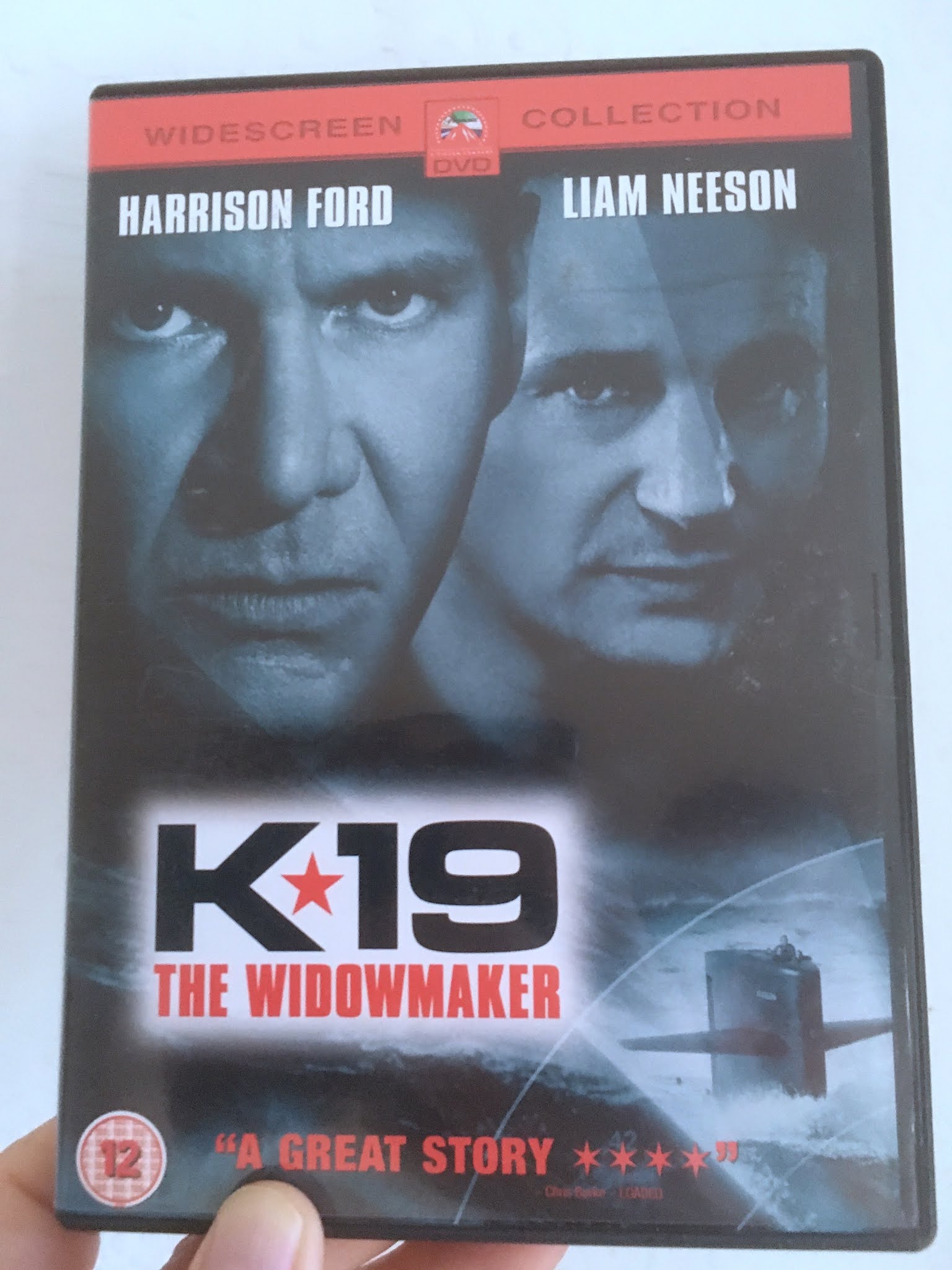
K-19: The Widowmaker (2002)

It’s 1961 and the Soviet Union sends a new nuclear submarine on a test mission. Mikhail Polenin (Liam Neeson) has been demoted from the role of captain and replaced by Alexei Vostrikov (Harrison Ford), who seems unreasonable and needlessly reckless, so tensions are running high from the outset. When a reactor coolant pipe bursts, the sub is in danger of blowing up – and destroying everything around it, including a US destroyer – risking dangerous military escalation and potentially World War III. 

As the drama unfolds and the crisis rapidly accelerates within the claustrophobic interiors of the craft, the two captains have to navigate their own prickly relationship as well as the relationships they have with their men, who clearly favour Polenin’s way of doing things. 

It’s an intelligent film that continually surprises. There are disturbing scenes that change the dynamic from intense Cold War thriller to compassionate human drama. 

The two leads are excellent and exude charisma, even if their Russian accents sometimes come and go.

Witness (1985)

Unusual and striking thriller directed by Peter Weir. A child from an Amish community witnesses a murder that Philadelphia detective John Book (Harrison Ford) is assigned to investigate. When it turns out that the Chief of Police is in on the crime, Book goes into hiding among the Amish people he now has to protect. There, he meets a young widow (Kelly McGillis), who he begins to fall for, and he starts to understand her very different way of life. 

The film brilliantly balances a standard thriller with a full-on study of another culture within the USA. It does this with real empathy. There’s a lengthy sequence in which you see a traditional “barn raising”, a custom demonstrating how the community chooses to work collectively to assist its members. 

Ford is his usual charming self, effortlessly watchable as ever, but Kelly McGillis (later in the woeful Top Gun) is the real revelation. She manages to seem simultaneously innocent, naive, frightened and smoulderingly passionate. Her very expressive face conveys so much. There’s a hugely romantic scene in which she and Ford dance to Sam Cooke’s “(What a) Wonderful World”. It expresses her joy, delight and nervousness so well. 

There’s also a timeless quality to the film (it doesn’t seem “1980s” at all) that means it holds up extremely well today. 

Ultimately, it’s touching and even profound. A treasure.

What Lies Beneath (2000)

Claire Spencer (Michelle Pfeiffer) and her husband Norman (Harrison Ford) appear to have an ideal marriage and an ideal home. But the strain starts to show when Claire becomes convinced that their neighbour has murdered his wife. She also begins to observe spooky goings-on in her Vermont home, garden and lake. Norman encourages her to seek psychiatric help, but the weird events begin to escalate and it soon transpires that their marriage isn’t the fairytale story we might have imagined.

Director Robert Zemeckis does an excellent job with this Hitchcockian supernatural thriller. He’s masterful at storytelling (see Cast Away and the Back to the Future trilogy) and proves equally adept at building suspense. It’s genuinely frightening in places, not least because of the clever and claustrophobic way certain shots are framed.

The two leads are as good as ever, and Pfeiffer in particular builds a character you can easily believe in and relate to. There’s a major twist in the second half that changes everything, and both actors adapt their roles perfectly to make it work.

After an increasingly tense plot development, the pay off of the climax is extremely exciting. It’s real edge-of-the-seat stuff.

Blade Runner 2049 (2017)


A sequel to the 1982 masterpiece, set 30 years later. Ryan Gosling plays K, the replicant seeking answers about his origins. It transpires that in one unprecedented instance, a replicant gave birth. That replicant was Rachael from the first film. K’s discovery of this knowledge begins a quest that ultimately leads him to Deckard (Harrison Ford), who he believes to be his father. But the sinister Wallace Corporation also wants to understand replicant breeding for its own ends.

It's visually stunning – possibly even more so than the original – and asks similarly deep philosophical questions about life, identity and memory. For a few reasons, though, Denis Villeneuve's film does not satisfy in the way that Ridley Scott’s does. Firstly, it’s simply too long (163 minutes). Some of the scenes are ponderous and slow. You can sit back to admire the expansive, luxurious quality or you can become infuriated with the glacial pace. The villains (Sylvia Hoeks and Jared Leto) didn’t quite convince. And too much of the film was given over to Gosling’s time with his synthetic “hologram” girlfriend (Ana de Armas). I liked her as a character, but – other than filling in details of how relationships and technology work in 2049 – this plot didn’t really lead anywhere. 

Harrison Ford’s appearance was surprisingly successful. I had feared it would be a tokenistic attempt to drag the star of the original back on screen for the sake of “sequel credibility”, but they wisely built the plot around him – even though he’s barely in it. And unlike in Star Wars Episode VII, where he’s depicted as the same Han Solo except older, with no character development at all, here he seems wiser and not in any way ridiculous.

I’d like to see it again, and on a big screen. With the plot twists now fully understood, I think I could get more out of it on second viewing.

Firewall (2006)


Reasonably entertaining but unexceptional thriller starring Harrison Ford as bank IT security expert Jack Stanfield, who is kidnapped by a criminal gang led by Paul Bettany. The family are taken hostage and Stanfield is asked to hack into his own IT system to transfer $100 million.

The two leads are fairly strong and clichés are mostly avoided, but the film doesn’t quite come alive until the action finally kicks off. The wife (Virginia Madsen) and children are underdeveloped as characters, making their predicament less troubling than it should be. You struggle to believe they are real people in real peril. Likewise, the techie henchmen seem one-dimensional. You know they won’t last long, and they don’t. Far more enthralling is the loyal secretary, played by Mary Lynn Rajskub, whose facial expressions communicate so much. Harrison Ford is reliably watchable and does everything he can with the material, but even he can’t make wandering around an office or a server room seem interesting.

The title seems to have been chosen because, circa 2006, it still had a faint whiff of futuristic glamour about it. In 2020, it’s as quaint as calling the film Download or Software Update.

Blade Runner: The Final Cut (2007)


Ridley Scott’s masterpiece (originally released in 1982) is also Harrison Ford’s greatest film. In the Los Angeles of 2019, a cop has to track down and terminate four “more human than human” robots (or “replicants”) who have turned murderous as their four-year lifespan is about to expire. It’s wonderful on so many levels:
• The super-atmospheric soundtrack by Vangelis.
• The dark, dank visuals that so convincingly create a world and which have proved so influential on other films.
• The way it plays with genre. Is it sci-fi, horror, film noir, existential drama or a detective story? It’s all of those.
• The perfect cast: Rutger Hauer and Daryl Hannah are so convincing that you never once doubt that they are synthetic beings. Sean Young is also perfectly not-quite-right as the replicant who believes she’s human until all her illusions are crushed.
• The philosophical depth of it. What is life? What is humanity? How should we best use the little time we have?
• The exciting plot that builds to a remarkable and unexpected resolution.
• The restraint of it. No one over-acts. And Harrison Ford looks genuinely frightened when he’s being pursued. It’s the opposite of a shoot-’em-up cop film, or rather an extremely sophisticated version of one.

This is the third version of Blade Runner I’ve seen and they are all valuable in their own ways.

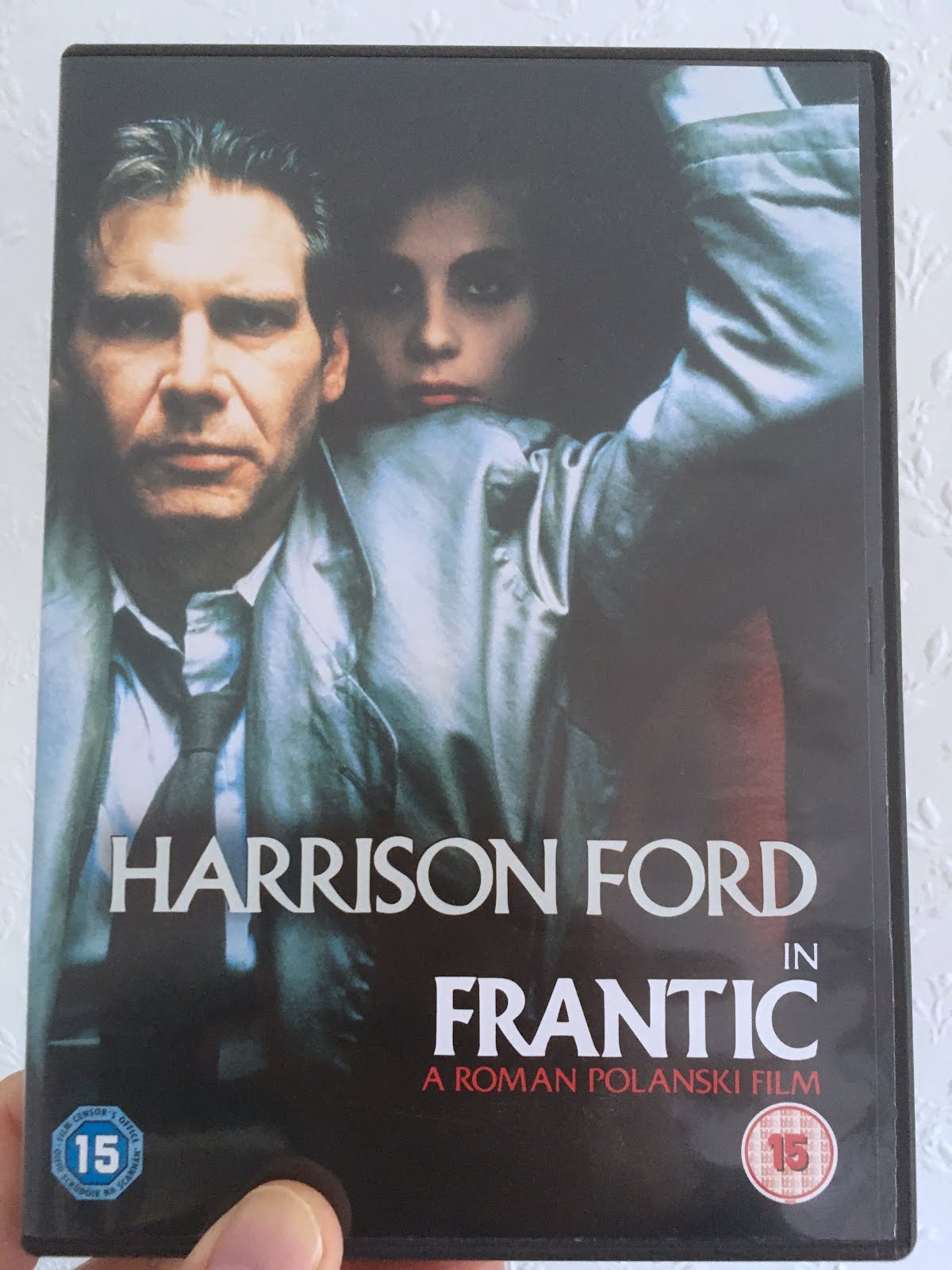
Frantic (1988)


Tense, constantly gripping thriller directed by Roman Polanski. Harrison Ford plays an American doctor in Paris whose wife is kidnapped from their hotel. In the absence of any help from the police or the US embassy he sets out to find her himself, aided only by a pretty young drug smuggler called Michelle (Emmanuelle Seigner).

It’s a taut and exciting narrative, with the mystery steadily deepening as Ford's character begins to learn what’s happening. There are moments of black humour, too, as his situation becomes more and more dire. The scene in which he scrabbles around on a slippery rooftop is a highlight.

Music is by Ennio Morricone, excellently judged as ever, with additional tracks by Grace Jones.

Cowboys & Aliens (2011)


Inspired fusion of sci-fi and western. Daniel Craig and Harrison Ford are the cowboys battling the mysterious aliens who have stolen their people and who want their gold. Daniel Craig is the sole survivor of an abduction and cannot remember any of what happened to him, but he wears one of the aliens’ bracelets, which acts as a superweapon he can use against them. Olivia Wilde plays the blue-eyed girl assisting him and turns out to be not quite what she seems.

The brilliance of the film comes from the fact that it plays it straight. There are no knowing smirks and winks. No self-conscious irony. It’s a proper western in which the enemy just happens to be from another world.

There’s plenty of character development, with a father/son theme running across several relationships. Clichés were avoided and scenes that could have turned corny were sufficiently humanised to work well. I suspected it would “go rubbish” at various points – when the aliens started running around, when the big battle began – but refreshingly it stayed original and watchable to the end.

Surprisingly the film wasn’t a commercial success. Too intelligent? Too unusual? It’s a shame – especially when tripe such as Independence Day (1996) does so well.

Clear and Present Danger (1994)


Harrison Ford stars in this adaptation of a Tom Clancy thriller about a CIA man who gets involved in both a Colombian drug war and the murky secrets of the White House. Maybe it worked as a novel, but as a film it’s too long and too slow. Buried in there somewhere are two interesting stories – a guns ’n’ copters action plot and a political saga built around protocols that sadly seem almost quaint in the debased Trump era. Instead, you get a rather drab and convoluted mess that cannot satisfy. That said, Harrison Ford is as riveting as ever, Willem Dafoe isn’t bad as field agent John Clark and James Earl Jones is convincing as the dying Vice Admiral James Greer.

Air Force One (1997)


Edge-of-the-seat thriller in which Harrison Ford plays the US president. His plane is hijacked by a Russian baddie (Gary Oldman). Ford appears to make a break for safety in an escape pod. But of course he chooses to stay on board to save his family, his crew and democracy itself.

Meanwhile the vice president (a reasonably convincing Glenn Close) leads the operation from the White House and there are some interesting discussions of protocol, i.e., are the president’s instructions legally binding if he is incapacitated? What if you don’t know whether he’s incapacitated?

The film maintains the tension expertly and Ford is as watchable as ever. There are only two corny lines (“Get off my plane” being one of them) and it’s to the film’s credit that the villain is well developed as a character.

There’s lots of shooting, and the violence seems real and painful rather than cartoonish. You know the good guys will win, of course, but it’s exciting to find out how they go about it.

Working Girl (1988)


Intelligent and amusing Wall Street comedy-drama about a working-class stockbroker's secretary who dreams big. Like so many American films of this time, it is obsessed with social status and upward mobility. In many ways it’s a more sophisticated version of The Secret of My Success. Melanie Griffith, Sigourney Weaver and Harrison Ford are tremendous in the lead roles, really seeming to relish their parts. The script is nuanced enough that even the villain (Weaver) is likeable. It’s wonderfully 1980s – the hairspray, the shoulder pads, the pop soundtrack (Chris De Burgh’s "Lady in Red", the Pointer Sisters’ "I’m So Excited"), the New York scenes – but it has dated well because it taps into timeless themes of class, aspiration and identity. And while there are farcical elements, it resists cheap laughs and never descends into mere slapstick. The pacing is perfect, too: it builds and twists at just the right speed to keep you engaged.

In addition to the big trio of lead actors, there’s an all-star cast also featuring Alec Baldwin, Joan Cusack, Kevin Spacey and Olympia Dukakis. There are even brief appearances by David Duchovny and Ricki Lake. The theme song is the rousing but horribly overproduced "Let the River Run" by Carly Simon.

Star Wars Episode VII: The Force Awakens (2015)


In the safe hands of director J.J. Abrams, this cleverly continues the Star Wars saga while simultaneously acting as a sort of franchise reboot. There are so many elements repeated from previous films – important message carried in droid, seedy bar with exotic species from across the galaxy, deadly battle station with deadly super-weapon, evil regime battled by small resistance group, person falling into deep shaft, having to blow up something huge to save the galaxy – that it seems like a homage to the original trilogy. But there are exciting new elements, too – a welcome greying of the simplistic good vs. evil extremes of yore, some charming, unexpected character-based wit emerging from the dialogue and a believably “real” visual quality we haven’t seen before. Harrison Ford plays the now-elderly Han Solo and surprisingly seems one of the weaker elements in the film – a slightly ridiculous figure. Encouragingly, however, Episode VII ushers in a credible new generation of characters and actors – Daisy Ridley as the plucky Force-sensitive Rey, Oscar Isaac as the handsome resistance pilot Poe and Adam Driver as the “new Darth Vader” Kylo Ren. The latter is especially watchable, with his temper tantrums and visibly conflicted feelings. 

All in all, it’s a rich and rewarding step forwards – and sideways – for a series that (after the prequels) badly needed this kind of care and attention.

Raiders of the Lost Ark (1981)


Finally saw this on TV, 37 years after it came out. Disappointing. It’s a good-natured swashbuckling romp that veers on pantomime in places (daft running around and escape scenes, camp bald man who takes off his shirt to have a fight, a monkey who works for the Nazis), with cartoonish violence (like James Bond, Indiana Jones can be sprayed by machine-gun fire and never be hurt). There’s also queasily intrusive music by John Williams, who lazily recycles his themes from other films (including Star Wars). On the plus side, Harrison Ford is always watchable (he was at the height of his good looks) and Karen Allen is impressive as the love interest Marion Ravenwood. The ending is utterly preposterous, with the semi-realist narrative suddenly turning supernatural. As with all Steven Spielberg films except for Duel and Jaws, I couldn’t quite see what all the fuss was about.

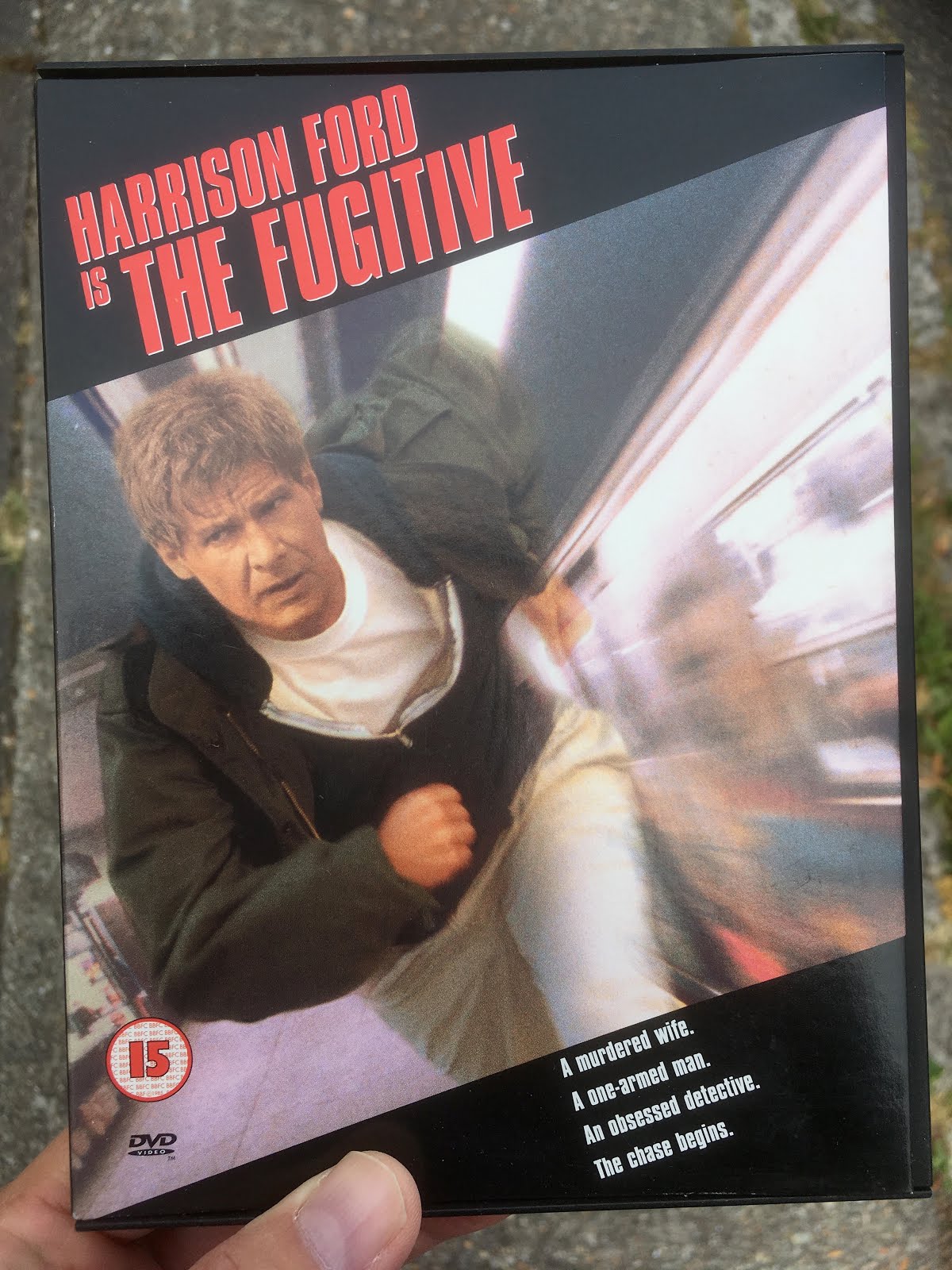
The Fugitive (1993)


Harrison Ford is highly watchable as the smart Chicago doctor Richard Kimble, on the run after being wrongly accused of murdering his wife. Tommy Lee Jones is credible as the tough US marshall on his trail. It could have been awfully clichéd, but somehow ends up refreshing and compelling throughout. I especially liked the hair-raising “dam” sequence.