Showing posts with label Genre: historical drama. Show all posts

Madame Bovary (2014)

Directed by Sophie Barthes, this is a superb adaptation of the 1856 novel by Gustave Flaubert. 

Emma Bovary (Mia Wasikowska) finds her marriage to a village doctor stifling and lifeless. She seeks more exciting distractions, with disastrous consequences.  

Wasikowska is excellent, as is the supporting cast. My only criticism is that Emma's character seems to change too quickly, with her downward spiral beginning rather suddenly after years of quiet restraint. This sort of character development can be handled more subtly across a novel but can seem rushed in the 118-minute running time of a film.

The Last Legion (2007)

It’s not specifically marketed at children, but this action-adventure romp directed by Doug Lefler is certainly well-suited to the younger viewer. 

Thomas Sangster plays Romulus Augustulus, who is descended from the Caesar bloodline when his parents are killed. He is taken in by the kindly Aurelianus Ambrosius (Colin Firth) and Mira (Aishwarya Rai), and guided by the wise – and oddly bearded – Ambrosinus (Ben Kingsley). 

It’s quite entertaining in a fairly silly manner. The only real criticism is that Sangster could’ve been more of a hero, instead of someone that things merely happen to. That way, you might have found yourself actually rooting for him.

The Scarlet Letter (1995)

Ludicrous adaptation of the classic 1850 novel by Nathaniel Hawthorne. You can virtually hear him turning in his grave.

Demi Moore is wildly miscast as Hester Prynne, who begins an affair with the Reverend Dimsdale (Gary Oldman) in a small settlers community in 1667 Massachusetts. Hester believes her cruel and abusive husband is dead – until he shows up (in the form of Robert Duvall). 

The film unnecessarily adds a plot about a war between the settlers and natives. It also adds a quite dodgy montage scene when the couple first consummate their relationship. Moore is absolutely out of her depth as an actor.

The DVD box has some weird marketing messages on it. Two of the quotes refer to "fun". The film is many things, but fun isn't one of them.

Jane Eyre (2011)

Compelling and powerful adaptation of Charlotte Brontë’s 1847 novel, directed by Cary Fukunaga. 

Mia Wasikowska stars in the title role, while Rochester is played by Michael Fassbender. Both of them are absolutely at the top of their game, delivering subtle and nuanced performances. 

There’s something highly believable about it – a gritty realism that’s often lost when revered classics are filmed.

Persuasion (2007)

Excellent television adaptation of the 1817 novel by Jane Austen. Directed by Adrian Shergold, it transcends the usual limitations of TV drama.

There’s something very fresh and even raw about it – both visually and emotionally – and this makes it feel much more real

Sally Hawkins is superb as Anne Elliot, conveying a huge range of emotions with her face alone. Rupert Penry-Jones is fine as Captain Wentworth, but less impressive overall.

It's nice to see the familiar Bath city locations as well as a very cold-looking Lyme Regis.

Belle (2013)

Somewhat stilted period drama directed by Amma Asante. 

The premise is intriguing enough – the upbringing of an illegitimate girl is entrusted to William Murray, Earl of Mansfield, the Lord Chief Justice (Tom Wilkinson), who lives in Kenwood House, Hampstead. The girl's mixed-race background is a cause of controversy within the Earl's social standing.

This is based on a true story inspired by the 1779 painting of Dido Elizabeth Belle, but – frustratingly – events have been changed and fictionalised for the purposes of this film. Why invent parts of the plot when the truth is more interesting? 

The older actors are impressive – Penelope Wilton, Emily Watson and Tom Wilkinson – but the two would-be sisters Gugu Mbatha-Raw and Sarah Gadon, are surprisingly flat for such important roles. And annoyingly, it wasn't even filmed at Kenwood.

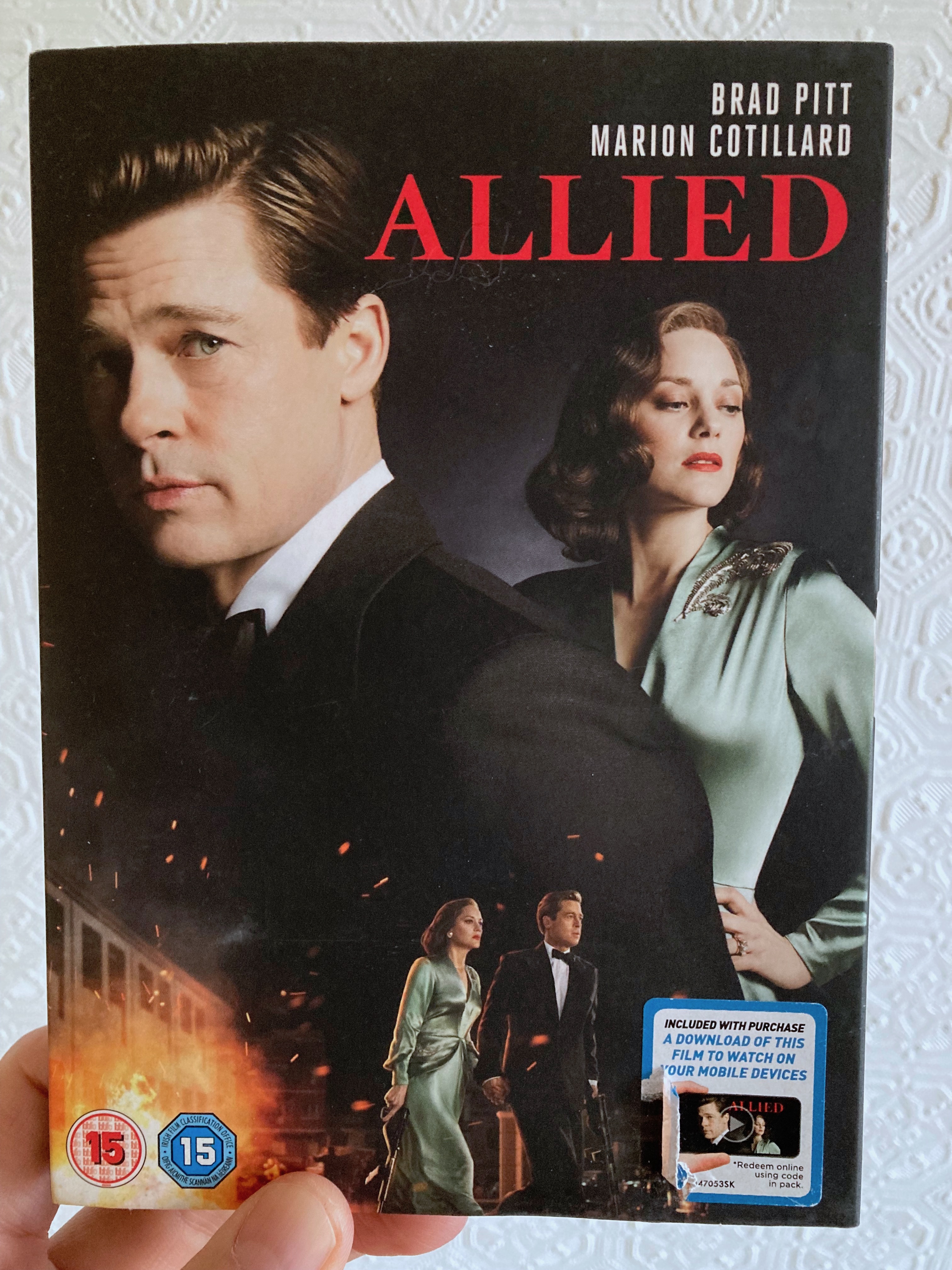
Allied (2016)

Entertaining wartime thriller directed by Robert Zemeckis

Brad Pitt and Marion Cotillard star as a Canadian intelligence officer and French resistance fighter. They fall in love, while pretending to be a married couple for a military mission in Casablanca. They move to London as the war continues, but is everything as it seems? 

Zemeckis brings his usual high quality of storytelling, and the narrative keeps you guessing until the end. Pitt is OK rather than spectacular (as usual), but Cotillard steals the show with a much more impressive, nuanced and well-rounded performance.

Sense and Sensibility (1995)

Superb historical drama adapted by Ang Lee from Jane Austen’s classic 1811 novel.

Sisters Elinor and Marianne are played wonderfully by Emma Thompson and a young Kate Winslet. Hugh Grant, Greg Wise and Alan Rickman portray the men they fall in love with. As these relationships play out, in London and Devonshire, the story examines whether we should marry for love or for status.

It's hugely involving, with moments of wit and tenderness. Hugh Grant is incredibly charming as the shy and well-meaning Edward Ferrars. Alan Rickman, for once, doesn't seem typecast or obvious. He brings real subtlety to the role of Colonel Brandon. 

As well as the main leads, there are excellent performances by Imogen Stubbs, Gemma Jones, Hugh Laurie and Robert Hardy.

One of the greatest costumers.

Barry Lyndon (1975)

Written and directed by Stanley Kubrick, this historical drama is a masterclass in how to make a great film. Everything about it is superb. 

Consisting of the varied and rambling adventures of the title character (portrayed by Ryan O’Neal), the story details the exploits of an 18th-century Anglo-Irish loner. He has to leave home following a duel with British Army captain John Quin (Leonard Rossiter), is robbed by highwaymen and then ends up in the British army – until he deserts and sets off on a whole sequence of other adventures.

There’s a quirky tone, enhanced by the narration of Michael Hordern. The film has an unusually sophisticated deadpan wit and intelligence. It's visually stunning, too. Kubrick treats you to a sequence of brilliantly composed shots. It’s like a rare liqueur – a luxurious treat. 

A masterpiece.

Gangs of New York (2002)

One of Martin Scorsese's lesser works. As a fan, I found this a big disappointment.

Fragmented and unfocused, it tells the story of the feuding Catholic and Protestant groups in the New York of the 1860s. At the same time, Amsterdam Vallon (Leonardo DiCaprio) seeks revenge from William "Bill the Butcher" Cutting (Daniel Day-Lewis), who killed his priest father (Liam Neeson).

Scorsese tries to tell too many stories and loses track of the multiple threads.

There's slightly naff Irish music running through the film, which drags on for 167 minutes.

DiCaprio doesn't get to act much, which is a missed opportunity, and Cameron Diaz (who plays his pickpocket girlfriend) doesn't bring a great deal to the role.

There was possibly a great film in here somewhere, but possibly it got lost in the edit.

The Wings of the Dove (1997)

Historical drama adapted from the 1902 Henry James novel and directed by Iain Softley. 

The wealthy American heiress Milly (Alison Elliott) is dying. Her friend Kate (Helena Bonham-Carter) schemes to inherit her money via a love triangle with her boyfriend Merton (Linus Roache). But inevitably things don’t go to plan. 

It's enjoyable but there are a couple of flaws. The first is that Milly never seems especially unwell. The second is that Merton doesn’t seem charming enough to have two women in love with him. What’s the appeal?

In places, more depth was needed to explore characters and their motivations. For example, Kate’s strict, stuffy aunt (Charlotte Rampling) is something of a caricature without being fully explained. This may be because the novel had to be condensed for the screen. 

That said, it's lavishly shot and generally well acted.

The Help (2011)

Historical drama set in Mississippi in 1963. 

Skeeter (Emma Stone), an aspiring author, decides to write a book on African-American maids and the struggles they face on a daily basis.

Directed by Tate Taylor, this film is adapted from the popular 2009 novel by Kathryn Stockett. Despite good storytelling and some remarkable performances by Emma Stone, Viola Davis and Viola Davis, it’s sentimental and simplistic. There’s also an unfortunate “white saviour” aspect. Given the importance of the Civil Rights movement, you wish there had been a more nuanced and subtle treatment of the topic.

A Room with a View (1985)

Produced by the Merchant Ivory team, this adaptation of E.M. Forster's 1908 novel is arguably the ultimate costumer.

A young woman named Lucy Honeychurch navigates relationship troubles and the social restrictions of Edwardian England.

Helena Bonham Carter is immensely lovable in the main role.

There's so much subtle, gentle wit on display, and the Italian locations look lavish.

Surprisingly, Forster seems to work much better on film than on the page (see also Howard's End, which also starred H.B.C.). Rich and vibrant characters come alive through a sparkling script. Simon Callow is excellent as the Reverend Mr Beebe. Judi Dench is also on top form as the novelist Eleanor Lavish. 

The rest of the all-star cast includes Julian Sands, Maggie Smith, Denholm Elliott and Daniel Day-Lewis.

The Mission (1986)

A remarkable drama directed by Roland Joffé and written by Robert Bolt.

Plot (borrowed from online): "18th century Spanish Jesuits try to protect a remote South American Indian tribe in danger of falling under the rule of pro-slavery Portugal."

Robert De Niro and Jeremy Irons star. 

The jungle setting is visually stunning.

It's powerful and moving, especially given that it's based on true events.

The stirring music is by Ennio Morricone. 

Viceroy's House (2017)

A not especially compelling historical drama, set at the time of India’s handover from Britain, and the partitioning of India and Pakistan. 

It tells that political story as well as the tale of a young couple separated along social and religious lines. 

Hugh Bonneville stars as the final Viceroy of India, Lord Dickie Mountbatten, and Gillian Anderson is excellent as his wife. 

Overall, the film disappoints. Somehow it fails to bring all of this to life. The script never sparkles and the overuse of archive footage (or at least mocked-up archive footage) has the effect of distancing you from the action. Also, it’s never clear whether the British actors are being formal and stuffy on purpose or whether they simply don’t have particularly well-written parts.

My Cousin Rachel (2017)

Superb historical drama adapted from the novel by Daphne du Maurier. 

A young man in Cornwall (Sam Claflin) meets his older cousin’s widow (Rachel Weisz). Initially, he suspects her of causing his cousin’s death. But he is quickly bewitched by her and – driven mad by lust – donates his estate to her. But is she to be trusted? 

It’s tightly plotted and excellently acted. Weisz judges her role perfectly, seeming to be simultaneously sinister and completely proper in everything she says and does.

Tess (1979)

Roman Polanski’s superb adaptation of Thomas Hardy's 1891 novel Tess of the d'Urbervilles.

In the 1880s, a poor Wessex family seek social betterment after they discover their connection to a noble lineage.

Natasha Kinkski is mesmerising in the lead role. She says little but conveys great presence. 

Long and luxurious, it looks fantastic and the 186-minute running time never seems excessive.

Jude (1996)

Michael Winterbottom’s skilful adaptation of Thomas Hardy’s Jude the Obscure is a powerful and moving saga. 

Christopher Eccleston plays Jude Fawley, the self-educated stonemason who falls in love with his well-to-do cousin Sue Bridehead (Kate Winslet). In addition to the scandal of the couple being related (and both married to someone else), the story also addresses their conflicting class backgrounds. 

There’s real gravitas in the performances and it ends up being moving without resorting to sentimentality. 

June Whitfield is excellent as Jude’s elderly mother.

The Missing (2003)

Ron Howard directs this rather slow drama set in 19th-century New Mexico. 

Samuel Jones (Tommy Lee Jones) tries to reconcile with his estranged daughter Maggie (Cate Blanchett), who resists his efforts. But when Maggie’s daughter is abducted, she allows her father to help her rescue the girl.

The main two leads are excellent, with a degree of chemistry, and the scenery looks stunning. But it could’ve been better. It’s workmanlike where it should have sparkled. Long, too. It dabbles with a watered-down mysticism but doesn’t really deliver on that front. Also, the main villain is comical and silly rather than terrifying and the ending seems oddly abrupt. The alternative endings on the DVD make more sense, suggesting that something went a little askew in the edit.

Michael Collins (1996)

Biopic of Michael Collins (played by Liam Neeson), the revolutionary Irishman who leads a guerilla force against the UK during the Irish War of Independence.

Neil Jordan directs, but it doesn’t feel like a Neil Jordan film. 

For some reason, I found it difficult to sustain interest. The narrative didn’t make a strong enough case for why these events were important or why we should care. And it doesn’t explain how Collins, out of so many people, rose to prominence. 

Liam Neeson wasn’t at his best. Julia Roberts has charm but was underused as his love interest. The accents were distracting – especially in the case of Alan Rickman’s awkward portrayal of Éamon de Valera. Only Stephen Rea, as Ned Broy, was truly convincing.