Showing posts with label Year: 2011. Show all posts

Unknown (2011)

Effective but unoriginal Liam Neeson vehicle, directed by Jaume Collet-Serra. 

A professor (Neeson) has an accident on a work trip to Berlin. After he wakes up from a coma four days later, he has to prove his identity after no one recognizes him – including his own wife. Then another man claims to be him.

It’s engrossing if you don’t ask too many questions about the plot and if you don’t mind key elements of the story appearing to have been borrowed from the Jason Bourne films.

The Grey (2011)

Liam Neeson stars as the survivor of a plane crash in Alaska. He and his remaining oil industry colleagues attempt to walk to safety, battling icy storms and very hungry, very predatory wolves.

Director Joe Carnahan is effective at ramping up the tension, but the film – based on the short story “Ghost Walker” by Ian MacKenzie Jeffers – requires you to believe that the wolves are intent on hunting down the men and strategically picking them off one by one. I’m not sure how accurate this is in terms of the animals’ behaviour, but it’s certainly a negative depiction of the species, doing for wolves what Jaws did for sharks.

As it progresses the film takes on a more philosophical dimension, which just about works.

The Lincoln Lawyer (2011)


Matthew McConaughey is brilliant in this thriller, directed by Brad Furman and adapted from a novel by Michael Connelly.

Lawyer Mickey Haller works in a chauffeur-driven Lincoln Town Car rather than an office, although not enough is made of this fact. He is hired to represent a Beverly Hills playboy accused of brutally beating a prostitute. 

It's an exciting, highly watchable thriller that's enhanced by McConaughey's considerable charm and charisma.

The Awakening (2011)

Rebecca Hall stars as Florence Cathcart, a professional debunker of supernatural phenomena, who is sent to a school where spooky goings on have been reported. As she begins to investigate ghostly sightings, it becomes clear that she is involved in these events in deeper ways than she realises. 

Directed by Nick Murphy, this is a genuinely creepy thriller that follows the first rule of horror: what you don’t see is scarier than what you do see. 

Imelda Staunton is excellent as a member of staff at the school, while Dominic West is pretty good as one of the teachers who becomes romantically involved with Cathcart.

On the down side, too much happens in the last 10 minutes, so the ending does seem a little rushed. And the deliberately ambiguous ending may frustrate.

A Separation (2011)

Remarkable Iranian drama. 

When a middle-class couple (Leila Hatami and Peyman Moaadi) split up, the daughter stays with her father and grandfather. The latter has Alzheimer's disease, but the carer hired to look after him becomes the centre of a dispute that threatens to shatter multiple lives. 

Masterfully directed by Asghar Farhadi, the story brilliantly leads up to one key event and then examines the fall-out. It richly considers multiple perspectives and takes an impressive non-judgemental view.

The acting is highly convincing and the situation seems all too real.

Jane Eyre (2011)

Compelling and powerful adaptation of Charlotte Brontë’s 1847 novel, directed by Cary Fukunaga. 

Mia Wasikowska stars in the title role, while Rochester is played by Michael Fassbender. Both of them are absolutely at the top of their game, delivering subtle and nuanced performances. 

There’s something highly believable about it – a gritty realism that’s often lost when revered classics are filmed.

The Raid (2011)

Indonesian action thriller written and directed by Gareth Evans.

An Indonesian National Police tactical squad attempts a raid on a deadly drug lord's apartment block.

It's incredibly violent – almost certainly the most violent film I've ever seen. The action is relentless. There's endless hunting, fighting and killing that ultimately becomes numbing. The film is extremely well choreographed, shot and edited, but its unrelenting quality makes it both disturbing and difficult to watch.

Chalet Girl (2011)

Enjoyable romantic comedy directed by Phil Traill. 

Kim (Felicity Jones) is a former skateboarding champion whose mother died in a car accident. Since then, she has been living in semi-poverty with her depressed father (Bill Bailey). She takes a job as a chalet girl in an Austrian ski resort, where her working-class origins place her in stark contrast with her posh co-worker (Tasmin Egerton) and the wealthy family they both work for. Meanwhile, Kim rediscovers her sporting mojo and enters a snowboarding competition…

It’s frothy and very silly, but Felicity Jones is extremely charming. Brooke Shields and Bill Nighy play the parents of the fairly lame male lead (Ed Westwick). 

The issues of class aspiration are never really resolved, but despite that there’s a reasonably satisfying progression to the plot. The script features some witty lines and it’s engaging enough to keep you watching.

Crazy, Stupid, Love (2011)

Comedy-drama directed by Glenn Ficarra and John Requa. It’s a sort of American Love Actually, with interwoven strands and an ensemble cast telling several connected stories. 

Steve Carell and Julianne Moore play Cal and Emily Weaver, a middle-aged couple in the process of separating. Ryan Gosling is Jacob, a super-confident ladies’ man, who (implausibly) decides to teach Cal everything he knows about sweet-talking women. Meanwhile, Emma Stone is a law school graduate who turned down Jacob's advances. Kevin Bacon is the co-worker Julianne Moore's character pairs up with. 

It’s quite funny in places if you can suspend disbelief about various scenarios that fail to ring true. Morally, it’s all over the place and I’m not entirely sure what point it was trying to make about predatory men.

The Help (2011)

Historical drama set in Mississippi in 1963. 

Skeeter (Emma Stone), an aspiring author, decides to write a book on African-American maids and the struggles they face on a daily basis.

Directed by Tate Taylor, this film is adapted from the popular 2009 novel by Kathryn Stockett. Despite good storytelling and some remarkable performances by Emma Stone, Viola Davis and Viola Davis, it’s sentimental and simplistic. There’s also an unfortunate “white saviour” aspect. Given the importance of the Civil Rights movement, you wish there had been a more nuanced and subtle treatment of the topic.

The Tree of Life (2011)

An amazing film directed by Terence Malick. On one level it’s a story of an American family and how they deal with a bereavement. But the film is also designed as a work of art, constructed to operate on multiple levels of symbolism and philosophical exploration. 

Early on it detours into a history of life on Earth (perhaps influenced by 2001), showing dinosaurs and the meteorite that forced their extinction. It then returns to the story of the family. Brad Pitt and Jessica Chastain play the parents of three boys, while Sean Penn plays one of those boys as an adult in the present day and struggling to come to terms with his past. 

There are so many impressionistic elements that you’re often unsure what to think and what, if anything, is actually happening in narrative terms. That can be frustrating if you are expecting anything close to a regular drama. Indeed, the dinosaur segment borders on the ludicrous. 

If the job of the film is to take you on an emotional journey, then it’s too muddled to succeed. But if you embrace the sheer ambition of the project – in terms of its visuals, music, editing techniques and production – it’s unlike anything else you will see.

J. Edgar (2011)

Directed by Clint Eastwood, this is a surprisingly dull biopic given the rich source material. 

J. Edgar Hoover (Leonardo DiCaprio) looks back on his life and work as the head of the FBI. Along the way we learn about his repressed homosexuality and a series of world events as presidents come and go. 

Naomi Watts is wasted as a secretary with little to go on in terms of a fleshed-out character. Judi Dench is much better as Edgar’s domineering mother. Much of the story is told in flashback and the worst aspect is the prosthetics used to age the character. DiCaprio and Watts look OK, but Armie Hammer as Clyde Tolson looks comically awful in his rubbery “older” face, and it’s a major distraction. 

In a very brief appearance only, Adam Driver makes his film debut.

The Butcher of Prague (2011)

Also known as Lidice and Fall of the Innocent, this drama tells the story of the Nazi massacre in the Czech village of Lidice. 

Karel Roden plays a man who returns to his village after a spell in prison, only to find that it no longer exists. 

Beyond the history lesson, I didn’t get a great deal out of the film. Not entirely sure why, as the performances were mostly strong. Perhaps I was just in the wrong frame of mind to witness more senseless killing and cruelty.

Dream House (2011)

Psychological thriller starring Daniel Craig as an editor who moves into a new suburban home with his wife Libby (Rachel Weisz) and two daughters. But all in the house is not as it seems and only his neighbour (Naomi Watts) seems to really know what’s going on. 

There are a couple of major plot twists, so it’s difficult to reveal any more about the story without ruining it. Craig and Weisz are OK (and it’s quite interesting to watch this real-life couple play a pretend couple), but Watts is oddly underused. The creepy premise isn’t quite followed through, so it slightly runs out of steam. 

Shutter Island is a better treatment of similar themes. Also, the main part of the film works as a psychological study, so it’s a shame that a genuine supernatural element is confirmed near the end. All that said, it’s a fairly entertaining romp.

Tinker Tailor Soldier Spy (2011)

Cold War spy thriller adapted from the 1974 novel by John Le Carre. 

Gary Oldman is George Smiley, leading an all-star cast that also includes Kathy Burke, Benedict Cumberbatch, Colin Firth, Tom Hardy, John Hurt, Toby Jones and Mark Strong. 

The plot follows Smiley’s efforts to track down a double agent within the British secret service. I found it often too complicated to follow. I also got annoyed with the unrelenting greys and the deliberately grim visuals. Most of the “drama” comes from flashbacks or reported speech, making it less than compelling. I could appreciate that it was an expertly made film but it was too focused on mood and style to ever pull me in.

Water for Elephants (2011)

Romantic drama directed by Francis Lawrence. 

Robert Pattinson stars as a young veterinary medicine student, Jacob Jankowski, who joins a travelling circus in 1931. He meets the sadistic ringmaster (Christoph Waltz) and falls in love with his wife (Reese Witherspoon). 

It’s compelling. The circus crew live and travel on a train, and their micro-world is conveyed well. Waltz is convincingly multi-faceted and menacing. The love story is touching without being schmaltzy. And the CGI animals seem completely real. 

The one flaw – and it’s a big one – is the slightly cheesy framing device in which we see Jankowski as an old man (Hal Holbrook), looking back on his life and narrating the story. Why was this considered necessary?

Also, the title makes no sense. Maybe it works in the novel (by Sara Gruen), but it jars a little for this adaptation.

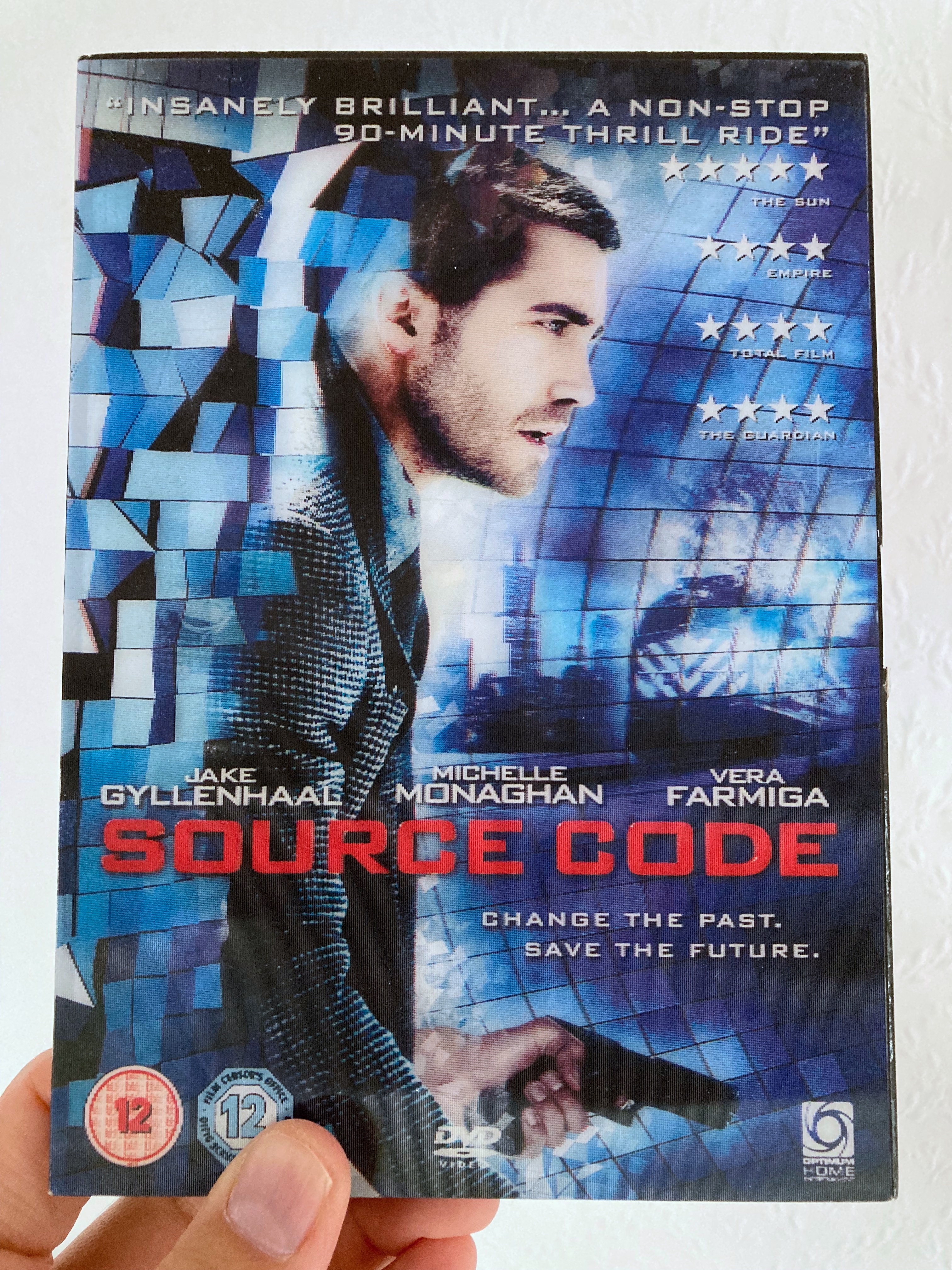
Source Code (2011)

Mind-bending sci-fi thriller. 

The plot is extremely difficult to summarise, but here goes: a U.S. Army Captain Colter Stevens (Jake Gyllenhaal) finds himself on a train journey into Chicago. The eight minutes that he experiences ends in a terrorist explosion that kills all of the passengers on board. He is forced to relive the same eight-minute stretch of time again and again until he can find the bomber and prevent the disaster. Meanwhile, in the intervals between each attempt he comes to in what seems like a helicopter cockpit, where he is advised and manipulated by a mysterious military unit led by Vera Farmiga and Jeffrey Wright, who need him to succeed in his mission to prevent a series of even worse terrorist incidents. 

In narrative terms there’s a Groundhog Day element – the idea of repeating the same moments until you get them right – but the tone and feel are completely different. This is tense, taut and suspenseful, with a humanity that makes it more appealing than you might expect a tech thriller to be. 

Michelle Monaghan plays the woman he’s sat opposite on the train, who he falls for and wants to save. It’s complicated but the storytelling is excellently handled and it’s far more lucid than the summary above might suggest.

In 2018, Very Farmiga would show up again in an oddly similar train-terrorist thriller called The Commuter.

The Ides of March (2011)

Political drama adapted from Beau Willimon’s play Farragut North. It’s directed by George Clooney, who plays a liberal-minded governor running for president. Stephen Meyers (Ryan Gosling) is his junior campaign manager, reporting to the skilled but cynical Paul Zara (Philip Seymour Hoffman). And Evan Rachel Wood is the young intern whose affair with the governor threatens to bring down the entire campaign. 

It’s a fascinating insight into the politics behind the politics. Because it’s from a play, it’s strong on dialogue and character. There’s an escalating tension that’s brilliantly handled by everyone involved. There’s a theme about idealism being eroded by the cynical realities of the political system, and Gosling is superb as a representation of that conflict. Also at their best are Paul Giamatti as a rival campaign manager, Marisa Tomei as a reporter for the New York Times and Jeffrey Wright as the Democratic Senator from North Carolina.

Midnight in Paris (2011)

Charming Woody Allen comedy-drama about an American screenwriter and would-be novelist named Gil Pender (Owen Wilson) on holiday in Paris with his rather superficial fiancé Inez (Rachel McAdams) and her insensitive parents. 

While Gil begins to feel distant from Inez, with whom he evidently has little in common, he finds himself transported to the Paris of the 1920s that he idealises so much. Indeed, every night he travels back in time and begins to mingle with notable Bohemians and artists including F. Scott Fitzgerald, Zelda Fitzgerald, Ernest Hemingway, Gertrude Stein, Salvador Dalí and so on. Should he stay in the past, or is it just a nostalgic distraction from what’s really important in the present?

It’s remarkable how much Owen Wilson takes on the “Woody Allen-type character”. Even his speech patterns and mannerisms are Allen-esque.

If you can accept the fantasy/time travel premise, there’s plenty to enjoy. The film asks some interesting philosophical questions but never becomes too serious or ponderous. There are roles for Carla Bruni and Lea Seydoux as well as Michael Sheen, Kathy Bates and others.

Larry Crowne (2011)

Strange – and strangely enjoyable – romantic comedy that’s neither especially funny nor romantic. 

Tom Hanks plays a middle-aged man who loses his job and goes to college to educate himself. There, he develops a friendship with a much younger woman (Gugu Mbatha-Raw) and also with his teacher (Julia Roberts). Both of these relationships transform him. Before long, he’s riding a scooter with a gang, wearing more fashionable clothes and sporting a less fusty haircut. 

It’s odd because the tone is so unusual. Parts of it are like a gentle drama. There’s subtle wit, but it doesn’t really emerge until the second half – and even then there are few laughs. Also, there are elements of the story that simply don’t ring true. 

But Hanks and Roberts are appealing and you find yourself rooting for them to get together, so the film must be doing something right. I found myself liking it a lot, despite not thinking it quite worked.