Showing posts with label Starring: Oscar Isaac. Show all posts

A Most Violent Year (2014)

Excellent thriller directed by J. C. Chandor and set in the early 1980s. 

Oscar Isaac stars as a New Yorker whose business – selling oil – is threatened by corruption and violence. Jessica Chastain plays his tough wife – a complex, brilliantly drawn character, whose father has a dubious criminal background. 

It has a Martin Scorsese feel and the choice of urban locations is superb. The title doesn’t quite work, though, as it could be applied to countless other thrillers.

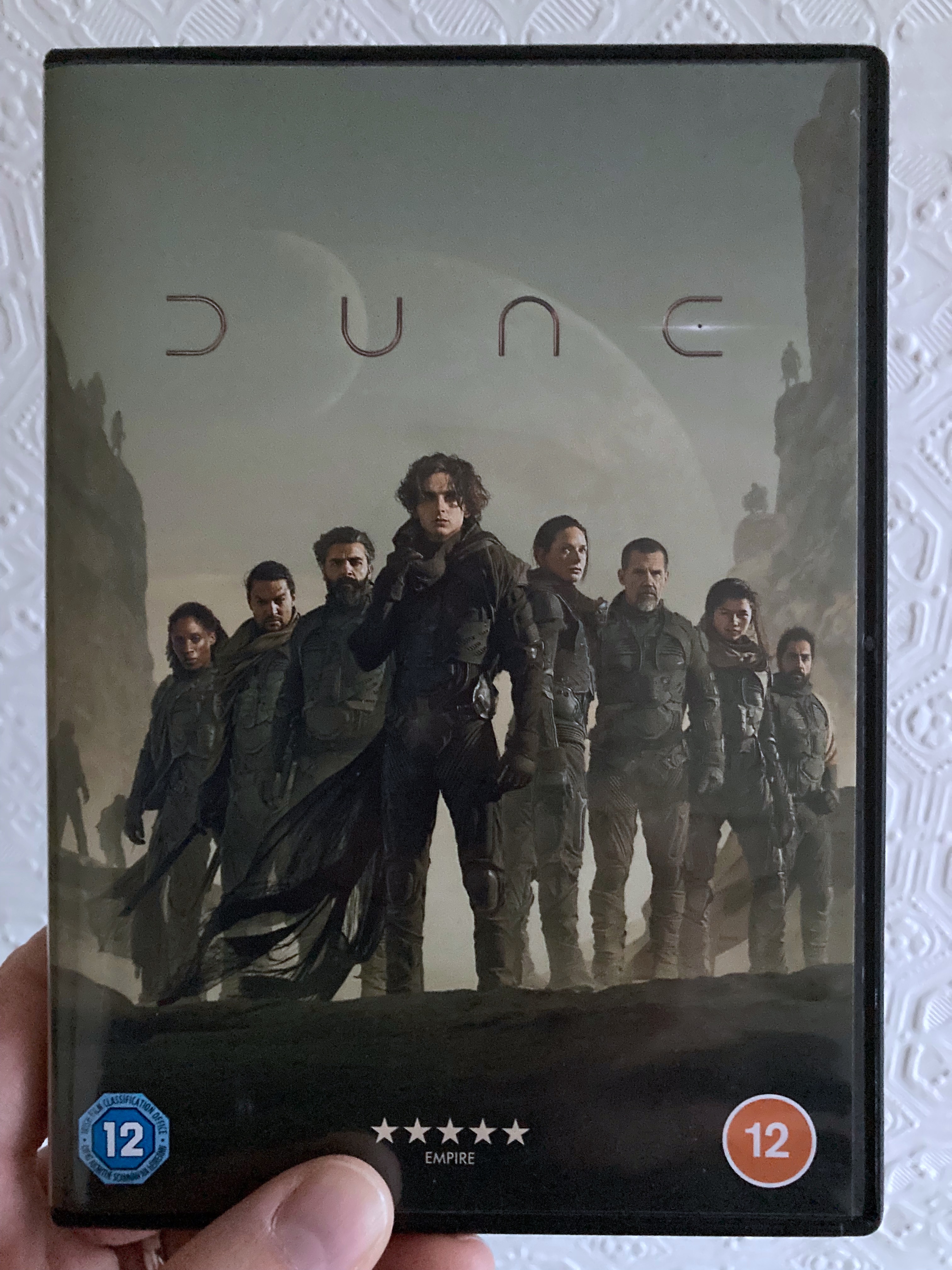
Dune: Part One (2021)

Denis Villeneuve’s remake of the Frank Herbert novel previously filmed by David Lynch. It’s certainly more coherent than the Lynch version, but some of the wild imaginative magic of that film has been lost. Instead, everything looks great, and is incredibly epic, but it comes across as rather ponderous. Every word or sentence uttered seems intended to carry great gravitas, and sometimes you wish there was a little more life in the drama. That said, the spectacle is remarkable and the vast planetscapes are undeniably impressive.

Timothée Chalamet seems oddly weedy as Paul Atreides, but that’s presumably the point. He’s young and naive but carrying the potential of greatness, and he grows in stature as the film progresses. Better is Rebecca Ferguson as his mother and Oscar Isaacson as his father. Josh Brolin and Charlotte Rampling have small, but important parts, but seem somewhat underused. 

The second part will be released in 2024.

The Two Faces of January (2014)

Directed by Hossein Amini, this is an absolutely stunning thriller adapted from the 1964 novel by Patricia Highsmith. 

It’s 1962. American con artist Chester MacFarland (Viggo Mortensen) and his wife Colette (Kirsten Dunst) are holidaying in Greece, when MacFarland’s criminal past catches up with him. Desperate and needing to flee, the couple team up with Rydal Keener (Oscar Isaac), an American tour guide who himself is a conman, albeit on a far smaller scale. But Rydal’s motivations are ambiguous – he has designs on Colette, while seeing Chester as a reminder of the father he recently lost. 

The exciting plot consistently ramps up the tension as the fortunes of the three become more and more entangled. 

It’s brilliantly directed: every shot is expertly framed for maximise the drama. 

The soundtrack by Alberto Iglesias is uncannily well suited to the action. 

It’s an admirably short film at 97 minutes: taut and perfectly paced.

Body of Lies (2008)

Intelligent Ridley Scott CIA thriller that’s extremely gripping. 

The CIA operative on the ground is Leonardo DiCaprio and his superior is Russell Crowe. They are attempting to track down a terrorist called al-Saleem. 

Mark Strong plays the head of Jordanian Intelligence. Oscar Isaac is a CIA field operative in Iraq. And Rahavard Farahani plays a nurse who DiCaprio falls for and thus endangers. 

All of these actors are superb in their roles. 

It’s a complex web of connections and locations. It’s extremely violent for a “15”, with scenes of torture and close-ups of shootings. The use of drone-sourced visuals gives it an appealing tech-heavy feel.

The Bourne Legacy (2012)

Intriguing attempt to try something a little different with the Bourne series while still taking it forwards. Matt Damon isn’t in this fourth film, but the narrative is built around his actions in the first three. It’s cleverly woven into the earlier plots while essentially just recycling them. This time Jeremy Renner is the agent on the run, assisted by Rachel Weisz – one of the doctors who had been “programming” him. There’s plenty of action (the chase scene in Manila goes on for an improbably long time), but there’s also a more “human” dimension in the form of the developing Renner/Weisz relationship. 

They could have had more fun with the title: how about Bourne to Run, I Wasn’t Bourne Yesterday or Bourne to Be Wild?

Drive (2011)

A disturbing thriller.

Ryan Gosling plays a getaway driver who becomes mixed up in a crime involving the husband of his neighbour (Oscar Isaac and Carey Mulligan respectively). After a brooding, menacing start, it turns very, very violent indeed. Gosling seems superbly intense in the lead, initially, but his character development takes him down a path that means you can no longer identify with him.

I found the violence somewhat gratuitous. I know that violence was in many ways the subject of the film, but a couple of the scenes were horrifically drawn out in a way that they really didn’t need to be. It was difficult to know what I was supposed to take away from it.

On the plus side, the driving sequences were exciting and the locations were well chosen. Gosling and Mulligan had a certain chemistry, too. There are echoes of Taxi Driver, but it doesn’t have the consistent logic or magnetic pull of that masterpiece.

Inside Llewyn Davis (2013)


I really disliked this Coen Brothers so-called “comedy drama” about a folk singer in New York in 1961.
1. It looks horrible: washed-out and grey – just not a visual treatment I can enjoy. I understand that this was meant to mirror a washed-out and grey existence, but it felt heavy-handed and self-conscious.
2. Everyone and everything was made as ugly as possible. Why?
3. With the exception of Oscar Isaac as the character in the film title, no one was likeable in any way.
4. There’s an entirely superfluous sub-plot about a road trip to Chicago that promises lots and goes absolutely nowhere.
5. I have an aversion to John Goodman. He’s always the same in everything he does and he’s never as funny as he’s meant to be. Just the same annoying tics. 
6. The comedy in general was extremely weak. No laughs, or even wry smiles, and opportunities to satirise were overlooked.
7. Unfortunately, the drama was weak also – mainly because of point 3, above.
8. Carey Mulligan’s character was so objectionable that you couldn’t care in the slightest about her problems.
9. There’s something deeply soporific about it – the long, ponderous performance scenes and the consistently unsparkling dialogue. Even the endless swearing lacked impact.
10. The directors take a fascinating time and place in American history and crush all the life out of it. Or as Suzanne Vega stated: “I feel they took a vibrant, crackling, competitive, romantic, communal, crazy, drunken, brawling scene and crumpled it into a slow brown sad movie.” The arrival of Bob Dylan at the end to usher in a new era was too little too late.

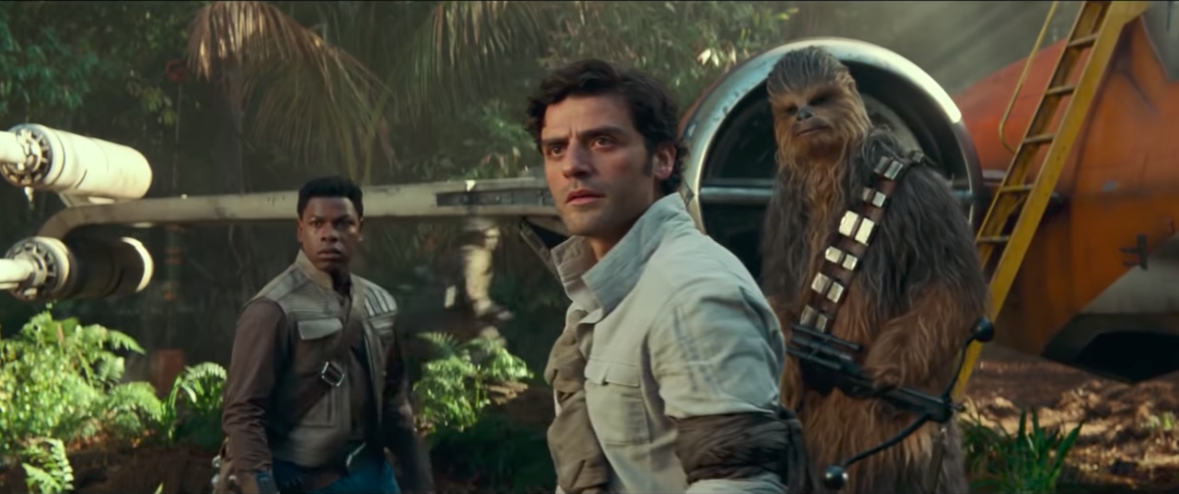
Star Wars Episode IX: The Rise of Skywalker (2019)


The last of the sequel trilogy had a lot to deliver, resolving not only the new sequence of films but also the entire saga. Did it achieve that? Well, sort of. Mostly.

It offers such a rich visual feast and a fairly full-on narrative. So much happens so quickly and there's a lot to take in. Unlike with Episode VIII, there’s no filler. The characters are stronger – there’s a warm feeling of “the old gang back together” – and the weaker ones from the last film (such as Rose) had been minimised.

Although the overall story worked, the plot was flawed in many ways:
• It's ludicrous to think of Palpatine (Ian McDiarmid) having a wife and children, not to mention how he cheated death and came back to life (an increasingly common trick in Star Wars).
• General Hux (Domhnall Gleeson) being the spy was too convenient and unlikely. Couldn’t Kylo Ren (Adam Driver) sense who was betraying him? He had pretty much every other power imaginable.
• Fin (John Boyega) suddenly developing Force sensitivity somewhat cheapens that power. Can anyone have it now? Perhaps it was just to give him more of a reason to exist, but I still think his character could have been combined with that of Poe Dameron (Oscar Isaac).
• There’s a conspicuous lesbian kiss (seen among the celebrating Resistance fighters) for no apparent reason. This seems like a right-on gesture with no grounding in the plot logic.
• Even given the ending, in which Rey decides to consider Luke and Leia her true parents, the title made little sense.

Those points aside, there was a vast amount to enjoy. Daisy Ridley was compelling as Rey and the complicated love story between her and Kylo Ren makes for a strong central theme.

I was surprised how much Carrie Fisher was in it, given that she died before filming – presumably a “deep fake” scenario rather than a repurposing of unused footage. Wasn’t expecting to see Harrison Ford, either.

It was lovely to see a couple of Ewoks and a relief that there were no Gungans.

There were a few laughs – mainly banter from Poe.

The big “surprise” (unless you’d seen the trailer) return of Billy Dee Williams as Lando Calrissian was superfluous, but presumably they felt they needed everyone they could get from the old films.

It goes without saying that the effects were incredible. I loved it when Palp sent force lightning up into space.

All in all, a hugely entertaining romp.

Robin Hood (2010)


As with Gladiator, Ridley Scott directs and Russell Crowe is the main man. But the magic of that earlier film is not repeated.

It’s England in 1199 and there’s intrigue afoot, with a knight conspiring against King John of England (Oscar Isaac) with King Philip of France. Chaos and conflict ensue.

Rather than a simple tale of Robin Hood and his merry men, this is a fairly “serious” historical-drama treatment that deliberately veers away from the almost-pantomime silliness of the usual story – despite shoehorning in a lame, tokenistic Friar Tuck.

For a lengthy and sometimes complex film, there’s too little explanatory material and sometimes the narrative signposting is unclear. The motivations of Sir Godfrey (Mark Strong) and Sir Walter Loxley (Max von Sydow) aren’t always evident.

Ridley Scott’s usual visual flair is on display (he’s particularly expert at large, intense battle scenes), but it lacks Gladiator’s “special” factor – perhaps because Scott takes on too much at the expense of a single, cohesive story. The film attempts to detail the Robin Hood legend, retell a slice of actual English history and develop a credible romance scenario. Cate Blanchett makes for a refreshingly tough Maid Marian and seems to have real chemistry with Crowe, so I would have preferred more of their relationship and less messy muddying of myth and reality.

Crowe is always highly watchable but his constantly changing accent – did he think he was from Scotland, Northern Ireland or Yorkshire? – was a distraction.

The plot seemed to be setting up a sequel (Robin Hood only becomes the outlaw figure of legend in the closing minutes), but – several years later – that’s looking less and less likely.

Star Wars Episode VII: The Force Awakens (2015)


In the safe hands of director J.J. Abrams, this cleverly continues the Star Wars saga while simultaneously acting as a sort of franchise reboot. There are so many elements repeated from previous films – important message carried in droid, seedy bar with exotic species from across the galaxy, deadly battle station with deadly super-weapon, evil regime battled by small resistance group, person falling into deep shaft, having to blow up something huge to save the galaxy – that it seems like a homage to the original trilogy. But there are exciting new elements, too – a welcome greying of the simplistic good vs. evil extremes of yore, some charming, unexpected character-based wit emerging from the dialogue and a believably “real” visual quality we haven’t seen before. Harrison Ford plays the now-elderly Han Solo and surprisingly seems one of the weaker elements in the film – a slightly ridiculous figure. Encouragingly, however, Episode VII ushers in a credible new generation of characters and actors – Daisy Ridley as the plucky Force-sensitive Rey, Oscar Isaac as the handsome resistance pilot Poe and Adam Driver as the “new Darth Vader” Kylo Ren. The latter is especially watchable, with his temper tantrums and visibly conflicted feelings. 

All in all, it’s a rich and rewarding step forwards – and sideways – for a series that (after the prequels) badly needed this kind of care and attention.