Showing posts sorted by relevance for query Chicago. Sort by date Show all posts

The Lake House (2006)

Romantic drama directed by Alejandro Agresti. It's a new version of the South Korean film Il Mare (2000).

Sandra Bullock is a doctor called Kate. Keanu Reeves is an architect called Alex. The pair fall in love. The problem is that Alex lives in 2004, while Kate lives in 2006.

They communicate through letters left in the mailbox of a lake house in Chicago, somehow bridging the two-year gap but without being able to meet.

Trying to work out the various time/space concepts made my head hurt. It’s great that the film makes you think, but this tends to be at the expense of the storytelling. I wanted to focus on the relationship between the couple, and not get bogged down by the dodgy science. Other films, such as Back to the Future, deal with the conceptual stuff much more neatly so that it can be moved out of the way and not distract from the plot.

Another flaw is that – by definition – too much of the film has to show the two characters alone, talking to themselves. The best moments are those rare occasions when we actually see the pair together – or nearly together.

I really enjoyed The Lake House despite the fact that it fundamentally doesn’t work. Thankfully, Bullock is great, whatever she’s in, and she raises an average drama to something well worth watching – as long as you don't ask any questions.

Casino (1995)

Lengthy, sometimes dense and extremely violent Martin Scorsese crime thriller. 

Robert De Niro and Joe Pesci play mafia men sent from Chicago to Las Vegas, scamming money off a casino’s profits for the bosses back home. They become rivals and enemies, which is a problem because Pesci’s character is essentially a psychopath. Meanwhile, Sharon Stone is an ex-prostitute who marries De Niro but is still attached to her pimp boyfriend played by James Woods.

It’s similar to Goodfellas in terms of subject matter and tone, but that film is far more appealing because it has a character you can relate to. There’s no one in Casino that you can identify with at all. Also, the violence is really disturbing – especially the head-in-a-vice and buried-alive scenes. I’m not sure I will ever get those images out of my mind.

The use of music was a little excessive. Countless great songs are jammed in, which is fun, but sometimes it's at the expense of light and shade. I craved a little more space.

De Niro is as good as ever, but it remains a flawed film that seems like it could have been a masterpiece and somehow didn’t turn out that way.

Backdraft (1991)

Chicago in 1971. Two brothers lose their fireman father when he is killed on duty. Twenty years later they are both firemen too and find themselves working within the same division, as resentful older brother Stephen (Kurt Russell) starts to train younger brother Brian (William Baldwin). 

Robert De Niro plays the Inspector of Fire Investigation. Donald Sutherland is a serial arsonist who wants to burn down the entire world. Jennifer Jason Leigh plays Brian’s former girlfriend (it seems inappropriate to write “old flame”). And Rebecca De Mornay is Stephen’s estranged wife. 

Ron Howard’s film has plenty of drama, and the fire scenes are scary. It’s a tale of two brothers that sometimes suffers from the fact that neither is especially likeable. In fact – with the possible exception of De Niro – that goes for everyone in it.

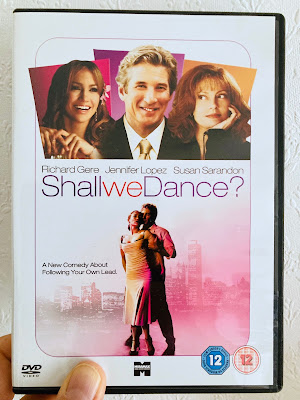
Shall We Dance? (2004)

Romantic comedy drama. 

Richard Gere plays a Chicago lawyer who feels a little jaded with life, despite his successful career and his lovely wife (Susan Sarandon). He secretly takes up dancing, inspired by a moody-looking dance instructor (Jennifer Lopez) he sees from his train window while commuting. He’s also encouraged by his work colleague (Stanley Tucci), who reassures him (and presumably the male viewers) that it’s “OK” for straight men to dance. 

It’s a lightweight piece of fluff with plenty of charm. Director Peter Chelsom handles the dance scenes extremely well. The script is adequate-to-good, with the best lines going to Sarandon. She memorably describes love as the idea of bearing witness to a life that might otherwise go unnoticed

Only Lopez lets the side down. She acts “troubled” but – other than being able to dance – brings little depth to the role.

Inside Llewyn Davis (2013)


I really disliked this Coen Brothers so-called “comedy drama” about a folk singer in New York in 1961.
1. It looks horrible: washed-out and grey – just not a visual treatment I can enjoy. I understand that this was meant to mirror a washed-out and grey existence, but it felt heavy-handed and self-conscious.
2. Everyone and everything was made as ugly as possible. Why?
3. With the exception of Oscar Isaac as the character in the film title, no one was likeable in any way.
4. There’s an entirely superfluous sub-plot about a road trip to Chicago that promises lots and goes absolutely nowhere.
5. I have an aversion to John Goodman. He’s always the same in everything he does and he’s never as funny as he’s meant to be. Just the same annoying tics. 
6. The comedy in general was extremely weak. No laughs, or even wry smiles, and opportunities to satirise were overlooked.
7. Unfortunately, the drama was weak also – mainly because of point 3, above.
8. Carey Mulligan’s character was so objectionable that you couldn’t care in the slightest about her problems.
9. There’s something deeply soporific about it – the long, ponderous performance scenes and the consistently unsparkling dialogue. Even the endless swearing lacked impact.
10. The directors take a fascinating time and place in American history and crush all the life out of it. Or as Suzanne Vega stated: “I feel they took a vibrant, crackling, competitive, romantic, communal, crazy, drunken, brawling scene and crumpled it into a slow brown sad movie.” The arrival of Bob Dylan at the end to usher in a new era was too little too late.

The Blues Brothers (1980)

Directed by John Landis, this is a remarkable blend of comedy, musical, road-trip saga, crime caper and love letter to Chicago. It’s rightly seen as a classic. There’s absolutely nothing else like it.

Brothers Jake (John Belushi) and Elwood (Dan Ackroyd) need to raise money to save an orphanage, so they plan to get their old band together – the Blues Brothers – to play a fundraising gig. The problem is that they are being pursued by the police, a country band, a bunch of Nazis and Jake’s angry girlfriend (Carrie Fisher). 

The action sequences are astonishing, with a huge number of police cars being trashed in the chase scenes. 

It’s especially notable for the song performances by jazz, soul and blues stars James Brown, Cab Calloway, Ray Charles, John Lee Hooker and Chaka Khan. There are also acting roles and brief cameos for John Candy, Frank Oz, Steven Spielberg and – bafflingly – Twiggy. 

It’s so good-natured and silly that it quickly wins you over. You end up rooting for these two daft men “on a mission from God” despite the inevitability that they are heading for disaster.

The Sting (1973)

Classic caper set in Chicago in 1936. 

Johnny Hooker (Robert Redford) is a petty criminal whose conman partner is murdered by Doyle Lonnegan (Robert Shaw), a much more powerful criminal. Hooker seeks his revenge and teams up with Henry Gondorff (Paul Newman) to trick Lonnegan out of his money. 

The twists and turns of the plot are complex, so you really need to pay attention. In a couple of places I found it too far-fetched, but wasn’t going to let that spoil it.

The chemistry of the two leads is clearly evident, with Redford in particular exuding magnetism, but I still preferred seeing their interplay in Butch Cassidy and the Sundance Kid (1969).

Robert Shaw is brilliant as the brooding villain who walks with a slight limp.

Scott Joplin’s ragtime piano music adds a playful, colourful quality to the action, neatly framing this somewhere between crime film and comedy-drama.

Some Like It Hot (1959)


An absolutely wonderful comedy classic. Tony Curtis and Jack Lemmon are the musicians who have to impersonate women to escape Prohibition-era gangsters. Marilyn Monroe is the singer and ukulele player in the all-girl band they join in order to flee Chicago.

It’s very, very funny and the slapstick is perfectly timed. Curtis and Lemmon make it work because they through themselves so completely into pretending to be women. The most amusing moment is probably the sequence on the train after lights-out when an absurd number of girls cram themselves into Jerry's tiny bunk for a secret party.

Monroe is perfect as Sugar Kane. There are stories of her being unable to remember her lines on set, but her performance is so natural and charming that it’s hard to believe.

While You Were Sleeping (1995)

Described as a romantic comedy, this OK film directed by Jon Turteltaub isn’t really funny at all. 

Sandra Bullock stars as Lucy, a Chicago Transit Authority token collector. She has a crush on a commuter, Peter (Peter Gallagher), who she sees every morning. One day he’s pushed in front of a train and she saves his life. He goes into a coma, and in a blaze of confusion she allows Peter’s family to believe she’s his fiancé. But then she starts falling in love with Peter’s brother (Bill Pullman). 

Whenever Bullock is on screen, she shines. Pullman is also pretty good. The problem is the ensemble case of family and friends – poorly drawn characters with too much screen time. It’s just not very well written. For example, when Peter’s actual fiancé shows up you expect all sorts of amusing misunderstandings, but that event is thrown away and a potentially interesting plot thread merely fizzles out.

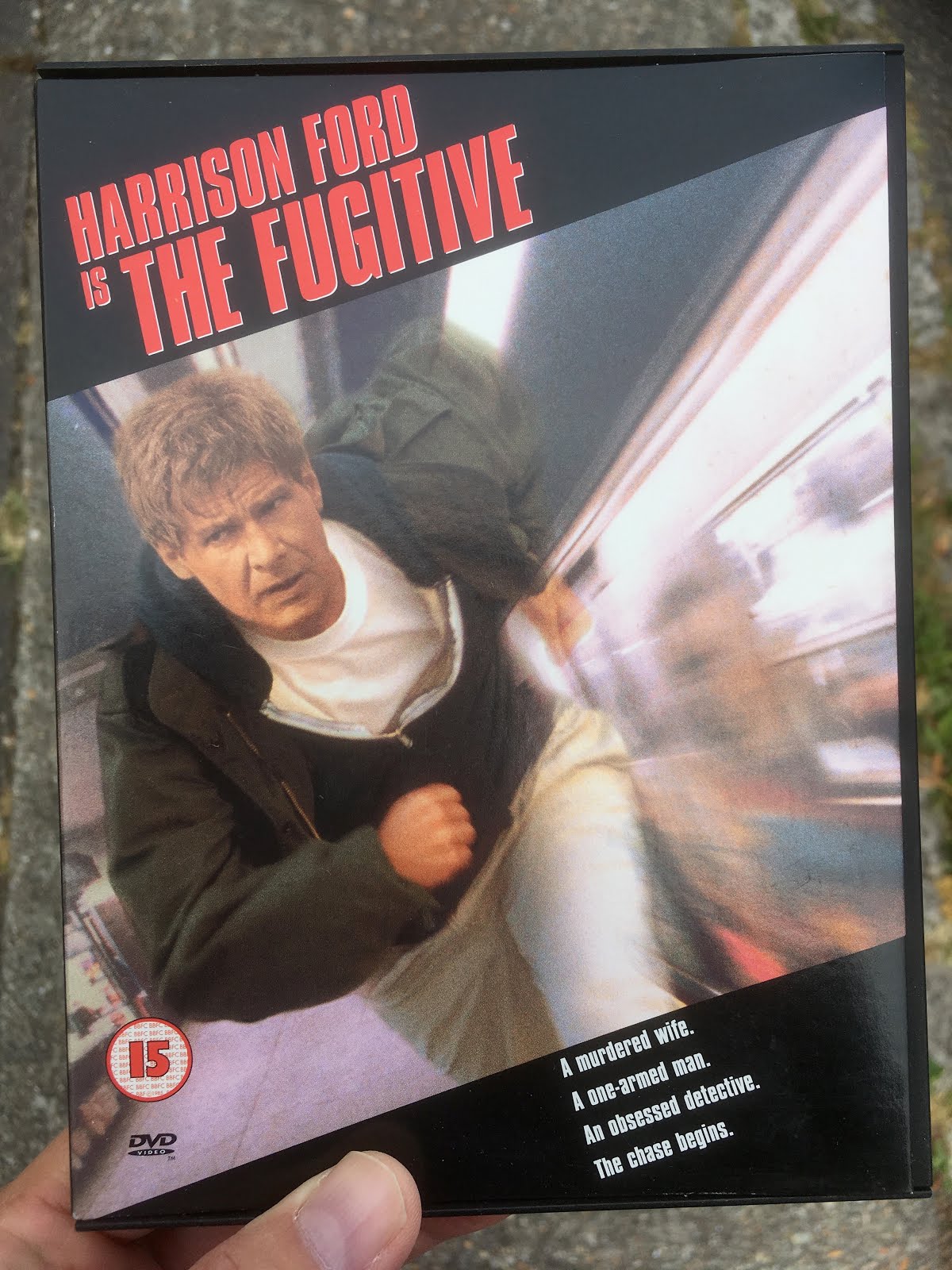
The Fugitive (1993)


Harrison Ford is highly watchable as the smart Chicago doctor Richard Kimble, on the run after being wrongly accused of murdering his wife. Tommy Lee Jones is credible as the tough US marshall on his trail. It could have been awfully clichéd, but somehow ends up refreshing and compelling throughout. I especially liked the hair-raising “dam” sequence.

Return to Me (2000)

Chicago architect Bob Rueland (David Duchovny) loses his wife (Joely Richardson) in a car accident. Her heart is donated to an artist named Grace (Minnie Driver), who would otherwise have died. A year later, Bob and Grace meet by coincidence, and – without realising what connects them – begin to fall in love. 

It’s a strange film – not quite a rom-com and not really a drama, either. There are too many extra characters of little consequence. For example, Grace lives with her Irish grandfather (Carroll O’Connor), who owns an Italian restaurant and socialises with his friends. There’s quite a bit of these elderly men sitting around playing cards and talking about Frank Sinatra or Dean Martin. We also get to see a lot of Grace’s friend Megan (Bonnie Hunt, who also directed) spending time with her husband (James Belushi) and their children. There’s also too much about Bob’s dog (and even the boy who helps look after Bob’s dog). Plus, there are threads about painting, gardening and antique bicycles. A further dimension comes from the gorilla sanctuary that Bob’s wife worked at and which he helps to expand and redevelop to honour her life’s work. 

All of these bitty elements don’t add up to much. But when Duchovny and Driver are on screen together, it works. You just wish they had been allowed more screen time as a couple, and with less of the unfunny silliness that surrounds them.

Footloose (1984)


Ren McCormack (Kevin Bacon) is a Chicago teenager who comes to the town of Bomont, Utah, where rock music and dancing have been banned and the oppressive rule of the troubled local minister (John Lithgow) imposes rigid, puritanical social control. Ren falls for the minister’s daughter, Ariel (Lori Singer, who I had a major crush on when she was the cellist in the Fame TV series), and gets the town dancing again.

Music is given prominence throughout, and in some ways it’s merely a glorified pop video, but actually there’s much more going on. If you can see past the product placement (Coca Cola appears in countless scenes), there’s a very interesting drama unfolding. The theme of small-town repression is explored in depth. There’s also a thread about violence against women, with Lori Singer being hit by two different men.

For once, there’s no obsession with social climbing. Instead, the film proposes that self-expression is the path to liberation. Dancing to music really can set you free.

The Untouchables (1987)

Brian De Palma’s historical crime drama is set in 1930 in Chicago, where gangster Al Capone (Robert De Niro) is running various illegal rackets during Prohibition. The cops are in on them, too. But federal treasury officer Eliot Ness (a handsome Kevin Costner) forms a tiny group of men he can trust (played by Sean Connery, Andy Garcia and Charles Martin Smith) to take on and stamp out corruption. 

It’s an engaging story, but a few flaws stop it being remarkable:

1. The very “1980s” music by Ennio Morricone is impressive in places, but is sometimes used jarringly. For example, a crucial encounter at the Canadian border is accompanied by “adventure” music that completely undercuts any dramatic tension that has been built up. I think of this as “Steven Spielberg syndrome” – see Jaws.

2. There are points at which it seems like an episode of The A-Team in the slightly sentimental way it assembles a gang of diverse “good guys against the world” – even though this apparently really did happen, albeit with a slightly larger gang. The fact that one of them is a nerdy accountant who conveniently happens to be handy with a shotgun makes it a little harder to take seriously. 

3. There’s something awkward and not-quite-right about Patricia Clarkson as Kevin Costner’s wife. Or maybe her role is just underwritten. Plus, the way the script (by David Mamet) focuses on Eliot’s loyalty to his wife and daughter leads you to think they will end up playing a greater part in the story (kidnapped or murdered) than they ever do. 

4. The motivation of Jimmy Malone (Connery) is unclear. Why does he risk everything to help Costner? Why is he so morally upstanding when all the other policemen are crooked? And what’s going on with his Irish-Scottish-American accent?

These points aside, it’s highly enjoyable. De Niro is reassuringly nasty as Capone, gaining weight especially for the role, and Kevin Costner surprises by being highly watchable. Plus, there’s a particularly dynamic scene set in Union Station that involves a mother with a pram being caught in a crossfire.

Airplane! (1980)

Spoof disaster film that’s extremely funny. As with others in this series (see also The Naked Gun), no joke is considered too silly or too childish to be worth making. And there are a lot of them, too – a relentless sequence of gags – so I was laughing almost continuously.

The “plot” is almost irrelevant (mostly it’s just an excuse for the jokes), but it details how veteran fighter pilot Ted Striker (Robert Hays) and his air-hostess girlfriend Elaine (Julie Hagerty) have to safely land a plane after the crew and passengers suffer food poisoning on a flight from Los Angeles to Chicago. To complicate matters, Striker is “troubled” by his war experiences, and has a “drink problem” (he can’t locate his mouth when he raises his glass). Plus, Elaine has just broken up with him and he’s trying to win her back.

Leslie Nielsen is easy to love as the hopeless Dr. Rumack. In fact, the entire cast is superb. There is so much rich comic detail that you could watch it again and again.

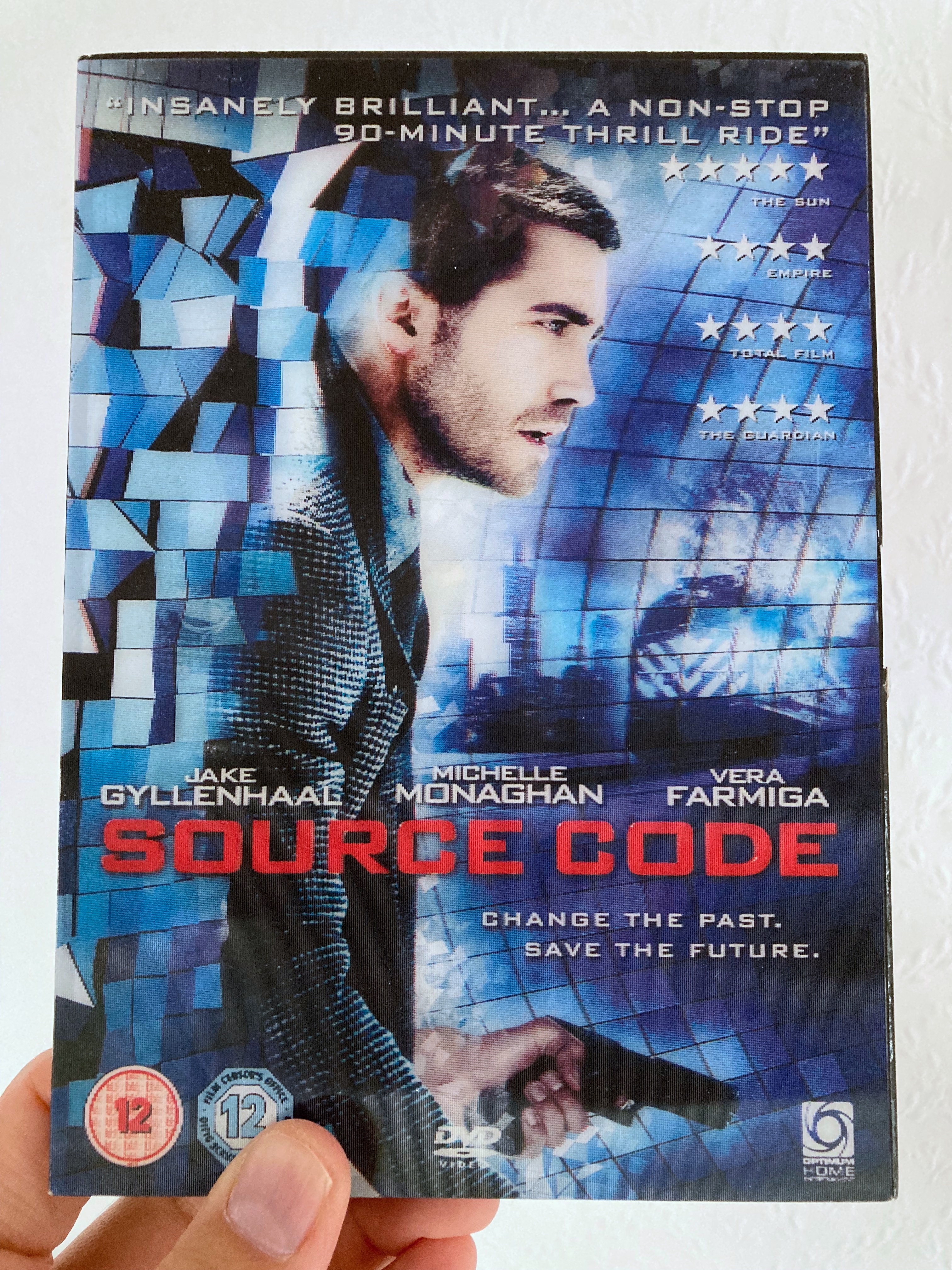
Source Code (2011)

Mind-bending sci-fi thriller. 

The plot is extremely difficult to summarise, but here goes: a U.S. Army Captain Colter Stevens (Jake Gyllenhaal) finds himself on a train journey into Chicago. The eight minutes that he experiences ends in a terrorist explosion that kills all of the passengers on board. He is forced to relive the same eight-minute stretch of time again and again until he can find the bomber and prevent the disaster. Meanwhile, in the intervals between each attempt he comes to in what seems like a helicopter cockpit, where he is advised and manipulated by a mysterious military unit led by Vera Farmiga and Jeffrey Wright, who need him to succeed in his mission to prevent a series of even worse terrorist incidents. 

In narrative terms there’s a Groundhog Day element – the idea of repeating the same moments until you get them right – but the tone and feel are completely different. This is tense, taut and suspenseful, with a humanity that makes it more appealing than you might expect a tech thriller to be. 

Michelle Monaghan plays the woman he’s sat opposite on the train, who he falls for and wants to save. It’s complicated but the storytelling is excellently handled and it’s far more lucid than the summary above might suggest.

In 2018, Very Farmiga would show up again in an oddly similar train-terrorist thriller called The Commuter.