Showing posts with label Year: 2005. Show all posts

A History of Violence (2005)

Thriller directed by David Cronenberg. 

An “ordinary” American, Tom Stall, works in a cafe in a small town. One day, a pair of crooks come in and threaten him and his staff. With what might be pure luck or uncanny combat skills, he quickly dispenses with them and is celebrated as a hero by the town. But then some gangsters show up in the same diner and appear to know Tom. Is this just a case of mistaken identity or does he have a troubling and mysterious past?

Viggo Mortensen stars, bringing depth to a complicated part. His wife is played brilliantly by Maria Bello in a fully rounded role. Ed Harris plays the sinister criminal whose appearance changes everything. 

There’s strong suspense and – as the title implies – a fair bit of blood. Cronenberg explores the nature of identity and violence, and the impact they have on family life. 

It's a scary and compassionate drama.

Derailed (2005)

Engaging but in places extremely far-fetched thriller.

Clive Owen meets Jennifer Aniston on a train and they begin a passionate fling. In a hotel room, the pair are attacked by Vincent Cassel (who only seems to play baddies), who then blackmails Clive Owen for money in exchange for not telling his wife about the infidelity. So Clive has to spend his life's savings, put aside to care for his sick daughter...  

It’s an enjoyable twist-filled tale, even if it begins to stretch credibility in the final sections. Owen is always charming, and he is excellent with the limited material. Aniston is better than expected – or rather, at least she’s not merely reprising Rachel from Friends

On the downside there is a silly character played by rapper RZA, and Clive Owen’s wife played by Melissa George is sketchy and unconvincing.

Hide and Seek (2005)

Psychological thriller directed by John Polson.

New York psychologist Dr. David Callaway (Robert De Niro) finds his wife dead in the bathtub, after what seems like a suicide. David takes his nine-year-old daughter Emily (Dakota Fanning) to upstate New York, where they can live in a big spooky house miles from anywhere. But when Emily makes friends with “Charlie”, who may or may not be imaginary, events quickly take a sinister turn... 

While De Niro is somewhat wasted in the role, it’s a tense drama with horror tropes and it keeps you guessing until the big reveal towards the end.

The Weatherman (2005)

Extremely downbeat drama with flashes of comedy. 

Nicolas Cage plays a TV weatherman having problems with his dying father (Michael Caine), estranged wife (Hope Davis) and unhappy children. He’s also having a sort of midlife crisis, and members of the public who recognise him keep throwing junk food at him. 

It’s whimsical and engaging but you wish it was funnier. Michael Caine’s dodgy American accent is a distraction. Cage and Davis are both excellent, however, and the film gains gravitas as it progresses. 

It’s a deeply sad story. Cage’s character seems such a nice guy that you’re completely on his side even as everything seems to go wrong around him.

Flightplan (2005)

Taut thriller directed by Robert Schwentke and later seemingly echoed by Non-Stop (2014). 

The oddly named Kyle Pratt (Jodie Foster) is a recently widowed aviation engineer. She is transporting her husband’s body from Germany back to the USA, with her six-year-old daughter Julia, travelling on a plane she herself helped to design. When Kyle wakes from a sleep, her daughter has gone missing. Has she been kidnapped? Or is Kyle delusional? Was Julia ever actually on the flight? And if she was, how can anyone go missing on a plane anyway?

The film is stylishly filmed, with some refreshingly unusual angles and visual treatments. The luxurious-but-claustrophobic environment is expertly rendered in the set design. It avoids cliché, and – unusually – even the slow-motion sequences work. Always watchable, Foster is good in “anxious mother” and “tech expert” modes. 

The ageless Sean Bean plays the pilot. Peter Sarsgaard plays a somewhat creepy air marshall. Greta Scacchi has a brief and slightly odd role as a therapist. 

Unfortunately, there are at least three major plot holes, which could have been avoided with slightly more sophisticated writing. But if you try not to think about them, it’s a hugely enjoyable film that keeps you hooked until the end.

Lord of War (2005)

Written, produced, and directed by Andrew Niccol, this is a superb crime drama with flashes of black comedy. 

Nicolas Cage plays Yuri Orlov, an arms dealer who becomes hugely successful while turning a blind eye to the damage caused by the weapons he sells. He has a cocaine-addicted brother (Jared Leto) and a fashion-model wife (Bridget Moynahan). Meanwhile, he is being pursued by Interpol agent Jack Valentine (Ethan Hawke).

The deadpan, almost satirical quality gives the subject matter even greater gravitas. 

There’s a remarkable opening sequence filmed from the perspective of a bullet.

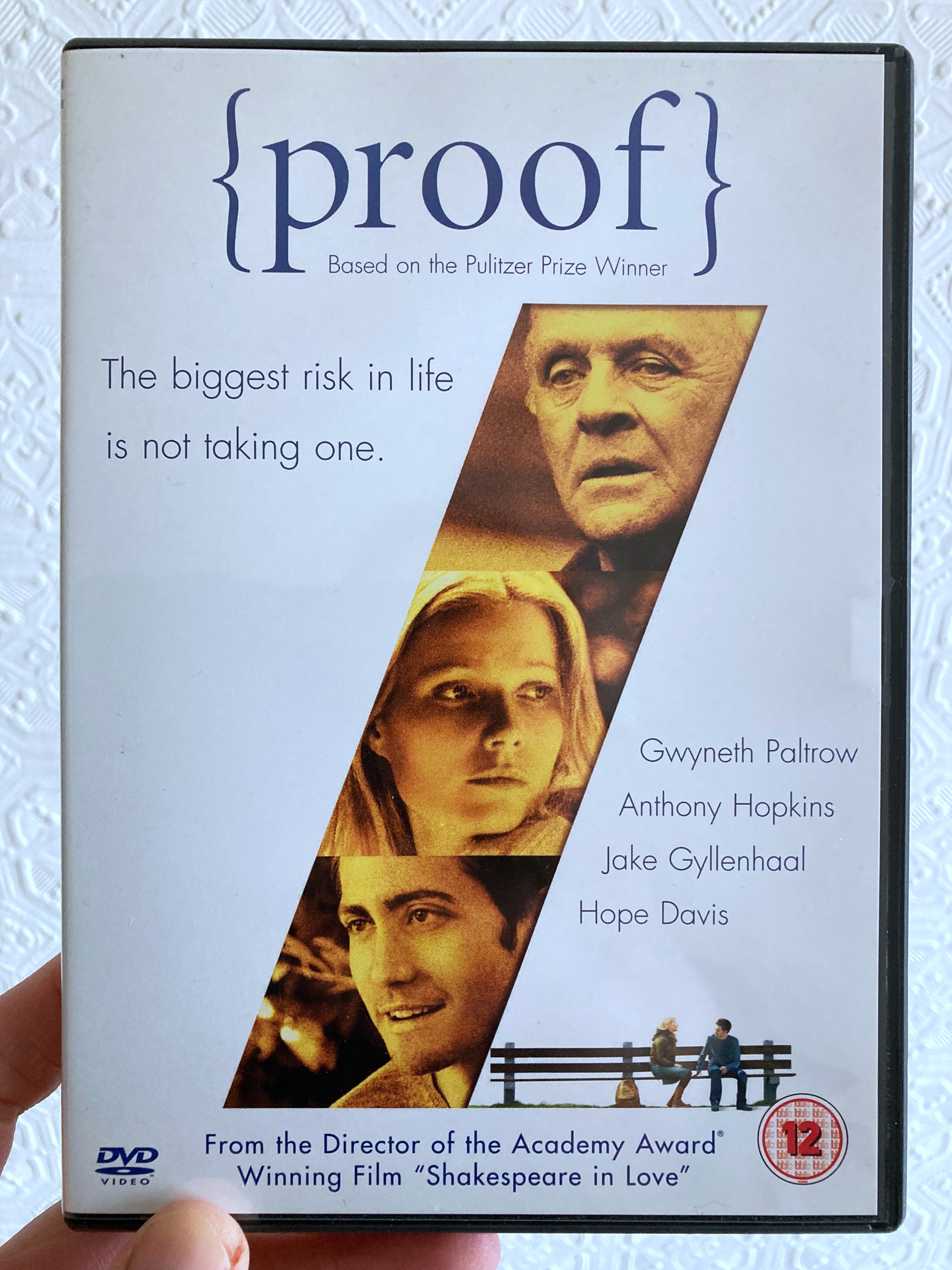
Proof (2005)

Excellent drama, directed by John Madden and adapted from the Pulitzer Prize-winning play by David Auburn. 

A brilliant mathematician, Robert Llewellyn (Anthony Hopkins), suffered mental problems and has recently died. His daughter Catherine (Gwyneth Paltrow) – also a genius with numbers – appears to suffer a similar condition. She has been caring for him in his troubled final years. After Robert’s death, Catherine’s controlling sister (Hope Davis) arrives from New York and tries to organise her. Meanwhile, Hal (Jake Gyllenhaal) is a former graduate student of Robert’s who wants to go through his papers and find out if he left anything else of worth.

All four characters are brilliantly drawn and portrayed. The dialogue is plausible. 

The “troubled maths genius” trope recalls Ron Howard’s 2001 film A Beautiful Mind, but there’s strong enough acting and a compelling enough premise to make this well worth watching.

Cinderella Man (2005)

Powerful biopic of world heavyweight boxer James J. Braddock, directed by Ron Howard. 

Russell Crowe plays the poor New Jersey man who tries to fight his way out of poverty for the sake of his wife (Renée Zellweger) and children. Paul Giamatti portrays his coach and manager, with empathy and depth. 

It’s a compelling saga, and Crowe judges the role perfectly. I like the fact that it’s also a love story in which the love is never in question. As with all Ron Howard films, the storytelling is lucid, with plot and character to the fore. 

The boxing scenes are extremely well filmed, with a brutality that makes them difficult to watch.

Because of Winn-Dixie (2005)

A charming film that’s superficially for children but which actually has a far wider appeal. 

A 10-year-old American girl named Opal Buloni (AnnaSophia Robb) has just moved to a new small town with her preacher father (Jeff Daniels), while trying to accept the loss of her mother. She struggles to make friends and to fit in – until she adopts a stray dog, who changes her life. She, in turn, transforms the lives of the people in the neighbourhood.

It’s surprisingly touching, and not only because of the cute, shaggy dog. The film builds a strong sense of place, and the friends that Opal makes – the librarian (Eva Marie Saint), the ex-con running the pet shop (Dave Matthews) and a blind lady who the local ruffians call a “witch” (Cicely Tyson) – seem real and three-dimensional.

Robb is among the more watchable child actors I have seen. She’s sweet without being annoying, and cheekily funny without seeming contrived. There are no irksome “stage school” mannerisms.

Jeff Daniels is great, too. In some ways it’s a similar role to the one he played in Fly Away Home. He seems to be an expert at playing dads of girls who lost their mothers.

Two for the Money (2005)

Extremely unusual drama

Al Pacino plays a charismatic gambling addict who has built a career advising other gamblers on which way to bet on American football games. He meets Matthew McConaughey, who is so talented at selecting winners that he gets it right 80% of the time. Meanwhile, Rene Russo plays Pacino’s wife, who forms part of a complicated love triangle with the two men. 

It works on lots of levels. It’s primarily a study of the relationship between the two men. But it’s also about the psychology of gambling and addiction. 

The tone is peculiar. Parts of the film feel like a comedy without jokes. There’s also a homoerotic subtext, with McConaughey’s rippling, sweaty muscles often displayed in close proximity to the adoring Pacino. 

I found it hugely watchable because the three main performances were so strong. It seemed initially trashy but acquired a kind of depth as it progressed.

The Interpreter (2005)

An interpreter at the United Nations (Nicole Kidman) overhears a conversation that suggests the leader of an African state is to be assassinated when he arrives to make a speech. A recently widowed Secret Service agent (Sean Penn) investigates and senses that she’s not telling the full truth, but the pair are drawn together by their shared losses. 

Directed by Sydney Pollack, it’s a smart and sensitive thriller that’s very nicely shot. Kidman and Penn are both excellently drawn characters and their relationship is subtle and nuanced. Catherine Keener is great as Penn’s professional partner, but doesn’t get given enough lines. 

The plot is complicated and there might be a few loose ends. For example, the phrase that the interpreter overhears doesn’t make sense in the light of what ultimately takes place. But that doesn't spoil an excellent thriller.

The Constant Gardener (2005)

Thriller adapted from the John Le Carre novel, with an emotional dimension you wouldn’t usually expect from that genre. 

Ralph Fiennes plays Justin Quayle, a mild-mannered diplomat whose Amnesty International activist wife (Rachel Weisz) is murdered. In investigating her death he learns that she was killed for what she has discovered about the British government’s collaboration with pharmaceutical companies in Africa.

The acting is tremendous all round, and Fiennes and Weisz are completely believable. The former’s sense of loss is unbearable to behold. Bill Nighy plays Sir Bernard Pellegrin at the Foreign Office and Pete Postlethwaite plays the creator of a deadly drug. 

It’s beautifully shot, with the beauty of the African landscapes contrasting against the ugly goings on perpetuated by corporate greed. 

It’s tensely dramatic and desperately sad, but also achingly romantic. That’s a lot to weave together, but director Fernando Meirelles pulls it off.

Kingdom of Heaven (2005)

Ridley Scott is responsible for at least six great films (Alien, Blade Runner, Black Hawk Down, Body of Lies, Gladiator and Thelma & Louise), so it’s difficult to articulate just how disappointing this tepid 12th-century historical epic turns out to be. It’s a muddled account of power and politics set during the Crusades. 

Orlando Bloom underwhelms as the blacksmith hero descended from Baron Godfrey of Ibelin (Liam Neeson). After just one lesson from his dad, he becomes a master swordsman. There’s too much of him wandering around, ponderously contemplating his destiny and feeling “significant”. 

Eva Green (as Sibylla of Jerusalem) and Jeremy Irons (Raymond III of Tripoli) both try to do their best with the material, but – as with everyone in this film – their “characters” are sketchy outlines at best. They both look like they wish they were elsewhere. 

Even the visuals aren’t particularly impressive as the big battle scenes are ruined by endless slow-motion shots that take you out of the action rather than enhancing it.

Plot-wise, it’s confusing. Not only does it fail to provide any historical context about the Crusades, but it’s also completely lacking in terms of character motivations. You’re left unsure why anyone is doing whatever they are doing, and not really caring either.

The ending is a mess, too. The film peters out with very little resolved. A director’s cut adds 45 minutes that supposedly improve the film and help it to make sense, but if this standard edition wasn’t good enough it probably shouldn’t have been issued in the first place.

Elizabethtown (2005)

Slightly awkward comedy-drama directed by Cameron Crowe

Drewe (Orlando Bloom) works as a designer for a shoe company and somehow manages to lose them nearly a billion dollars. His boss (Alec Baldwin) fires him. About to commit suicide, Drew learns that his father has died. He travels to Elizabethtown, Kentucky, to arrange the funeral, and reconnects with friends and family. He also meets and falls in love with Claire (Kirsten Dunst), who gives him a reason to live. 

It’s all very odd. There’s a strong performance from Susan Sarandon (as Drew’s mother), who brings the family together with a funny and moving speech at the funeral, but Bloom himself is weak and cannot carry the lead role. Unable to convince you that he’s suicidal, he’s extremely dull to watch – a problematic vacuum at the very centre of the film. Dunst is as magnetic and charming as ever, and it’s worth watching just to see her, but it was difficult to understand what her sparkly character would like about someone so featureless. 

Some of the humour falls a little flat. Also, there’s too much music (a lot of it by Tom Petty) as almost every scene seems to be punctuated by a “moody” rock song. That worked in Almost Famous, because it was about the music world, but it’s merely intrusive here. Sometimes less is more. 

Roger Ebert claims that Claire is actually an angel and not to be taken too literally. Certainly the story is a salvation saga and there are themes of life/death, being doomed/redeemed and so on. Maybe that’s the case, but this additional layer doesn’t make the film more vital or entertaining. It needs more laughs and a credible male lead. Plus, the whole business about the shoe company seems random and misjudged. There are no insights into that industry nor why Drew might have been working in it.

An actor who looks like Loudon Wainwright turns out to be the actual Loudon Wainwright.

Match Point (2005)

Excellent drama written and directed by Woody Allen. Critics were harsh on the fact that an American film set in London features some occasionally jarring turns of phrase (i.e., Londoners don’t call it "the" Tate Modern), but this in no way reduces the enjoyment.

Former tennis pro Chris (Jonathan Rhys Meyers) tries and fails to balance his relationships with his wife (Emily Mortimer) and mistress (Scarlett Johansson). In addition he wants to hang on to all the benefits of marrying into a wealthy family, who have secured him a lucrative career and given him a comfortable life. 

The film cleverly juggles major themes – the role of chance, ethics and love vs. desire – while evolving from a personal drama into a tense thriller in the second half. 

As with a lot of Woody Allen’s writing, there’s not a scene you could add or cut to improve the storytelling, so well-constructed is the escalating plot. Initially, I thought that Rhys Meyers was weak in the lead role, but as you find out what his character is capable of you begin to understand that the actor is playing the role perfectly. 

It’s a strong cast overall, with impressive performances by Brian Cox and Penelope Wilton, as Chris’s new in-laws, and Matthew Goode as their son Tom.

Broken Flowers (2005)

Comic drama directed by Jim Jarmusch.

Don Johnston (played by Bill Murray and with a name that gets him deliberately confused with the Miami Vice actor) is a lonely, retired man who used to work in computers. On the day that his girlfriend Sherry (Julie Delpy) leaves him, he receives an anonymous letter that tells him he has a 19-year-old son. With the help of his neighbour Winston (Jeffrey Wright), a fan of detective stories, he sets off on an investigative trip to meet four women who might have been the mother of the child he never knew he had. 

The bulk of the film deals with these four encounters, which meet with varying degrees of success. One of the former lovers (Sharon Stone) spends the night with him. Another (Tilda Swinton) gets him beaten up. All of these four women (​​Frances Conroy and Jessica Lange play the other two parts) are convincingly portrayed.

It could have been funnier. Some of the deliberately “low-key”, contemplative scenes just fall flat, even though that’s probably the point. The detective aspect is a bit silly, which undercuts some of the power of the serious relationship material. And while I appreciate that it was deliberately left ambiguous, the final “twist” at the very end is an in-joke that slightly spoils the open-ended conclusion.  

It’s ultimately a third-rate Lost in Translation, but without as much originality, dry wit or warmth.

King Kong (2005)

Peter Jackson’s epic remake of the monster classic is every bit as big and bold as its subject. 

The generally underrated Naomi Watts is superb as the woman captured and then befriended by the giant gorilla. The empathy and understanding between the two forms the emotional core of the film. Both are lost and misunderstood until they find each other. Jack Black seems miscast as Carl Denham, the ambitious, canny film director who has the map to Skull Island and wants to achieve fame and fortune by filming the extraordinary mysteries there. He’s not quite right for the role, somehow, and there are too many close-ups of his face looking “perturbed”. 

The visuals are impressive, even if I don’t really like the garish/ugly aesthetic style Jackson adopts. Some of the CGI scenes – such as Kong fighting dinosaurs as they tumble into a valley – are remarkable, even if he sometimes favours an ugly “high style” that doesn’t even try to be “realistic”. It’s more like a homage to a cinematic golden age that embraces its own artifice. 

Kong himself is motion-captured from Andy Serkis, who would provide the same function for Rise of the Planet of the Apes (2011) and its 2014 and 2017 sequels. You instantly relate to his predicament, and it’s heartbreaking to see him ruined by the greed and selfishness of the humans who seek to exploit him. 

The famous Empire State Building sequence (faithfully reconstructed from the 1933 original) is terrifying and genuinely disturbing.

Hidden a.k.a. Caché (2005)

Brilliant French thriller. 

TV presenter Georges Laurent (Daniel Auteuil) and his wife Anne (Juliette Binoche) start receiving mysterious video cassettes at their front door. These VHS tapes show footage of their own home being spied on and are accompanied by childish drawings of violent imagery. They are also subjected to mysterious phone messages. This premise becomes more creepy still when it becomes clear that whoever is watching and threatening them seems to know everything about Georges’ life from childhood onwards. The police aren’t interested, in the absence of an actual crime, but the situation intensifies as it begins to draw in their son (Lester Makedonsky as Pierrot) and a key individual from Georges’ personal history (Maurice Bénichou as Majid). In trying to unravel the mystery of what’s going on, the couple instead begin to unravel their marriage. 

I love the way that you think you’re watching a scene in the usual way, but then it becomes clear that you’re watching the surveillance tape of it instead. This is a neat innovation in a film that’s otherwise unfussy and straightforward in terms of its sets and direction. Indeed, a lot of it is deliberately humdrum.

It’s superbly unsettling. As the plot escalates, you expect to get closer to the truth of the events. But this enigmatic film deliberately keeps you guessing and refuses to offer simplistic solutions. As such, it presents bigger questions that stay with you.

The Island (2005)

As the back of the DVD explains: “Ewan McGregor and Scarlett Johansson lead an all-star cast as residents of an isolated, high-tech compound. But when they discover they’re actually clones, and worth more dead than alive, they stage a daring escape. Battling an unfamiliar environment and an armed team of mercenaries in hot pursuit, they’ll risk their lives and freedom to save those they left behind – and reveal the truth about The Island.”

This sci-fi thriller has similarities with 1984, The Hunger Games, Elysium and countless other dystopian stories. Its lack of originality wouldn’t have been a problem, though, if it had probed deeper into exploring the ethical issues it merely touches on. Unfortunately, it never feels very substantial. 

Ewan McGregor is as bland as ever as “Lincoln Six-Echo”. He can read his lines as well as anyone, but what else does he bring to the role? I found it bizarre to see him once again looking at a cloning facility, as he did in Star Wars Episode II. Scarlett Johansson (“Jordan Two-Delta”) isn’t given much of an opportunity to act, since most of the film involves the pair of them running around or being shot at. Sean Bean is OK as the supposedly sinister Dr. Merrick, while Steve Buscemi is likewise passable as a friend who helps the protagonists escape. 

The relationships in the film aren’t developed satisfactorily. A couple of scenes have fun with the clones’ naivety (they’ve only been educated to the level of 15-year-olds and know nothing of human society), but others allow them to be improbably worldly when the narrative demands it. As such, the plot only works if you don’t ask too many questions. 

The back of the DVD box warns: “Contains strong language, moderate violence and intense action”. It doesn’t warn about the excessive product placement. It’s intriguing that viewers needed to be warned about “intense action”, which surely is a selling point – especially since those sequences are expertly done. But maybe that’s how they justified the “12” certificate – action as a substitute for violence, or as a way of concealing it.

Visually, it’s striking – the colour has been ramped up and there’s a hyper-reality about the look of it. Yet there’s something missing. The Island hints at making wider points about social control but ends up sidestepping moral complexities to focus on exciting chase scenes instead.

Fantastic 4 (2005)


Ludicrous Marvel film, which I found – still shrinkwrapped – on a bench in West Finchley. Plot: five people are exposed to mysterious cosmic rays while in space and are granted special powers. One of them becomes a baddie. The other four – the fantastic four – team up to use their powers for good. These powers are: 1. stretchy limbs, 2. strength, 3. fire/flying, and 4. invisibility. It’s shallow and forgettable. It wants to be funny and exciting but isn’t really either. The lame romance plot between Stretchy and Invisible limps along. Overall, it’s fairly poor – the sort of DVD I’d only watch if I found it on a bench.