Showing posts with label Genre: biopic. Show all posts

Miss Potter (2006)

Directed by Chris Noonan, this is a biopic of Beatrix Potter focusing on the early part of the writer/illustrator’s career. 

I enjoyed it because Renée Zellweger is always so watchable, but it’s very thin on plot. And the addition of animated sequences in which Potter’s art comes to life are clunky and awkward. I found them a little patronising, too. We can see for ourselves that she regards her characters as “living” things because Zellweger’s acting makes it clear. We don’t need it spelled out in such a literal manner. 

On the plus side, Ewan McGregor is much better than usual. And there are some sweet moments detailing the couple’s romance. But ultimately Miss Potter feels like a branding exercise on behalf of the Beatrix Potter estate.

Pollock (2000)

Absolutely excellent biopic of Jackson Pollock, starring Ed Harris in the title role. The film examines the man’s life and work, exploring his addictions and mental health while also examining the innovations of his art. 

Marcia Gay Harden is perfect as his wife, the painter Lee Krasner, in a role that’s satisfyingly developed.

Harris, who also directs, does a great job of articulating the artist’s gifts and his mental struggles, often at the same time. It can’t have been an easy role, but he convinces in the part to the extent that it’s impossible to imagine any other actor doing it so well.

Jennifer Connelly plays Ruth Kligman, who Pollock had an affair with shortly before his death in a car accident.

Darkest Hour (2017)

Gary Oldman plays Winston Churchill during his early days as UK Prime Minister during World War II.

It’s brilliantly acted but poorly filmed. The overuse of shadows and light by director Joe Wright in pretty much every scene becomes wearing, and quickly feels clichéd, as does the naff music. In fact it’s quite “flat” all round. 

Kristin Scott Thomas and Lily James are strong in supporting roles as Churchill's wife and secretary respectively. Oldman is superb and the film is worth seeing (once) if only for him.

The Glenn Miller Story (1954)

Biopic of the American band-leader, directed by Anthony Mann. 

In the title role, James Stewart seemingly makes very little effort to become the character, instead relying on his usual tics and mannerisms to carry the plot along. 

As a biopic, it’s weak. As a story in its own right, it’s reasonably entertaining but oddly childish. You learn surprisingly little about Miller’s life and career.

Creation (2009)

An engaging biopic of Charles Darwin, directed by Jon Amiel. 

Darwin (Paul Bettany) attempts to complete On the Origin of Species while dealing with the grief of his daughter Annie’s death. He’s also semi-estranged from his wife Emma (Jennifer Connelly), and his theories about the beginnings of life on Earth are inflaming tensions in the God-fearing community. 

There are impressive scenes of nature, illustrating the idea of evolution as Darwin perceives it. 

Bettany’s compelling performance lifts the film and makes it highly watchable. Connelly brings a welcome complexity to her part as she tries to reconcile her love for her husband with her love of the God his life’s work debunks.

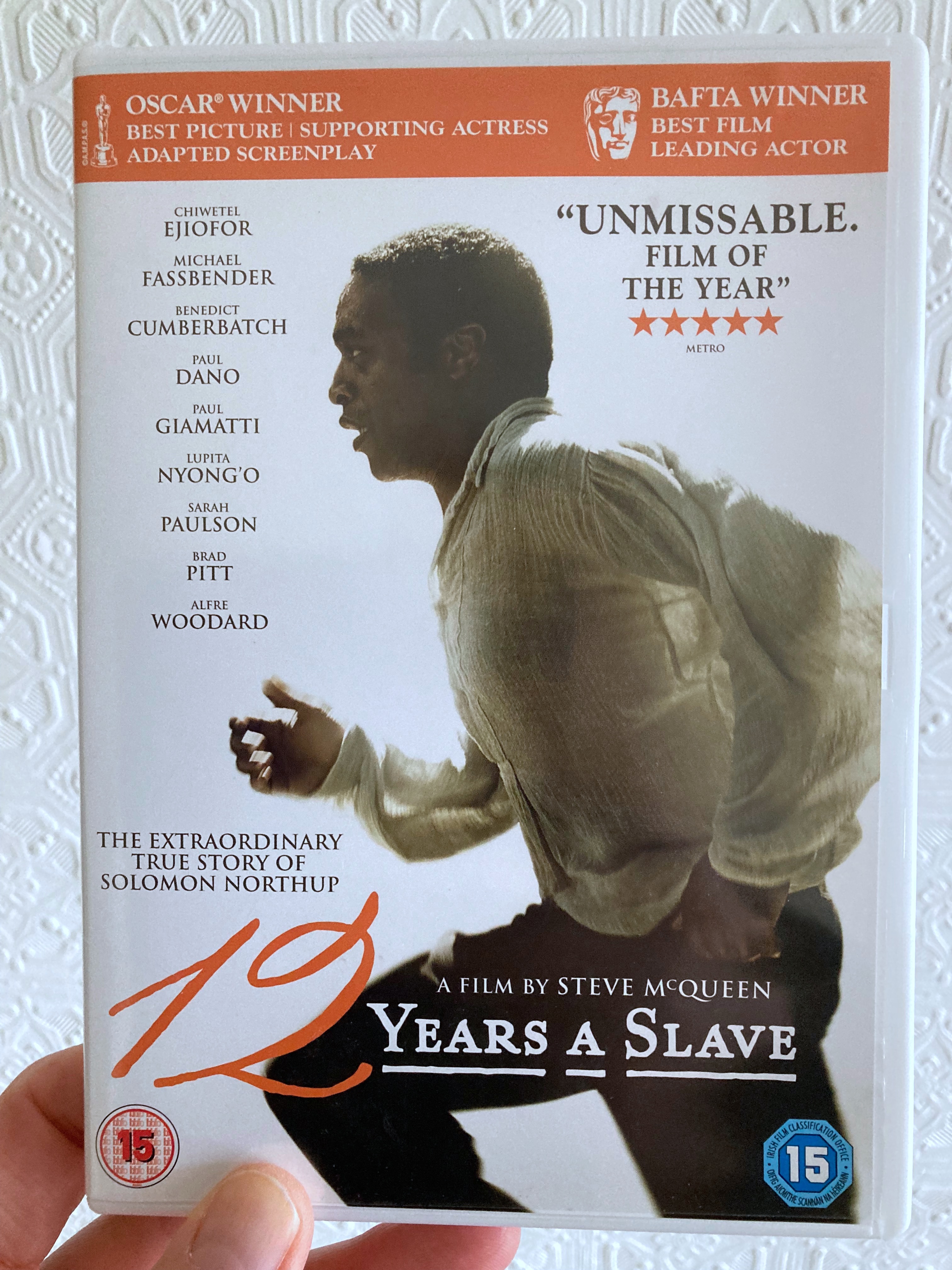
12 Years a Slave (2013)

Harrowing biographical drama directed by Steve McQueen and based on the 1853 memoir of Solomon Northup. 

Chiwetel Ejiofor stars as Northup, delivering a remarkably potent and sensitive performance as a man trying to retain his dignity and composure as he is systematically put through hell.

Kidnapped in Washington DC and sold into slavery, Northup is transferred between cruel owners. We see him treated in an especially barbaric manner by sadistic plantation owner Edwin Epps (Michael Fassbender).

It’s difficult to endure in places – especially when Northup is forced into acts of cruelty against his fellow slaves – but Ejiofor is so compelling that you keep watching anyway.

Colette (2018)

Keira Knightley stars in this biopic about the novelist Colette, directed by Wash Westmoreland. 

After growing up in rural 19th-century, France, Colette meets and marries Willie (Dominic West), a Paris-based literary entrepreneur who uses ghostwriters to come up with articles in his name. When Colette reveals a talent for writing, she embarks on a series of novels that Willy takes the credit for. 

It’s an intriguing drama that evokes the time and place well. Knightley gives one of the strongest and most multifaceted performances of her career. West is also good as her thoroughly unlikeable husband. The focus on the balance of power in their relationship is expertly handled.

I wanted to find out more about what happened to Collette’s life and writing, but it’s left to the brief snippets of on-screen text at the end to fill you in.

Napoleon (2023)

Visually stunning biopic of the French emperor, chronicling his rise to power across a sequence of epic battles, phenomenally shot by Ridley Scott. 

Joaquin Phoenix is perfect in the lead role, underplaying rather than overplaying the part. It’s a simmering performance full of nuance and strength. 

Central to the story is his relationship with Joséphine, brilliantly portrayed by Vanessa Kirby.

There's a lot to cram in, in terms of historical events and the surrounding context, and Scott does this without cluttering the story or making it unwieldy. At 157 minutes, it's long but it doesn't outstay its welcome.

Finding Neverland (2004)

Intriguing (partial) biopic of the writer J.M. Barrie. 

Barrie is played unexpectedly well by Johnny Depp. Kate Winslet plays Sylvia Llewelyn Davies, the widow he falls in love with and maintains a platonic relationship with, while becoming a sort of father to her children. In the meantime, he’s working on the Peter Pan play that will make his name, and which is inspired by the family he has become so attached to. 

It’s quite a touching story. “Neverland” works as a metaphor for make-believe/imagination and also for Heaven. There’s a strong performance by Julie Christie, as Sylvia’s strict and frosty mother. Dustin Hoffman is refreshingly unselfconscious as Charles Frohman, the play’s producer. 

It would be easy to criticise the film’s extremely sanitised portrayal of terminal disease, but it’s a story all about the imagination so it therefore seems to make sense that gritty realism is held at bay.

Nowhere Boy (2009)

Biopic of the teenage John Lennon, directed by artist Sam Taylor-Wood.

Growing up in Liverpool in the 1950s, Lennon (Aaron Johnson) is torn between his solid, strict, practical Aunt Mimi (Kristin Scott Thomas) and his flighty mother, Julia (Anne-Marie Duff), who gave him up to live with her sister. 

Wisely, it keeps to the emotional drama: the story of Lennon’s musical development mostly takes place in the background. I feared that it would be a sentimental and/or simplistic account of the heartache that led to his rise to fame, but the film explores his complicated relationships with nuance and subtlety.

Jackie (2016)

Directed by Pablo Larraín, this is a sort of biopic about the wife of John F. Kennedy in the days before and after his assassination. 

Like all the best biopics, it doesn’t attempt to cram a complete life story into two hours. Instead, it zooms in on one moment in that life and uses it to explore the character in depth. 

It’s impressionistic, without losing sight of dialogue and storytelling. Natalie Portman gives the performance of a lifetime as Jacqueline Kennedy. 

It’s sad and disturbing, perfectly capturing her mixture of shock, anger and loss.

Beyond the Sea (2004)

Intriguing but flawed biopic of Bobby Darin, written and directed by Kevin Spacey, who also stars as the singer. 

It’s a baffling film. The set pieces featuring the songs are expertly created and Spacey inhabits the role brilliantly. But things come slightly unstuck with the “magical realist” element of him talking to his younger self. There’s no attempt to describe his rise to fame, but there’s lots about his health problems and his ambiguous parentage. 

John Goodman and Bob Hoskins are on screen too much. Brenda Blenthyn is excellent as his mother. Kate Bosworth is underdeveloped as Darin’s wife. It’s suggested that she drinks too much but the question of alcoholism is never explored further. 

In terms of storytelling it’s disappointingly shallow and inconclusive, despite moments of brilliance.

The Wolf of Wall Street (2013)

The curiously featureless face of Leonardo Di Caprio works perfectly to represent the banality of ultra-greed in Martin Scorsese’s audacious biopic of non-legal trader Jordan Belfort. 

The aesthetic is bland and corporate, as it should be. Scorsese avoids the subtle layering of American Hustle and instead opts for relentlessness, brilliantly pushing the excess factor. Some of the speeches by the “wolf” are incredibly well done – a much more extreme twist on the “greed is good” theme of Michael Douglas as Gordon Gecko in Wall Street

Some critics complained that there’s no moral core, but surely that’s the point of this film. The book is even better. Jordan’s written account condenses certain episodes in his life. The film further combines and condenses, so inevitably drifts towards fiction.

A diverse cast also includes Jonah Hill, Margot Robbie, Rob Reiner, Joanna Lumley and Matthew McConaughey.

Selma (2014)

Historical drama dealing with the 1965 Selma-to-Montgomery voting rights marches led by Martin Luther King. 

David Oyelowo stars as King, Tom Wilkinson is President Lyndon B. Johnson, and Tim Roth is George Wallace. 

It’s slow to get going and I wasn’t especially engaged until the second half. I would have liked more about MLK’s family – the kids are barely seen or mentioned, and even the scenes with his wife Coretta (Carmen Ejogo) seem to lack dynamism. There's too much of King the legend and not enough about the man, who must have felt so conflicted as he surely knew he wouldn’t be around for long.

Florence Foster Jenkins (2016)

Directed by Stephen Frears, this is the compelling true-life story of a wealthy New York heiress who was generally regarded as a terrible singer, yet who became a recording artist and even performed at Carnegie Hall because her social set encouraged and applauded her. 

Meryl Streep is excellent as Florence Foster Jenkins, singing technically challenging opera in a way that’s just about good enough to be credible but also strange enough to be surreally comic. 

Simon Helberg is ideally cast as Cosmé McMoon, a wildly talented pianist who – against his initial misgivings – agrees to work as her accompanist.

In what is perhaps his most fully rounded and satisfying role, Hugh Grant is remarkable as her lover and manager St. Clair Bayfield. The unusual nature of the couple's relationship and the depth of his feelings really came across. I was slightly wrong-footed because I thought the plot was leading to Bayfield being exposed for scamming Florence and promoting the whole "emperor's new clothes" circus around her efforts, but touchingly the film turns out to be a true love story after all.

Stan & Ollie (2018)

Poignant account of Laurel and Hardy’s UK tour of 1953, directed by Jon S. Baird. 

The duo were very much on a decline, career-wise, but there was still enough affection for their old routines for them to be able to perform in theatres. This is set against Hardy’s declining health, and also the evolution of their long and complex relationship. 

Steve Coogan and John C. Reilly are superb in the lead roles, really nailing the mannerisms and voices. It’s touching to see how they interact after years of friendship and as a working unit. It’s also quite funny.


Vice (2018)

Punningly titled biopic of Dick Cheney, the US vice president in 2001–2009, during the period that George W. Bush was in power. 

There is a fascinating story to be told here, but director Adam McKay chooses a gimmicky, tricksy approach, breaking the fourth wall, adding text on screen and inserting surreal skits that constantly remind you you’re watching a film, rather than allowing you to become absorbed in it. There’s even a “false ending” about halfway through, with the production credits rolling up the screen. 

Cheney emerges as a complete enigma and the film cannot get inside his character enough to explain the motivations behind his various abuses of power. In reality he was an extreme figure, responsible for introducing torture, abolishing the FCC fairness doctrine (leading to the rise of biased, politicised TV news reporting), rebranding “global warming” as “climate change” to make it more palatable to the masses, and focus-grouping reactions to September 11th in order to further America’s geopolitical interests. It’s all especially relevant in the era of Donald Trump.

There’s no shortage of strong material, and the key performances by Christian Bale, Amy Adams and Steve Carell are outstanding. But Vice is hugely frustrating nonetheless.

Confessions of a Dangerous Mind (2002)

Biopic directed by George Clooney. That fact alone sets alarm bells ringing – I couldn’t finish his film Leatherheads (2008) and I barely got through The Monuments Men (2014), as they were simply too self-conscious and annoying. He’s fine at surface-level tricksiness, but there’s little emotional depth and his “funny” scenes fall flat. 

This film is marginally better. Chuck Barris (played by Sam Rockwell) is a successful TV producer who also kills people for the CIA. He’s recruited by George Clooney, works alongside Julia Roberts and is in a relationship with Drew Barrymore. 

The story is interesting, and Rockwell and Barrymore have real chemistry together, but Clooney’s direction is awkward and gimmicky. He regularly changes filters and keeps reminding you that you’re watching a film, rather than simply letting you become immersed in it. 

The film dodges perhaps the most interesting aspect of Rockwell’s life – the possibility that all of his CIA deeds were completely invented and never took place. That would have made for a whole extra dimension to the story, but it seems that Clooney is a hamfisted director who just couldn’t quite handle the material.

J. Edgar (2011)

Directed by Clint Eastwood, this is a surprisingly dull biopic given the rich source material. 

J. Edgar Hoover (Leonardo DiCaprio) looks back on his life and work as the head of the FBI. Along the way we learn about his repressed homosexuality and a series of world events as presidents come and go. 

Naomi Watts is wasted as a secretary with little to go on in terms of a fleshed-out character. Judi Dench is much better as Edgar’s domineering mother. Much of the story is told in flashback and the worst aspect is the prosthetics used to age the character. DiCaprio and Watts look OK, but Armie Hammer as Clyde Tolson looks comically awful in his rubbery “older” face, and it’s a major distraction. 

In a very brief appearance only, Adam Driver makes his film debut.

Michael Collins (1996)

Biopic of Michael Collins (played by Liam Neeson), the revolutionary Irishman who leads a guerilla force against the UK during the Irish War of Independence.

Neil Jordan directs, but it doesn’t feel like a Neil Jordan film. 

For some reason, I found it difficult to sustain interest. The narrative didn’t make a strong enough case for why these events were important or why we should care. And it doesn’t explain how Collins, out of so many people, rose to prominence. 

Liam Neeson wasn’t at his best. Julia Roberts has charm but was underused as his love interest. The accents were distracting – especially in the case of Alan Rickman’s awkward portrayal of Éamon de Valera. Only Stephen Rea, as Ned Broy, was truly convincing.