Showing posts with label Starring: Brad Pitt. Show all posts

Once Upon a Time in Hollywood (2019)

Fascinating comedy-drama written and directed by Quentin Tarantino. 

It’s 1969 in Los Angeles. Rick Dalton (Leonardo DiCaprio) is an actor famous for his role in a 1950s TV western. His best friend is his stunt double and personal assistant Cliff Booth (Brad Pitt). Times are changing and the pair are struggling to stay relevant in the film industry. Their next-door neighbours are actress Sharon Tate (Margot Robbie) and her director husband Roman Polanski. Also on the fringes of the scene is a young Charles Manson…

The film cleverly weaves together fact and fiction across multiple narratives, playing on what we know – or think we know – about the mythology of the Manson murders. It’s a kind of alternative history that finds humour and tragedy in the events, but not in the way that you might expect.

It’s visually rich and full of the iconography of the time, with Tarantino really relishing the period detail. Highly watchable stuff.

Spy Game (2001)

Retiring CIA officer Nathan Muir (Robert Redford) learns that his protege Tom Bishop (Brad Pitt) is in trouble in Hong Kong. Muir’s CIA colleagues begin to dig in to his past, and the film then reveals his story in a series of flashbacks. The somewhat disjointed and bitty narrative focuses on specific incidents in Vietnam, Berlin and Beirut. 

It’s not quite the thriller you might have imagined or hoped for – mainly because Redford never gets out of the office. Somehow he is able to run rings around his CIA colleagues, even though they would’ve had the same training as him. As such, it’s an intriguing thriller that doesn’t quite work. The basic ingredients are good, and with more focus in the storytelling, it might have been more satisfying.

Allied (2016)

Entertaining wartime thriller directed by Robert Zemeckis

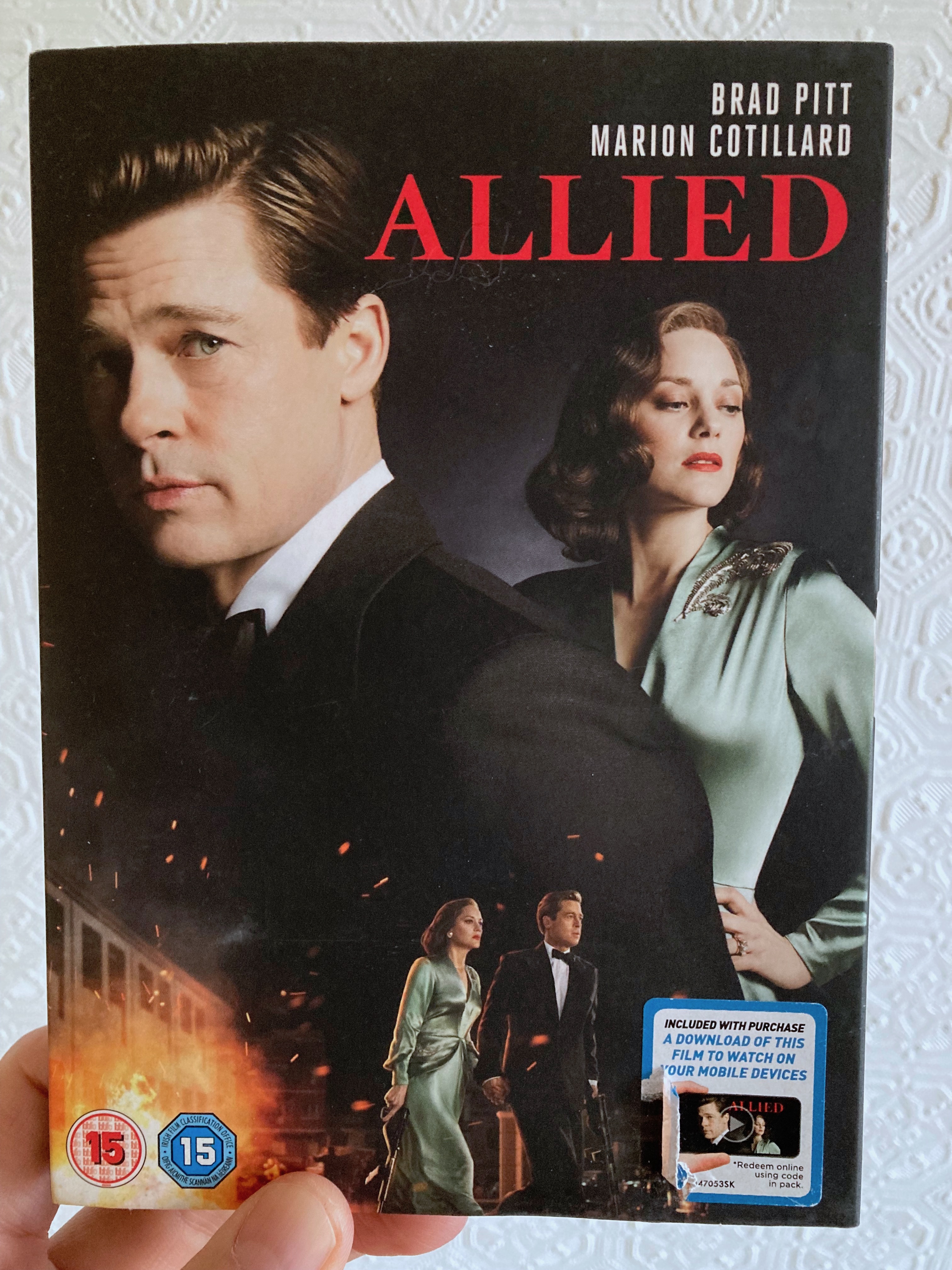
Brad Pitt and Marion Cotillard star as a Canadian intelligence officer and French resistance fighter. They fall in love, while pretending to be a married couple for a military mission in Casablanca. They move to London as the war continues, but is everything as it seems? 

Zemeckis brings his usual high quality of storytelling, and the narrative keeps you guessing until the end. Pitt is OK rather than spectacular (as usual), but Cotillard steals the show with a much more impressive, nuanced and well-rounded performance.

Seven (1995)

Atmospheric thriller directed by David Fincher. 

A serial killer embarks on a sequence of murders, each of which marks one of the seven deadly sins. Detectives Somerset and Mills (Morgan Freeman and Brad Pitt) try to catch him before he can complete the full cycle. 

It’s brilliantly shot, in a noirish manner. The constant rainfall, the grim urban settings and the claustrophobic streets all add atmosphere. Unexpectedly, and presumably for contrast, the film’s tense climax happens in wide-open spaces in bright sunlight. 

Gwyneth Paltrow plays Mills’ wife and is clearly going to have a more important function in the story. Kevin Spacey plays the “intelligent” killer – possibly partly influenced by Anthony Hopkins as the intellectual Hannibal Lector. 

The closing section is slightly far-fetched in the way that the killer is allowed to dictate the terms to the detectives. But it’s still a tense and compelling story that escalates to a satisfying conclusion.

The Tree of Life (2011)

An amazing film directed by Terence Malick. On one level it’s a story of an American family and how they deal with a bereavement. But the film is also designed as a work of art, constructed to operate on multiple levels of symbolism and philosophical exploration. 

Early on it detours into a history of life on Earth (perhaps influenced by 2001), showing dinosaurs and the meteorite that forced their extinction. It then returns to the story of the family. Brad Pitt and Jessica Chastain play the parents of three boys, while Sean Penn plays one of those boys as an adult in the present day and struggling to come to terms with his past. 

There are so many impressionistic elements that you’re often unsure what to think and what, if anything, is actually happening in narrative terms. That can be frustrating if you are expecting anything close to a regular drama. Indeed, the dinosaur segment borders on the ludicrous. 

If the job of the film is to take you on an emotional journey, then it’s too muddled to succeed. But if you embrace the sheer ambition of the project – in terms of its visuals, music, editing techniques and production – it’s unlike anything else you will see.

Legends of the Fall (1994)

Family saga, domestic drama, western, war film, homage to Native American traditions and mini-history of the USA. 

Three brothers live with their father (Anthony Hopkins) in the wilderness and plains of Montana. The youngest, Samuel (Henry Thomas), is due to marry Susannah (Julia Ormond), but his would-be wife is attracted to the middle brother Tristan (Brad Pitt) and simultaneously yearned for by the older brother Alfred (Aidan Quinn). These conflicting emotions play out against the changing times (World War I, Prohibition), and – in Tristan’s case – against the Native American traditions he embraces. 

This is an unusual, intelligent film that covers a lot of narrative ground but never becomes trite or silly. 

There are excellent performances all round. It’s moving but not sentimental. Hopkins a little wasted in terms of minimal dialogue, but when he’s on he’s very good. Pitt is better than usual, too, rising to the challenge of being at the centre of the story.

Fury (2014)

Brad Pitt stars as Collier, a tough American sergeant commanding a Sherman tank (named Fury) on missions through Germany towards the end of World War II. The film focuses on his relationship with his crew and how they adapt to a new, naive young recruit (Logan Lerman) joining their team despite having no military experience.

The set pieces are violent and dramatic. An extended scene set in a house with two German women is especially powerful. 

It’s atmospheric and it looks convincingly grey, bleak and muddy.

Brad Pitt has rarely impressed me as an actor but he’s at his best here, finding a depth and charisma that sometimes eludes him in lesser roles.

The Mexican (2001)

Foolish amateur gangster Jerry (Brad Pitt) has to perform “one last job”, which involves transporting a legendary gun from Mexico back to the USA. Predictably, nothing goes to plan. Events are further complicated when his girlfriend (Julia Roberts) is kidnapped by another gangster (James Gandolfini) and the pair develop a strange friendship. 

This is a comedy thriller with an unusual tone. It flits between tense moments and genuinely funny ones – a tricky balancing act that director Gore Verbinski pulls off with skill. 

Brad Pitt is better than usual because he’s playing an idiot and therefore doesn’t need to seem credible. Roberts is terrific – vividly full of life and personality – and her evolving relationship with Gandolfini provides the heart of the film. 

Gene Hackman has a cameo. Plus, there’s a nice sub-plot about a ferocious dog.

Sleepers (1996)

Four friends growing up in New York in the 1960s end up in a youth detention centre, where they are brutalised by the staff. We then meet them again, 13 years later, in 1981, and find out how those harrowing experiences have defined every aspect of their adult lives. 

The first half is compelling. Director Barry Levinson brilliantly sets the scene and evokes both time and place perfectly. But in the second half, the film seems to lose its way. A lengthy courtroom segment takes the focus away from the themes of friendship and community that initially made the film so watchable. And something about that plot – the convoluted account of a faked legal hearing – just doesn’t ring true. 

The cast is excellent, with memorable performances by Robert De Niro (reliably brilliant as a priest who befriends the boys), Minnie Driver (who falls in love with three of them), Dustin Hoffman (an alcoholic lawyer) and Kevin Bacon (one of the abusive staff at the Wilkinson Home for Boys). Brad Pitt is less convincing as the grown-up version of Michael Sullivan. 

There’s overbearing music by John Williams

The film is often disturbing, as you’d imagine from the subject matter – and all the more so because the 1995 novel it’s drawn from (by Lorenzo Carcaterra) is semi-autobiographical. It makes some profound points about how cruelty shapes and damages us, but somehow it still misses the mark.

Ad Astra (2019)

Brad Pitt stars in an existential sci-fi mind-bender. He’s an astronaut who leaves Earth in search of his father (Tommy Lee Jones), who is fixated on seeking intelligent life elsewhere in the universe. But that search has deadly repercussions for Earth and needs to be stopped.

The film asks intelligent questions about what’s important in life. It looks remarkably “realistic”, and there are moments of great beauty – especially around Jupiter. Pitt has never particularly impressed me with his acting, but he’s excellent here. He conveys the desperately lonely experience of being on your own in the vastness of space. 

Liv Tyler and Donald Sutherland play supporting roles.

Seven Years in Tibet (1997)

Drama based on real events. 

Brad Pitt plays Austrian mountain climber Heinrich Harrer, who abandons a pregnant wife to summit Nanga Parbat. But then World War II begins and he is held in a prisoner-of-war camp. His wife files for divorce, so he has little to return home to, but he escapes and makes it to the Tibetan capital city of Lhasa. There, he becomes tutor to (and friend of) the 14th Dalai Lama. The film details his gradual shift to a more caring, sharing kind of guy after years of living fairly selfishly. 

It’s rich and colourful, but there are flaws. Pitt is oddly unconvincing. Maybe it’s his accent. Or maybe it’s his haircut. But I struggled to believe he was an Austrian climber, and struggled further to believe the spiritual development the film told us (rather than showed us) took place. Also, the “action” moves too slowly. Parts of the narrative look nice but just aren’t very interesting. 

For much of the story, Heinrich is accompanied by colleague Peter Aufschnaiter – first a rival and later a friend – but that part too fails to come alive in the hands of David Thewlis, and their relationship never gains the gravitas it’s supposed to.

Given that Harrer’s actual life story seems fairly remarkable, it’s a shame that this account somehow fails to capture the essence of what makes it so notable.

The Big Short (2015)


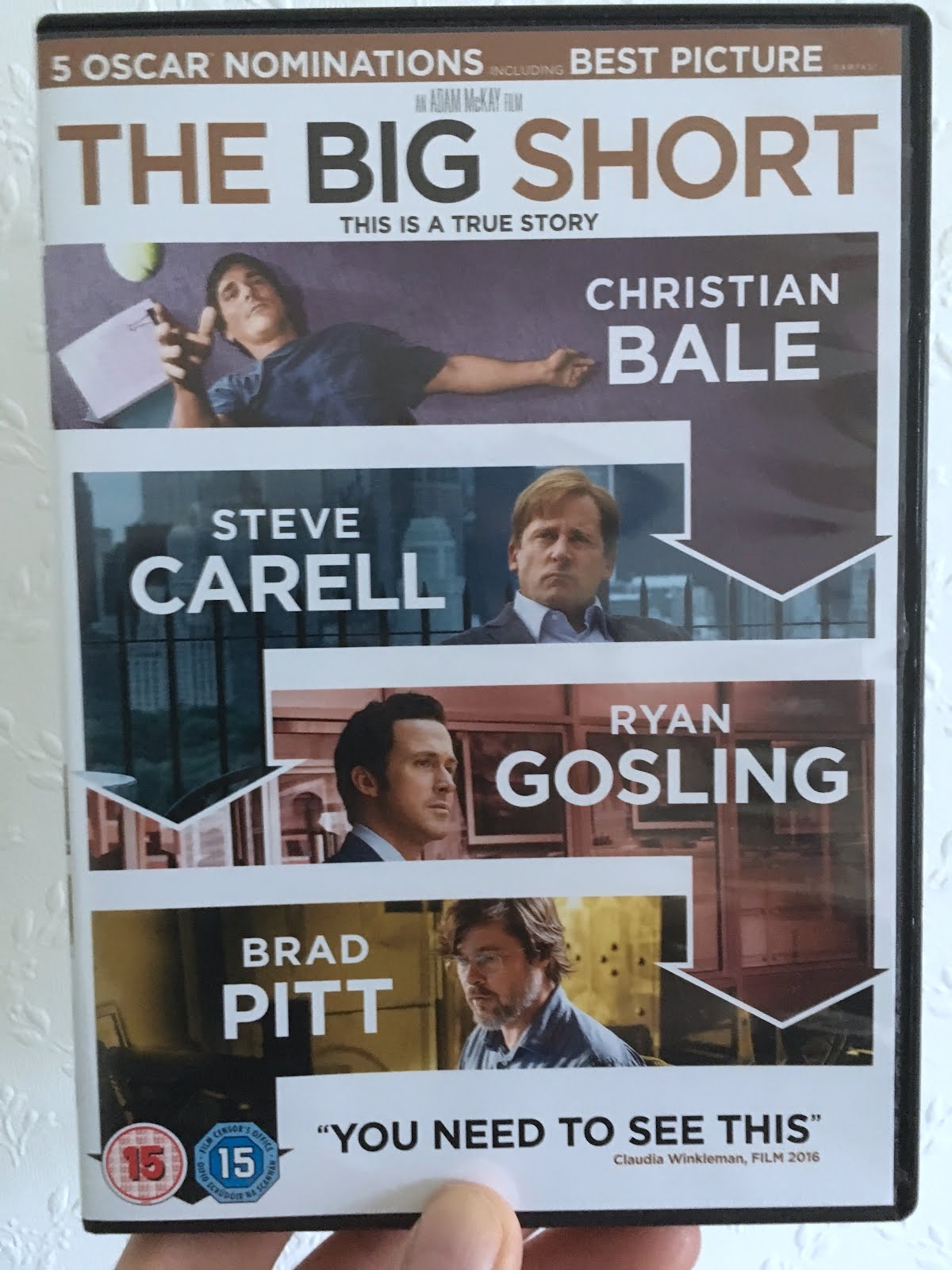
This highly stylised account of the investment schemes devised in the weeks leading up to the financial crisis of 2007–2008 follows three parallel narratives featuring individuals who stood to gain by the collapse of the US mortgage market.

Complex financial concepts are often hard to grasp, so the film – being somewhat self-conscious and postmodern – has this terminology explained by walk-on celebs (Margot Robbie, Anthony Bourdain, Selena Gomez, etc) talking direct to camera.

It’s not as compelling as The Wolf of Wall Street, which was personality-driven and had the huge advantage of starring Leonardo diCaprio. This film is more about a situation, with the characters seeming secondary to the way it unfolds. That said, the semi-crazed actions of Christian Bale (as Michael Burry) are the most watchable element. Steve Carell, Ryan Gosling and Brad Pitt are difficult to empathise with. That’s surely intentional, but it does make for a less engaging narrative.

Ultimately, I think I would have preferred to watch a well-made documentary about the same events or a fully fictional account that could structure the story in a more satisfying way.

Troy (2004)

Epic retelling of Homer’s Iliad. It’s Troy (Turkey) in the 13th or 12th century BC, when men will fight for honour, for king, for country – and for a beautiful woman. Brad Pitt plays beefy Achilles, an almost superhero-type warrior with an appropriately one-dimensional personality – he’s a mythological archetype, not a soap opera character. Orlando Bloom is weedy and ineffectual as Prince Paris, who unwisely stole Helen of Troy (Diane Kruger) from King Menelaus of Sparta (Brendan Gleeson). Eric Bana is credible as Paris’s loyal brother, the sensitive Prince Hector. And Peter O’Toole has a certain gravity as the brothers’ elderly father, King Priam. Meanwhile, Sean Bean is his usual Sean Beany self as Odysseus.

As a “sword and sandals” blockbuster, it’s effective in an unsubtle way. There are a lot of sweaty biceps – almost fetishistically displayed – and the huge battle scenes are impressive, even if they are computer-generated. In terms of the acting, it’s performed in a “high style” that’s often ridiculous but which somehow works. Again, it’s not subtle.

The famous Trojan Horse is relatively underplayed in the plot, which I liked. Also, it seemed more real because it was clearly a load of old wooden planks taken from their ships and hurriedly bashed together, rather than the finely crafted “horse” shape you often see in illustrations of the tale.

So is the film any good? I’m not entirely sure. But the source material – the decade-long Trojan War of Greek mythology – is rich and resonant enough that the story cannot really fail.

Ocean's Eleven (2001)


Completely unbelievable casino heist thriller. Some of the 11 criminals are caricatures, while Brad Pitt just eats during every scene. There are too many things in the plot that simply couldn’t happen, such as when they need to create a power cut and so steal a big piece of scientific equipment to release an electromagnet pulse that plunges all of Las Vegas into darkness. The guy with the English cockney accent is plain embarrassing. Why do American films and TV shows so often completely misjudge how English people speak? 

George Clooney is charming as Danny Ocean and Andy Garcia is convincingly nasty as the evil casino owner, but it’s too visually stylised and self-conscious to let you ever become fully engrossed in the story. 

Would I watch it again? No.

Thelma & Louise (1991)


What a great film. The two stars – Geena Davis and Susan Sarandon – are so compelling to watch. The scenery is stunning. The story works on many levels – road movie, thriller, feminist statement, homage to the likes of Bonnie & Clyde (1967), a story of friendship, and a study of personal development and transformation – that it’s captivating to see it unfold. There’s really nothing you could add or remove to improve it.