Showing posts sorted by relevance for query earth. Sort by date Show all posts

Man of Steel (2013)

Found on a wall. 

This Superman reboot starring Henry Cavill is faster, noisier and slicker than the 1978 version with Christopher Reeve, but it has none of that film’s charm. Nothing seems remotely real, either. This is partly because of the excessive CGI (it looks like a slick computer game) and partly because of the fast edits. There are no “rules” in terms of the powers we see the heroes and villains use: anything can happen and anything does happen, but none of it carries any real “weight” or actually adds up to anything. The thrown-through-a-building effect is used again and again and ultimately becomes completely mind-numbing – partly because, despite all the endless scenes of destruction, no one ever seems to get hurt

Michael Shannon underwhelms as the evil General Zod. Certainly he’s no Terence Stamp. Amy Adams does her best as Lois Lane, although she’s not given much of a character to develop. Diane Lane is credible as Superman’s Earth mum, while Russell Crowe and Kevin Costner are both watchable as Superman’s Krypton dad and Earth dad respectively

In visual terms, it’s excessively filtered – another distraction.

The joy of Christopher Reeve’s Superman was watching him save lives again and again. Man of Steel has surprisingly little of that. Also, the relationship with Lois Lane – so integral to the Reeve films starring Margot Kidder as Lois – is completely and coldly undeveloped here. There’s virtually no romance. 

All in all it’s an expertly made yet completely empty experience.

Interstellar (2014)


Sci-fi mind-bender directed by Christopher Nolan. Earth is in peril as dust storms threaten to wipe out crops and humanity. Cooper (Matthew McConaughey) is a pilot persuaded by the remnants of NASA to leave his children on the doomed planet to travel through a wormhole and locate a new world for people to colonise. Inevitably, things don’t go to plan...

It’s a very moving story. Owing to time dilation, we see Cooper’s children growing older while he ages mere months. In one heartbreaking sequence, a "brief", botched visit to a watery planet with terrifying tidal waves equates to 23 years passing in Earth time and for the crew member left in orbit.

Michael Caine plays the NASA scientist intent on saving humanity. Anne Hathaway is his daughter, who is part of the mission. Jessica Chastain plays Cooper’s daughter, who helps resolve the riddles of the fifth dimension with some unexpected assistance. And Matt Damon is the lonely colonist who goes wildly off-piste when company arrives.

It’s a long and complex film, with several strands, but the lucid storytelling means that it works, even if you don’t have a degree in astrophysics. It’s ultimately an emotional story that asks big questions about time and love.

Ad Astra (2019)

Brad Pitt stars in an existential sci-fi mind-bender. He’s an astronaut who leaves Earth in search of his father (Tommy Lee Jones), who is fixated on seeking intelligent life elsewhere in the universe. But that search has deadly repercussions for Earth and needs to be stopped.

The film asks intelligent questions about what’s important in life. It looks remarkably “realistic”, and there are moments of great beauty – especially around Jupiter. Pitt has never particularly impressed me with his acting, but he’s excellent here. He conveys the desperately lonely experience of being on your own in the vastness of space. 

Liv Tyler and Donald Sutherland play supporting roles.

Supergirl (1984)


A ludicrous mess. Kara Zor-El, the cousin of Superman, comes to Earth in pursuit of the Omegahedron – an orb with remarkable powers. This mystical ball falls into the hands of an evil witch called Selena who, for some reason, lives in a disused fairground with her annoying friend Bianca. It’s difficult to say whose acting is worse: Peter O’Toole, Peter Cook or Faye Dunaway all ham it up like mad, wrestling with a fundamentally flawed script. Unsure whether to play it for laughs or kitsch kicks, they flail around like pantomime actors who failed their am-dram audition. Helen Slater is actually quite appealing as Supergirl/Linda Lee. There’s a vulnerability and naivety that is endearing. And the sections in which she starts at school and befriends a girl called Lucy Lane – Lois Lane’s sister, amazingly enough – hint at another, more charming film with human-interest elements you can relate to. More of this would have been welcome. But it’s wildly uneven in tone and there are colossal holes in the plot logic. For example, when Selena first acquires her sinister powers she inexplicably puts aside the thoughts of world domination she has already shared with Peter Cook. Instead, she decides to kidnap a gardener, drug him with a love potion and then – when he wanders off – uses telekinesis to steer a construction vehicle through the streets to return him to her. Why? This is one of the few action sequences, but it’s still a small-scale affair involving a few cars, some burning tyres, a water tower and some hay blowing around the street. It certainly doesn’t have the epic scale of the first two Superman films, which seemed to use the whole Earth as their set. In fact, Supergirl seems relatively low-budget despite being made for $35 million by the same production team. Despite all the woeful elements, it was just about entertaining enough for me to make it through to the end. The flying sequences are a thrill, just as they always were with Christopher Reeve, and the rare moments in which Supergirl displays her powers are enjoyable. But the film could have been so much better.

Alien Covenant (2017)


Ridley Scott’s follow-up to Prometheus (the second in the Alien prequel saga) is an all-out space-action-horror affair. Michael Fassbender returns to the role of the creepy-genius droid David, but this time the same actor also plays a second, superficially similar droid with different programming.

A quick outline of the premise from Wikipedia: “In 2104, ten years after the Prometheus expedition, the colonization ship Covenant is seven years from reaching planet Origae-6, with 2,000 colonists in stasis and 1,140 human embryos in cold storage. The ship is monitored by Walter, an advanced android model that physically resembles David. When a shockwave damages the ship, Walter reanimates his 14 human crewmates, themselves couples/colonists. Ship's captain Jake Branson dies when his stasis pod malfunctions. While repairing the ship, the crew picks up a transmission of a human voice from a nearby planet, which appears eminently more habitable than Origae-6.”

The crew detour to the appealingly Earth-like planet, which, inevitably, is too good to be true. Before long, everything kicks off. As with Prometheus, the characters take stupid risks by walking around alone and with nothing to protect them. You just know someone is doomed when they wander off saying they will be back in a minute...

But the thrills are considerable. There are some remarkable scenes, such as an attempted take-off of the survivors’ rescue ship with the alien and the heroine Janet Daniels (Katherine Waterston) both clinging on to it. It’s like an action set-piece from a James Bond film, but set on another world and with monsters. The chase scenes in the Covenant corridors are also highly effective, but it lacks the haunting suspense and claustrophobia of the original Alien and is far less scary as a result.

The same themes about God, creation and the meaning of life are explored, but it’s tighter all round than Prometheus. It’s also more ambitious and convincing psychologically. Ridley Scott manages to have his cake and eat it, constructing a philosophical puzzler that simultaneously works as a guns ’n’ gore thriller.

2001: A Space Odyssey (1968)

Mind-bending sci-fi masterpiece produced and directed by Stanley Kubrick, with a screenplay written by Kubrick with Arthur C. Clarke. 

The “plot”, what there is of one, concerns the presence of an enigmatic monolith found on Earth in early human times, on the Moon and near Jupiter in the present day – presumably an artefact of extraterrestrial life. And a manned mission to Jupiter becomes increasingly precarious as the onboard computer, HAL (voiced by Douglas Rain), increasingly takes control of life-and-death decisions involving Bowman (Keir Dullea) and the rest of the crew. 

The film becomes increasingly abstract as it progresses. It’s impossible to say how it ends or “what happens”. It insists on you interpreting what you see.

Visually, it’s ridiculously ahead of its time. It still looks stunning now. Musically, it’s also awe-inspiring, with the classic “Also Sprach Zarathustra” being the perfect choice to express the epic, visionary quality of the film. The same goes for every piece of music chosen. It couldn’t be better matched to the visuals and the narrative. 

I also love the audacious slowness of 2001. Unlike so many films made now, it has the complete confidence and assurance to unfold at a glacial pace – often very quietly. And yet it’s never less than captivating. Let’s hope no one is ever silly enough to remake it.

Ender’s Game (2013)

A sci-fi saga presumably aimed at 12-year-old boys, this version of Orson Scott Card's 1985 novel is entertaining and races along in an exciting way.

Ender Wiggin (Asa Butterfield) is an unusually talented child selected to join an orbiting military academy. He is one of many young people being trained to lead Earth’s defence against invading aliens named the Formic. Harrison Ford plays his mentor, Colonel Hyrum Graff, while Ben Kingsley is Mazer Rackham, a war hero from the aliens’ first attack.

For some reason the training segments of the film – complete with drill instructor – seem to deliberately pay homage to those in Full Metal Jacket, a film that the young audience won’t even be aware of.

The visuals are often remarkable, with seamless zero-gravity CGI and impressive videogame-like effects. 

In places it can all seem a little silly – a bunch of kids taking everything very seriously indeed – and although it attempts to introduce moral issues, these aren’t explored in great depth.

But ultimately it’s a well-paced romp, and the double twist of the ending certainly wasn’t predictable.

Seeking a Friend for the End of the World (2012)


This was critically savaged and/or ignored at the time of release. In his one-star Guardian review, Peter Bradshaw wrote: “You will have had handfuls of wet sand in your swimsuit less irritating than this supremely irritating romantic dramedy.” But I liked the title and the concept – in three weeks the Earth will be destroyed by an asteroid. As society breaks down, everyone has to address the question of how they use the time they have left.

Penny (Keira Knightley) and Dodge (Steve Carell) are neighbours in the same apartment block. When looting and rioting hits their street, they take off together on what turns out to be a sort of road trip. They are opposites in many ways – she’s English, he’s American; she’s 28, he’s middle-aged; she’s giddily naive, he’s reliable, worldly and wise – but inevitably they begin to fall for each other as their time runs out. The blossoming love story points at bigger questions: what really matters in these extreme circumstances? Why does it matter? Who should you spend your last few hours with? Friends and family? A lover? Or a random stranger in the new climate of anything-goes lawlessness?

I can see why Peter Bradshaw was irritated, but I think Keira Knightley’s scatty, free-spirited persona is deliberately annoying. She needs to be, initially, because the film is partly about her character’s progression to maturity as she finally meets someone she really cares about.

One thing fails to ring true, though. She’s supposed to be a music fan and she saves a selection of records from her apartment during the riot. (There are prominent displays of LPs by Herb Alpert, John Cale, Leonard Cohen, Lou Reed and Scott Walker at various points in the film.) But there’s something oddly unconvincing about K.K. as a record buyer, even given the faddishness of vinyl in younger consumers. She even self-consciously says: “I love records. You really have to take care of vinyl.”

It’s not a masterpiece – it could certainly have been funnier, and some of the scenes could have worked better – but it seems more relevant than ever during these dark times of a global pandemic. And despite the unevenness, I was both moved and amused.

Geostorm (2017)

Disaster film. 

The world has been saved from environmental disaster by a hi-tech space station (the actual science isn’t explained), but when it malfunctions extreme weather takes a deadly hit on Earth. It turns out that the tech has been sabotaged – with suspicion going all the way up to the US President – and it takes the station’s creator Jake (Gerard Butler) to save the world from total climate meltdown. 

The film is utterly ludicrous but quite entertaining if you don’t ask any questions. Jim Sturgess is laughable as Jake’s sweaty, anxious brother Max, who has family “issues” (and looks a bit like Chris de Burgh). Abbie Cornish plays his tough, secret-service girlfriend. Alexandra Maria Lara is the sensitive and appealing space station commander who becomes Jake’s love interest. Ed Harris is the U.S. Secretary of State serving the president, who is played by Andy Garcia. 

The script is wooden and the plotting is entirely predictable. But the CGI scenes of extreme weather are exciting and the action rattles along so quickly that you don’t have time to assess whether any of it makes sense.

Starship Troopers (1997)

Stunning hybrid of sci-fi, horror and war film that cleverly masters those genres while simultaneously pastiching them. Directed by Paul Verhoeven, and based on Robert A. Heinlein's 1959 novel, it also works as ultra-black comedy in the way it satirises military propaganda. 

Earth is at war with a devastating species of bugs. A young soldier named Johnny Rico (Casper Van Dien) enlists to fight, and moves up through the ranks. He’s involved in different ways with two colleagues – “Dizzy” (Dina Meyer), who fights alongside him in the Mobile Infantry, and Carmen (Denise Richards), who is a gifted pilot. Blandly handsome and obedient, they perfectly epitomise the patriotic ideal. 

The effects are extraordinary, and they don't seem to have the slick veneer of CGI. It’s extremely violent, with plenty of bloody dismemberment presented in a semi-cartoonish manner, but it’s also a hugely entertaining romp that's both intelligent and memorable. I liked it even more on second and third viewings.

Gravity (2013)


This space drama is deeply moving. I’ve seen it three times and every time I found it emotional and stirring in a way that’s hard to articulate. Sandra Bullock and George Clooney are perfect in the lead roles, and the zero-g special effects are such that I never for once doubted that these were real astronauts in real peril. How did they film it?! My heart was pounding. I’ve heard a couple of people complain that the film “has no plot”, and I simply cannot understand this criticism. “Sole survivor of space disaster tries to return to Earth” seems like a pretty strong storyline to me. Perhaps what they mean is that the film is unusually focused – we are isolated up there with Dr. Ryan Stone, without distraction – and doesn’t follow the conventions of a standard drama. No sub-plots. No chitter-chatter between minor characters. And maybe that’s exactly why it stands out as being so exceptional.

Apollo 13 (1995)

Ron Howard’s version of the events of April 1970 in which a planned Moon mission goes horribly wrong after an explosion loses vital fuel and oxygen from the craft. Instead of walking on the lunar surface, as they had hoped and dreamed, the three astronauts find themselves in a desperate struggle to return to Earth. 

It’s a taut drama that steadily builds tension. We know that disaster is on the way, so there’s added suspense in waiting for that moment. I especially liked the Mission Control sections, which showed how much of an ingenious team effort the rescue attempt was. 

The casting and acting is spot-on, and makes this film stand out:

• Tom Hanks plays Jim Lovell, from whose memoir this was adapted. Hanks does his usual thing, but it works. His almost bland demeanour seems to match the highly sought after brave-but-calm profile of that of a well-adjusted astronaut.
• Kevin Bacon is perfectly acceptable as backup Command Module pilot Jack Swigert even though this actor is often now seen as a figure of fun.
• Bill Paxton is solid as Lunar Module pilot Fred Haise.
• Kathleen Quinlan is Lovell’s wife, trying to hold it together at home with the kids. The “worried wife” role can’t be a rewarding one for any actor, and too often that part is underwritten (see Deepwater Horizon or The Untouchables), but Quinlan convincingly portrays someone whose personal nightmare becomes a drama watched by the entire world.
• Ed Harris is impressive as the tough but compassionate Flight Director Gene Kranz.
• Gary Sinise is excellent as pilot Ken Mattingly, who misses out on the mission itself but helps the crew by mirroring their predicament in a NASA flight simulator. 

I liked the fact that in the film, as in real life, it wasn’t about luck or heroism or faith or fate. It was science that saved them – a triumph of knowledge and rational thought. A lesson to be learned there for all of us.

The Martian (2015)


A sci-fi disaster/survival masterpiece based on Andy Weir's gripping 2011 novel. This is an incredible film – dramatic and terrifying, but also surprisingly funny and moving. 

Astronaut Mark Watney (Matt Damon) is stranded alone on Mars when a vicious storm forces his mission to be aborted and the rest of the crew have to abandon him in their escape. Much of the story details Watney’s attempts to stay alive on the planet by drawing on his resourcefulness and extraordinary positivity. He manages to extend his survival time by farming potatoes. Another major thread covers the NASA rescue plans being debated and prepared on Earth. Meanwhile, the original mission crew (with Jessica Chastain as the commander) are in transit back home when the opportunity to turn around and save Watney becomes a possibility...

There’s so much that’s great about The Martian:
• It looks amazing, like most of Ridley Scott's work. Those vast, red Martian landscapes are striking and seem incredibly real. 
• The music is perfectly chosen (Watney is stranded with a load of disco classics) and is expertly matched to various scenes. The collage segments set to David Bowie’s "Starman" and Abba’s "Waterloo" are among the absolute highlights of the film. 
• The casting is excellent: Sean Bean, Jeff Daniels, Chiwetel Ejiofor and Kristen Wiig are all ideal in their parts. Every character counts, and so does every line of dialogue.
• The drama is perfectly paced, building to an unbearable tension in the final moments. But despite that I found myself smiling or laughing for quite a lot of the 141-minute running time. 

One other thought: it's interesting that so many of the best films of the past few years – Arrival, Gravity, Moon, Passengers and this one – have all been sci-fi.

Moonraker (1979)

The usual plot: a bad man wants to take over the world, and James Bond – aided by weapons, gadgets and beautiful women – has to stop him. The “twist” this time is that some of the action takes place in space. 

It’s difficult to believe Roger Moore can be running around on a space shuttle and in a space station, but that’s exactly what we see.

The pros:

• There are some genuinely funny moments.

• Roger Moore is as charming as he ever was.

• Lois Chiles is appealing as space scientist as Holly Goodhead.

• The special effects are fairly good – especially when you see the shuttles taking off.

• The Shirley Bassey theme is one of the better Bond songs.

• M (Bernard Lee) and Q (Desmond Llewelyn) are reassuringly excellent.

• Jaws (Richard Kiel) is terrifying when he poses in costume at the Rio de Janeiro carnival.

The cons:

• It’s plain silly when Jaws gets a girlfriend (Blanche Ravalec as Dolly), falls in love at first sight and instantly changes personality.

• The moment when the film briefly becomes a western (Bond wearing a poncho and riding a horse to silly music) seems misjudged.

• It’s not clear why any of this needs to have taken place in space. Surely the billionaire villain Drax (Michael Lonsdale) could have just protected his “master race” specimens in some kind of bunker and poisoned Earth from ground level. It suggests that the success of Star Wars (1977) meant they just wanted to make a film with sci-fi elements, no matter how far-fetched.

The Lord of the Rings: The Two Towers (2002)

Second part of the trilogy. More running around Middle-earth uttering fairly ludicrous statements and looking serious. 

You simply need to take it at face value that this creature/thing can out-magic that creature thing, or that this mystic power can thwart that one. 

There’s little here that wasn’t done better in the first instalment, which had a more unified narrative. Also, the segments featuring the walking, talking living trees dragged and detracted from the dynamism of the big battle scenes. 

The best thing about the series is Viggo Mortensen as Aragorn Elessar. He’s fun to watch, unlike the loutish Gimli (John Rhys-Davies) and the silly baddie with hair like Cher (Christopher Lee). 

It suffers from “mid-trilogy” problems in that it has to build on or develop themes from the previous film without the luxury of being about to resolve any of them.

The Tree of Life (2011)

An amazing film directed by Terence Malick. On one level it’s a story of an American family and how they deal with a bereavement. But the film is also designed as a work of art, constructed to operate on multiple levels of symbolism and philosophical exploration. 

Early on it detours into a history of life on Earth (perhaps influenced by 2001), showing dinosaurs and the meteorite that forced their extinction. It then returns to the story of the family. Brad Pitt and Jessica Chastain play the parents of three boys, while Sean Penn plays one of those boys as an adult in the present day and struggling to come to terms with his past. 

There are so many impressionistic elements that you’re often unsure what to think and what, if anything, is actually happening in narrative terms. That can be frustrating if you are expecting anything close to a regular drama. Indeed, the dinosaur segment borders on the ludicrous. 

If the job of the film is to take you on an emotional journey, then it’s too muddled to succeed. But if you embrace the sheer ambition of the project – in terms of its visuals, music, editing techniques and production – it’s unlike anything else you will see.

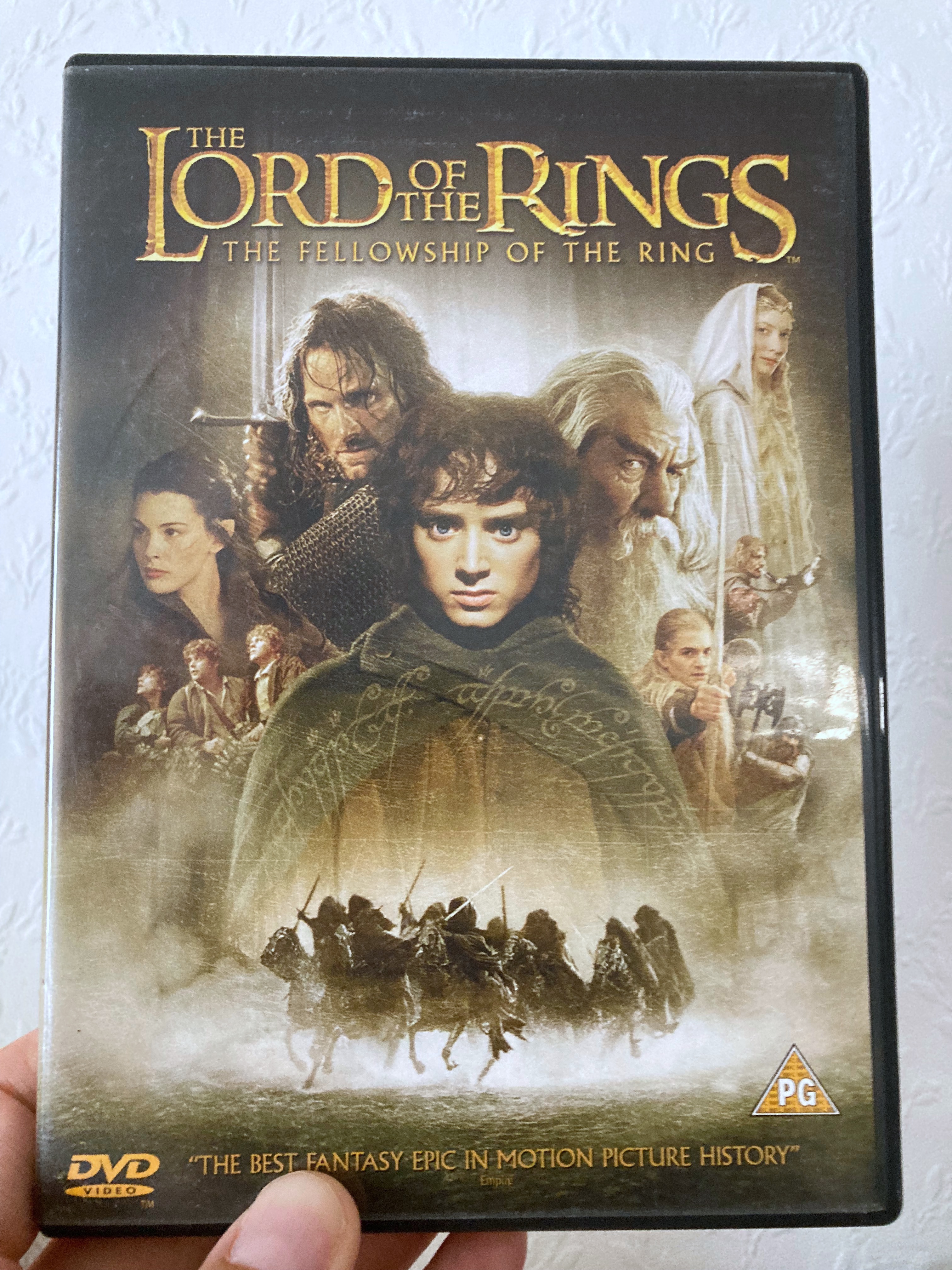
The Lord of the Rings: The Fellowship of the Ring (2001)

First part of Peter Jackson’s version of J. R. R. Tolkien’s fantasy epic. 

A hobbit called Frodo Baggins (Elijah Wood) journeys through Middle-earth to destroy a ring containing immense evil power. Along the way there are battles and mystical happenings that help and hinder his progress. 

I was somewhat dreading watching this – anything with wizards, elves, magic and beards is a big turn-off – but it was better than I thought. The storytelling is coherent and the acting is above par. 

Ian Holm, Ian McKellen, Liv Tyler, Cate Blanchett, Orlando Bloom, Christopher Lee, Sean Bean and Andy Serkis, among others, all do their bit. It’s ludicrous, but they take it seriously enough to make it just about hang together. 

My objection remains the arbitrary-seeming, make-it-up-as-you-go-along “rules” (i.e., this sword will glow blue when orcs or goblins are approaching) that typify fantasy. This thing has this power. That thing can defeat this thing. This other thing can destroy that other thing.

Creation (2009)

An engaging biopic of Charles Darwin, directed by Jon Amiel. 

Darwin (Paul Bettany) attempts to complete On the Origin of Species while dealing with the grief of his daughter Annie’s death. He’s also semi-estranged from his wife Emma (Jennifer Connelly), and his theories about the beginnings of life on Earth are inflaming tensions in the God-fearing community. 

There are impressive scenes of nature, illustrating the idea of evolution as Darwin perceives it. 

Bettany’s compelling performance lifts the film and makes it highly watchable. Connelly brings a welcome complexity to her part as she tries to reconcile her love for her husband with her love of the God his life’s work debunks.

Elysium (2013)


Dystopian sci-fi action thriller. It’s 2154, and Earth (specifically, Los Angeles) is a ruined slum whose inhabitants live in desperate poverty. Meanwhile on Elysium, a huge nearby space station, the elite citizens enjoy lives of luxury with advanced technology and healthcare bays that can cure seemingly anything. (The rich/poor social divide brings to mind The Hunger Games – plus, the shuttles look suspiciously similar.) A fairly convoluted plot sees this injustice and the social order challenged by a bunch of tech-savvy L.A. thugs.

Matt Damon plays the hero, Max Da Costa, who – dying of radiation poisoning – has Elysium’s data stored in a brain implant in exchange for a chance to travel there and be healed. Jodie Foster is the ruthless Defense Secretary Jessica Delacourt, who is out to stop him and who, script-wise, has little to get her teeth into. Alice Braga is Frey Santiago, Max’s childhood friend whose daughter also needs urgent medical treatment. As with Foster, she’s not given much to actually act with and the romance you expect to see never flourishes. Sharlto Copley is pretty awful as the one-dimensional nasty sleeper agent Kruger.

It’s extremely violent and there’s a lot of pointless swearing. The dialogue is banal at best. The film makes some interesting points about class and society, but risks becoming just another shoot-’em-up – albeit in a more exotic setting. You want to explore the miraculous environment of the space station, but instead have to watch sweaty men fighting and throwing hand grenades at each other. A shame, because somewhere in there is an intriguing idea that could have been developed in a much more sophisticated and rewarding way.

The Happening (2008)

Comically bad disaster film starring Mark Wahlberg and Zooey Deschanel as a couple on the run from a mysterious airborne virus that has something to do with wind and trees. 

The logic doesn’t really make sense. There’s a theme about planet Earth being angry at the way we’ve treated it. But the story can’t seem to tell the difference between the chemistry of trees and the weather that causes the wind that makes them move. 

The two stars are poorly directed and end up seeming laughable. It’s a shame because the premise – people in parks inexplicably kill themselves – could have been an interesting one. 

Somehow, The Happening grossed $163 million worldwide.