Showing posts with label Year: 2002. Show all posts

White Oleander (2002)

Absolutely superb drama directed by Peter Kosminsky.

Michelle Pfeiffer is Ingrid Magnussen, who is sent to prison for murdering an unfaithful boyfriend. Her daughter Astrid (Alison Lohman) is sent to a series of foster homes, which lead to problems of their own, but Ingrid’s controlling ways continue to determine events. 

Adapted from Janet Fitch's 1999 novel, it’s a sad and often harrowing story about the damage adults do to children. Pfeiffer and Lohman are fantastic. In other roles, Robin Wright and Renée Zellweger are also excellent.

One odd casting decision is having Billy Connolly play the murdered boyfriend. He’s hardly in the film at all but he does stand out as an extremely unusual and somewhat jarring choice for that role.

Two Weeks Notice (2002)

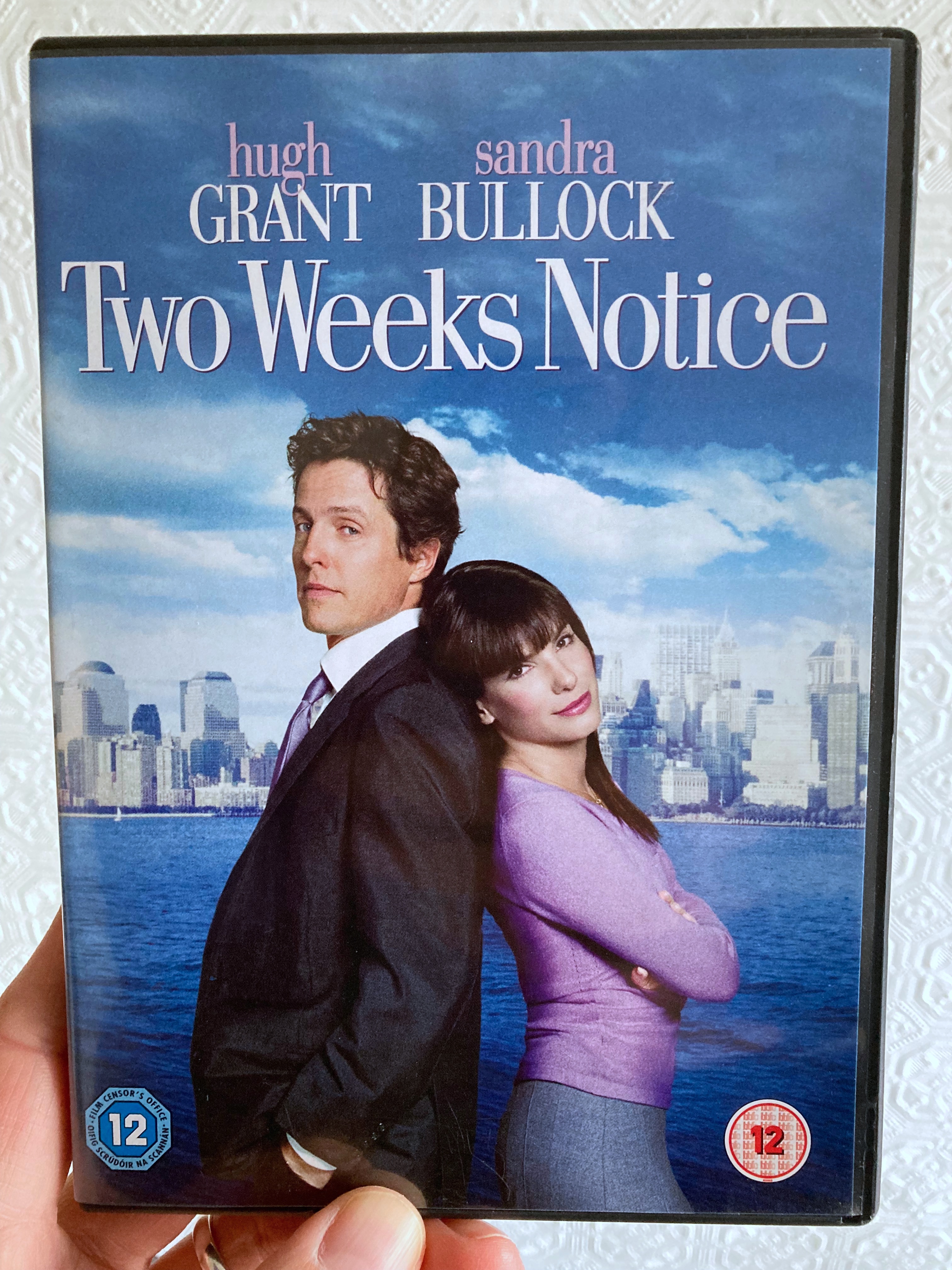
An idealistic liberal New York lawyer (Sandra Bullock) wants to protect a community centre. But her new boss – a womanising billionaire real estate developer (Hugh Grant) – wants to use the land for new property. The pair see the world differently, but soon hit it off. 

Troublingly, there’s no apostrophe in the title (which should be Two Weeks’ Notice). That aside, this is a charming rom-com. Hugh Grant and Sandra Bullock have great chemistry together, and a sharp script lets both of them deliver some funny lines. I like the fact that the pair have so much screen time together. Often in rom-coms the story is all about getting the couple together, leaving you feeling that you've missed out on enjoying their relationship. 

Donald Trump has a slightly bizarre cameo, and indeed Grant’s empire seems loosely based on Trump’s own. Singer Norah Jones also briefly pops up as herself.

Gangs of New York (2002)

One of Martin Scorsese's lesser works. As a fan, I found this a big disappointment.

Fragmented and unfocused, it tells the story of the feuding Catholic and Protestant groups in the New York of the 1860s. At the same time, Amsterdam Vallon (Leonardo DiCaprio) seeks revenge from William "Bill the Butcher" Cutting (Daniel Day-Lewis), who killed his priest father (Liam Neeson).

Scorsese tries to tell too many stories and loses track of the multiple threads.

There's slightly naff Irish music running through the film, which drags on for 167 minutes.

DiCaprio doesn't get to act much, which is a missed opportunity, and Cameron Diaz (who plays his pickpocket girlfriend) doesn't bring a great deal to the role.

There was possibly a great film in here somewhere, but possibly it got lost in the edit.

Blood Work (2002)

Enjoyable thriller starring and directed by Clint Eastwood. 

The plot features a retired FBI agent attempting to catch a killer. The twist is that he is suffering heart problems, which make it even more difficult.

Eastwood is great, as always. In fact, this could have worked as the next Dirty Harry film, although the main character is perhaps too compassionate to be Callahan. 

There are strong female characters – notably Anjelica Huston as Dr. Bonnie Fox. Jeff Daniels also co-stars.

Confessions of a Dangerous Mind (2002)

Biopic directed by George Clooney. That fact alone sets alarm bells ringing – I couldn’t finish his film Leatherheads (2008) and I barely got through The Monuments Men (2014), as they were simply too self-conscious and annoying. He’s fine at surface-level tricksiness, but there’s little emotional depth and his “funny” scenes fall flat. 

This film is marginally better. Chuck Barris (played by Sam Rockwell) is a successful TV producer who also kills people for the CIA. He’s recruited by George Clooney, works alongside Julia Roberts and is in a relationship with Drew Barrymore. 

The story is interesting, and Rockwell and Barrymore have real chemistry together, but Clooney’s direction is awkward and gimmicky. He regularly changes filters and keeps reminding you that you’re watching a film, rather than simply letting you become immersed in it. 

The film dodges perhaps the most interesting aspect of Rockwell’s life – the possibility that all of his CIA deeds were completely invented and never took place. That would have made for a whole extra dimension to the story, but it seems that Clooney is a hamfisted director who just couldn’t quite handle the material.

The Lord of the Rings: The Two Towers (2002)

Second part of the trilogy. More running around Middle-earth uttering fairly ludicrous statements and looking serious. 

You simply need to take it at face value that this creature/thing can out-magic that creature thing, or that this mystic power can thwart that one. 

There’s little here that wasn’t done better in the first instalment, which had a more unified narrative. Also, the segments featuring the walking, talking living trees dragged and detracted from the dynamism of the big battle scenes. 

The best thing about the series is Viggo Mortensen as Aragorn Elessar. He’s fun to watch, unlike the loutish Gimli (John Rhys-Davies) and the silly baddie with hair like Cher (Christopher Lee). 

It suffers from “mid-trilogy” problems in that it has to build on or develop themes from the previous film without the luxury of being about to resolve any of them.

Windtalkers (2002)

Nicolas Cage stars as a battle-damaged US Marine tasked with protecting a Navajo code talker (Adam Beach) during the conflict between the Americans and Japanese at Saipan during World War II. John Woo directs, and Christian Slater, Mark Ruffalo and Roger Willie boost a strong cast. 

It’s a violent and bloody drama that occasionally seems trashy (I would have ditched the slow-motion shots and intrusive music), but gains depth from focusing on strong characters and introducing some philosophical and ethical questions. 

Cage is highly watchable, as always. He just “has it” – whatever “it” is. 

Surprisingly, the film lost $38 million and received mixed reviews.

About a Boy (2002)

Uneven comedy/drama adapted from a novel by Nick Hornby. 

The clunkily named Will Freeman (Hugh Grant) is a moneyed-up consumer who lives a selfish life alone, protecting himself from commitments. He begins preying on single mothers in order to find a date (a quite disturbing trait that the film seems OK with) and ends up making friends with a 12-year-old boy with a suicidal mum (Toni Collette). The boy/man relationship, inevitably, teaches him to be less selfish and ultimately helps him to find a meaningful romance – with Rachel Weisz

Hugh Grant is as appealing as always but the big problem is the boy, Marcus (Nicholas Hoult), who is both unconvincing as a character and oddly difficult to like. Several elements in the story lack the all-important ring of truth. In particular, it’s never explained why Will is so disengaged from society. Is he depressed? Why? What’s the unresolved issue with his father that’s briefly alluded to but never explored? The script is too shallow to get inside these questions and make the characters three-dimensional and “real”. It seems like a fifth-rate imitation of a Richard Curtis film

The soundtrack is by Badly Drawn Boy and works well.

Changing Lanes (2002)

Superb drama directed by Roger Michell.

Samuel L. Jackson plays Doyle Gipson, an insurance salesman and recovering alcoholic fighting for custody of his children. Ben Affleck plays Gavin Banek, a lawyer engaged in shady dealings in the firm of his father-in-law (Sydney Pollack). The two men’s lives collide, literally, when they have a minor road crash in New York. This event sets in motion a sequence of escalating dramas, giving them both the worst day of their lives. 

It’s extremely powerful because it engages on a moral level, exploring what happens to reasonable people in unreasonable situations. Jackson and Affleck are at their best. The supporting characters, including Gipson's wife Valerie (Kim Staunton) and his AA sponsor (William Hurt), are also excellently drawn. 

I couldn’t imagine how the ending could satisfy, but somehow they pulled it off.

Collateral Damage (2002)

Action thriller. Arnold Schwarzenegger stars as a fireman whose wife and son are killed by a Colombian terrorist known as The Wolf (Cliff Curtis). Inevitably, Arnie takes the law into his hands to seek revenge, travelling into the heart of the Colombian guerrilla operation and teaming up with The Wolf’s wife (Francesca Neri) and son. 

It’s sort of exciting despite never bothering much with a script or any fresh ideas. The characters are fairly one-dimensional and it’s arguably quite racist, too. There are visual and thematic hints of Apocalypse Now, but without any of the sophistication or flair of that film. And when Arnie has to show emotions – as this plot demands – not very much happens.

The Bourne Identity (2002)

Taut thriller based on the Robert Ludlum novel and directed by Doug Liman. 

Matt Damon plays a man found shot, floating in the sea, just about alive but suffering severe amnesia. He tries to discover who he is and track down the agents (including Clive Owen) trying to kill him. In the process he uncovers a complex CIA conspiracy centred on a mysterious black-ops programme called Treadstone.

There are elements of James Bond (international locations, fast and thrilling chase sequences), The Fugitive (smart guy outwits authorities chasing him) and Memento (attempts to piece together a forgotten life), but it still feels fresh. The action never lets up and Damon’s subtle, low-key performance is easy to like. His Mini-driving German girlfriend Marie Kreutz (Franka Potente) is also appealing.

A string of sequels would follow.

Secretary (2002)

Lee Holloway (Maggie Gyllenhaal) comes from a troubled family and struggles with self-harm problems. She begins a new job working as a secretary for lawyer E. Edward Grey (James Spader), and begins an extreme relationship with him that’s based on discipline and control. This becomes an unlikely love story. 

It’s not for the prudish or the easily startled, but there’s a touching drama contained within this deliberately disturbing and very black comedy. Gyllenhaal is so expressive that she perfectly evokes her transformation from suffering victim to the liberated master of her own destiny. A slightly surreal, absurd aspect enhances the film rather than making it less believable. 

Adapted from a short story by Mary Gaitskill, Secretary covers themes that most films won't go near. It does so with wit and charm, so it doesn’t feel exploitative – even when exploitation is part of the subject matter.

The Hours (2002)

The lives of three women from different eras form intriguing parallels. In Richmond in the 1920s, we see Virginia Woolf (Nicole Kidman) writing Mrs Dalloway and dealing with suicidal thoughts. In 1950s California, Laura Brown (Julianne Moore) reads Mrs Dalloway and faces her own fears and insecurities. And in New York in 2001, Clarissa Vaughan (Meryl Streep) wrestles with her feelings for an old flame who is dying of AIDS. 

Kidman, Moore and Streep are all fantastic in emotionally complex and challenging roles. Kidman looks absolutely nothing like herself – it’s difficult to believe it’s her – owing to a prosthetic nose. 

There are also strong performances from Miranda Richardson, Jeff Daniels and Ed Harris. 

In many ways it’s a depressing film, and it deals with painful topics. But it also addresses the value of life. 

Intense, sweeping, music by Philip Glass adds emotional depth.

24 Hour Party People (2002)

Michael Winterbottom’s vivid and highly entertaining biopic of Tony Wilson, boss of Factory Records and founder of the Hacienda nightclub. Wilson is perfectly evoked by Steve Coogan, who really captures the flamboyant brilliance of the man. 

The film is witty and fairly innovative. At times it breaks the fourth wall with speech direct to camera. Real footage is woven in with recreations so, for example, you “see” Coogan as Wilson in the crowd of a Sex Pistols concert. It makes a strong case for Manchester as a thriving centre for culture from the late 1970s (punk) to the early 1990s (“Madchester”). 

Along the way we get the story of Wilson’s TV work for Granada Reports, his relationship with wife Lindsey (Shirley Henderson), and the rise and fall of Wilson-promoted bands Joy Division, New Order and the Happy Mondays. It’s very funny in places, and even the fantastical sequences such as sightings of a UFO and a conversation with God himself – the sort of gimmicks I usually hate – work well in this context, such is Winterbottom’s masterful juggling of the various threads of fact, fiction, myth and reality.

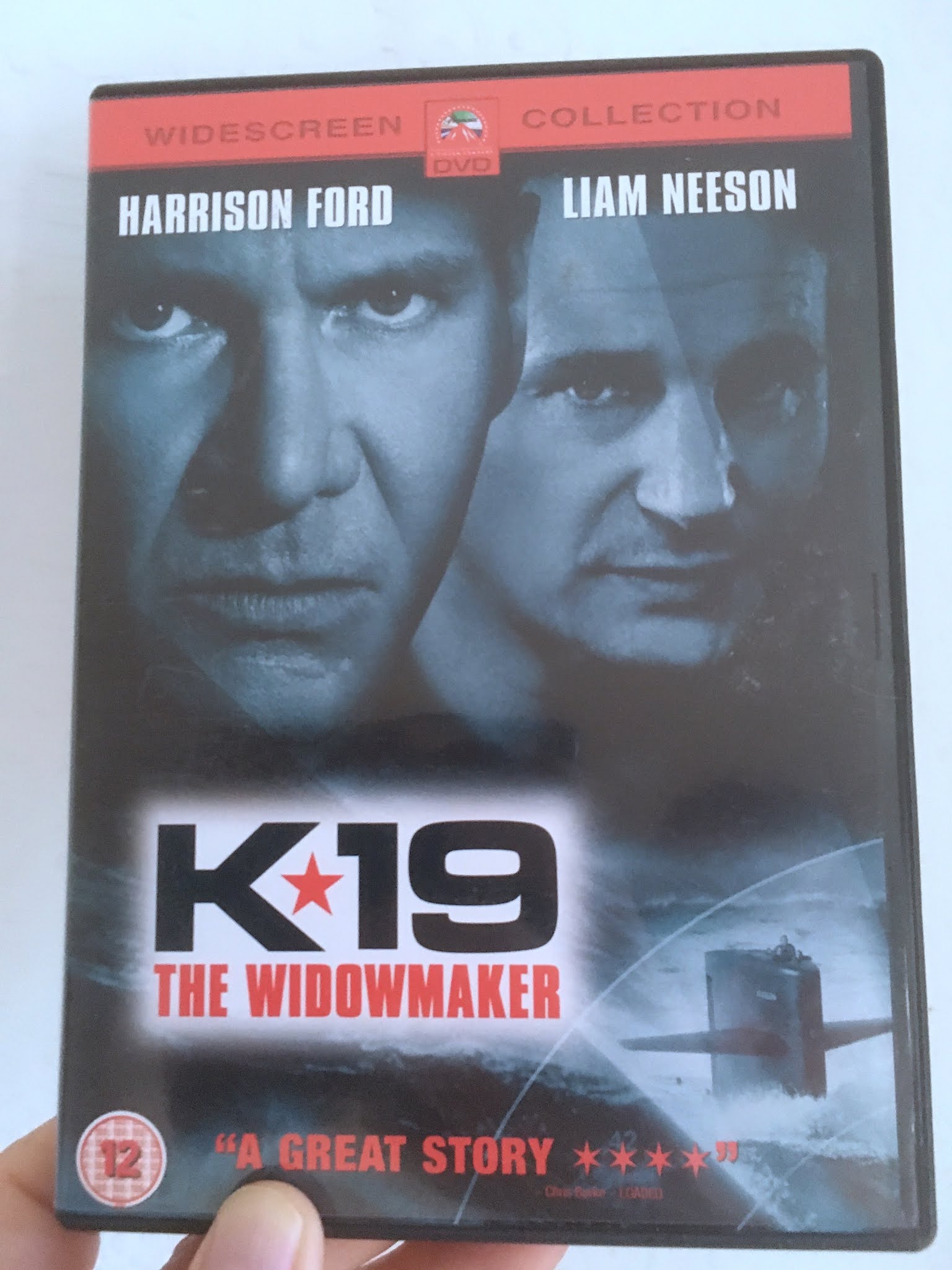
K-19: The Widowmaker (2002)

It’s 1961 and the Soviet Union sends a new nuclear submarine on a test mission. Mikhail Polenin (Liam Neeson) has been demoted from the role of captain and replaced by Alexei Vostrikov (Harrison Ford), who seems unreasonable and needlessly reckless, so tensions are running high from the outset. When a reactor coolant pipe bursts, the sub is in danger of blowing up – and destroying everything around it, including a US destroyer – risking dangerous military escalation and potentially World War III. 

As the drama unfolds and the crisis rapidly accelerates within the claustrophobic interiors of the craft, the two captains have to navigate their own prickly relationship as well as the relationships they have with their men, who clearly favour Polenin’s way of doing things. 

It’s an intelligent film that continually surprises. There are disturbing scenes that change the dynamic from intense Cold War thriller to compassionate human drama. 

The two leads are excellent and exude charisma, even if their Russian accents sometimes come and go.

Crossroads (2002)

A predictable “star vehicle”. Lucy (Britney Spears) and two other young women from Georgia take off on a road trip. One wants to go to an audition in Los Angeles, one wants to visit her fiancé and one wants to meet her estranged mother in Tucson, Arizona. In the process of taking the trip, they inevitably “find themselves” and rekindle their own childhood friendship. 

It’s formulaic in the extreme. Britney seems natural enough as an actor, but the script has no sparkle and the plot offers no surprises. I hoped they’d rob a bank or encounter a zombie apocalypse or something, but no such excitement occurs. Also, her dreary companions Kit (Zoe Saldana) and Mimi (Taryn Manning) are presumably there to make her look better. Her parents are played by Kim Cattrall and Dan Aykroyd, but it’s a struggle to believe they are the actual mum and dad of Ms. Spears. 

Crossroads tries to deal with issues such as teen pregnancy, the pressures of gender roles and the value of family, but the abundance of cliché means that it does so only superficially. It’s designed as fan fodder (you can almost hear the focus groups behind it), and in that sense it achieves everything it sets out to.

About Schmidt (2002)

Bleak black comedy about a man in Omaha, Nebraska who leaves an insurance company to enjoy his retirement, only to find that his wife dies soon after. Suddenly he has no shortage of free time, but he has no one to spend it with. Struggling to find meaning in his life, he begins to sponsor a child in Tanzania (his letters to the boy form the film’s narration), travelling around in his huge new Winnebago, and trying to persuade his daughter not to marry her waterbed salesman fiancé. 

Jack Nicholson is as fascinating to watch as always, and expertly portrays the bemused, slightly shell-shocked widower. Kathy Bates is excellent as the rather scary mother of his future son-in-law. 

It’s a fairly depressing film, and deliberately so. It’s to be respected for not offering any trite or easy resolutions to this lonely 66-year-old’s predicament in the way that a more obvious narrative might have done. But a few more laughs would have helped since a lot of it is genuinely painful to sit through.

Road to Perdition (2002)


Crime thriller set in 1931. Tom Hanks plays a mobster out to kill the man (Daniel Craig) who murdered his wife and youngest son. Paul Newman is the father and don who places Mafia loyalties before all else.

Told from the perspective of the mobster’s elder son (played sensitively by Tyler Hoechlin), the film examines both the boy’s relationship with his father and also his immersion into a world of gangland corruption and cold-blooded killing.

Sam Mendes’ direction is a little too stylised – there’s lots of “enigmatic” rain – but the storytelling is nevertheless powerful.

Jude Law is a little unconvincing as the murderous photographer. The character isn’t developed enough to explain why he has a thing about dead bodies. Maybe it makes more sense in the graphic novel from which this is derived.

“Cuddly” Tom Hanks isn’t quite right as Michael Sullivan, but the film cleverly has it both ways: he’s a heartless killer who truly loves his family and therefore comes across as a reasonably nice guy.

These points aside, it’s fairly atmospheric and engrossing.

Star Wars Episode II: Attack of the Clones (2002)


Episode II is even more awful than you remembered. There is so much wrong with it... Some of the worst “acting” you will ever see. Flat dialogue. “Jokes” that simply are not funny. Brightly lit green-screen sets that never seem real. Ponderous, almost faux-Shakespearean exchanges that hint at a weighty “significance” that never arrives. When Anakin tries to do “romance” – declaring his love for Padmé Amidala (Natalie Portman) – or indeed any kind of acting, it is excruciating. Hayden Christensen is way out of his depth and grotesquely miscast in the role of the troubled child about to become the evil dictator Darth Vader. Never once can you believe in him.

As with Episode I (1999), the weakest in the series, there’s something fundamentally “not quite right” about the whole film. There’s way too much of Obi-Wan Kenobi (Ewan McGregor) just...wandering around. And, but for a few action scenes, it’s incredibly s-l-o-w. Hard to believe this was designed to appeal to kids. Ian McDiarmid as Palpatine is the one redeeming feature.

Die Another Day (2002)


The fourth and final James Bond film starring Pierce Brosnan showed that the series was desperately in need of a rethink (which it would soon have with Daniel Craig). The sci-fi-tinged plot (an invisible car, a space laser like the Death Star in Star Wars) is possibly even more ludicrous than usual. There’s a bit where he’s wandering around in pyjamas and a Jesus beard after 14 months of being tortured. Halle Berry is blandly uninteresting as the female lead. John Cleese is an unfunny disaster as “Q”. There’s some awful dialogue (“Die, bitch!”). Madonna has a pointless cameo to demonstrate that she can’t act. There are cheesy slow-motion shots. And there’s a truly surreal moment when the soundtrack includes “London Calling” by The Clash. The sole redeeming feature is Judi Dench as “M”.