Showing posts sorted by relevance for query Paul Greengrass. Sort by date Show all posts

Dying of the Light (2014)

Simplistic, one-dimensional thriller that was disowned by writer/director Paul Schrader and some of the cast. 

Nicolas Cage plays a CIA man intent on revenge after he was tortured by a terrorist 22 years previously. The unusual twist is that he is suffering from a form of dementia, which affects not only his memory, but also his moods and behaviour.

It has a low-budget feel and there’s very little action. It seems like a cut-price attempt to make a Jason Bourne film, but without Paul Greengrass’s directorial energy and skill. 

The dementia angle is surprisingly low-key in the plot. I was expecting it to be used as a rationale for all sorts of odd outbursts from Cage.

Jason Bourne (2016)

Bourne again? 

The fifth instalment in the series and – as of 2021 – the final part. Jason (Matt Damon) is still at large, but thanks to the hacking by old pal Nicky Parsons (Julia Stiles) he now has extra information about his past – and an insight into what happened to his father. 

In many ways it’s the same film yet again, but it’s such a good film that it’s worth remaking. This time, Tommy Lee Jones plays the corrupt head of the CIA. There’s also stuff about internet privacy with a social media corporation called Deep Dream (led by Riz Ahmed), plus an ambitious young CIA tech wizard who may or may not be helping J.B. (Alicia Vikander as Heather Lee). 

Paul Greengrass directs again, delivering incredible action sequences. The car chase in Las Vegas is especially dynamic. 

If there’s a fault it’s that there’s little psychological development for Bourne. Yes, there’s a thread about his dad but he has even less dialogue than usual. I’d have liked him to have shared more of a relationship with Nicky, or at least some “meaningful” glances, but following the first film there seems to have been a conscious decision for the series to avoid romance. It makes sense plot-wise because Bourne can’t stay in the same place for a couple of minutes before men in cars and copters arrive to kill him. But it would still have been nice to give him the extra depth of reconnecting with the woman who loved him.

The Bourne Supremacy (2004)

Second instalment in the series inspired by Robert Ludlum’s novels. Matt Damon reprises the role of the CIA agent who lost his memory. This film pretty much continues where the last one left off. Bourne is now living in hiding in India with his partner Marie (Franka Potente), when their cover is blown and someone shows up to kill him. Once again he has to go on the run. Just like Dr. Richard Kimble in The Fugitive (his spiritual cousin), he also has to try to clear his name. 

It’s ridiculously exciting – probably even more so than The Bourne Identity. Director Paul Greengrass really understands how to make this kind of film work. The action sequences are superbly filmed and the pacing is spot on. The car chase in Moscow is especially thrilling. Also better in this film is the CIA boss (Joan Allen), who has a commanding presence. 

Matt Damon plays it just right: charismatic but understated. It makes the James Bond films (even the Daniel Craigs) look a little old hat.

United 93 (2006)

Extremely harrowing account of what is believed to have happened on one of the four planes hijacked on September 11th, 2001. Whereas the other three reached their targets, this Boeing 757-222 was downed in a Pennsylvania field on its way to Washington, D.C. after the passengers confronted the Al-Qaeda terrorists who murdered the pilots.

It’s filmed in a “documentary” style that’s horribly convincing. It’s to the great credit of writer and director Paul Greengrass that he doesn’t sensationalise the events. Nor does he create “hero” characters among the doomed passengers or flesh them out with speculative material. Instead, the narrative stays faithful to what little is known about what actually took place. The air-traffic control personnel are also portrayed well, and it’s grimly compelling as we observe them realising that events are spinning out of control.

The tension is almost unbearable. You feel what you are seeing is real, which makes you ask yourself why you are watching it at all. The closing minutes are incredibly dramatic and painful to watch.

Green Zone (2010)

Exciting thriller loosely based on real events and directed by Paul Greengrass, with the familiar, dynamic style that makes his best films so watchable. 

It’s 2003 and Matt Damon is a US soldier in Baghdad, leading a unit in the search for Weapons of Mass Destruction. But working with a member of the CIA (Brendan Gleeson) and a journalist (Amy Ryan), he comes to realise that there aren’t any weapons to find and that the government has acted on false information. 

It’s a thriller, a war film and a conspiracy drama. 

Matt Damon – rarely less than brilliant – is as riveting as he ever was. 

The fast cuts make it especially exciting, and I like the "low-res" visuals (which were no doubt exceedingly expensive).

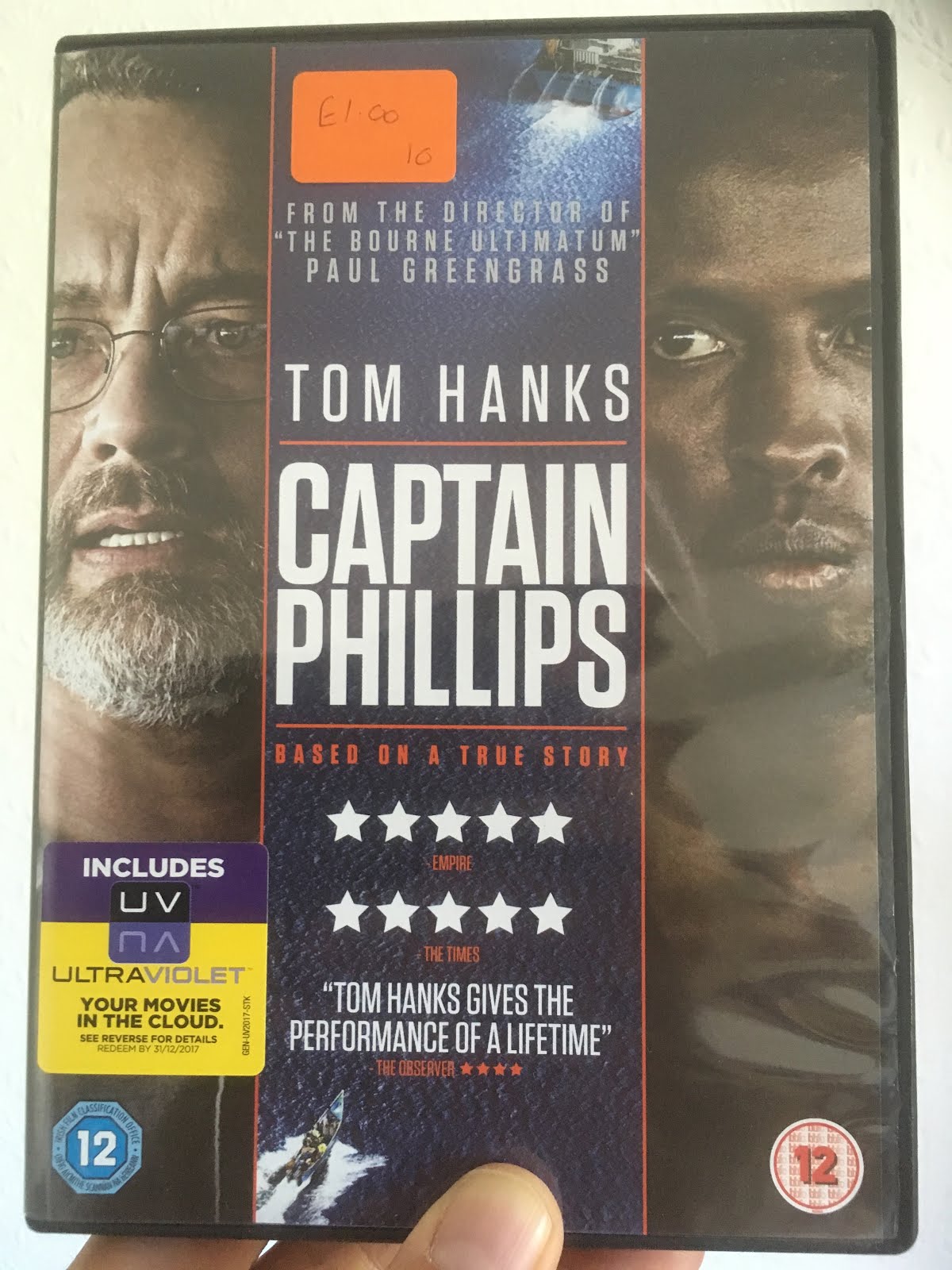
Captain Phillips (2013)


Terrifying true-life story about a Maersk cargo ship hijacked by Somali pirates. 

The film steadily ramps up the tension to unbearable levels, with director Paul Greengrass expertly managing to relentlessly heighten the drama. There are no clichés and it’s entirely believable – even with Tom Hanks in the lead role. The music by Henry Jackman does a lot to build the atmosphere.

There was controversy that the film wrongly presented Richard Phillips as a hero, but I saw him as a mere victim. It inspired me to read his book A Captain’s Duty: Somali Pirates, Navy SEALs and Dangerous Days at Sea.

The Bourne Ultimatum (2007)

In the third film in the series, Jason Bourne is still on the run and still trying to piece together his past. Plus, he’s continuing his attempts to expose corruption within the CIA. It’s a clever continuation of the first two films (you could argue that they simply made the second film again) that manages to develop the story and character as well. 

Matt Damon continues to pace around and cross the road a lot, escaping from vicious killers and generally evading capture again and again. Julia Stiles appears for the third time as the CIA’s Nicky Parsons and Joan Allen returns as CIA deputy director Pamela Landy. The baddies working within the agency are played by David Strathairn and Albert Finney. There’s even a journalist (Paddy Considine) who works for The Guardian. 

It’s fast cut, with director Paul Greengrass using the same jerky-camera “documentary” style he employed in United 93 and The Bourne Supremacy. The action sequences are brilliantly done, and you end up glued to the screen as you try to fathom how Bourne can possibly stay alive through these increasingly desperate situations.

As with The Bourne Supremacy, the title makes no sense.