Rocky (1976)

Drama written by and starring Sylvester Stallone as a small-time boxer and debt collector who somehow finds himself fighting against the world heavyweight champion, Apollo Creed. 

Directed by John G. Avildsen, it’s an amazingly low-key film, very little of which is actually about boxing. Mostly it’s a rather sad saga of a man struggling in the world. He finds love in the form of his friend’s sister Adrian (Talia Shire), who, like him, suffers from low self-esteem. 

It’s extremely gritty. You see a lot of Stallone wandering around, seeming a little lost, in run-down parts of Philadelphia. You end up rooting for him as he seems such a sweet and needy character. 

Burgess Meredith (The Penguin from the 1960s Batman TV series) plays his coach, and Burt Young plays his desperate and downtrodden friend Paulie. 

Numerous big-budget sequels would follow, but the impressive restraint of this original would never be repeated.

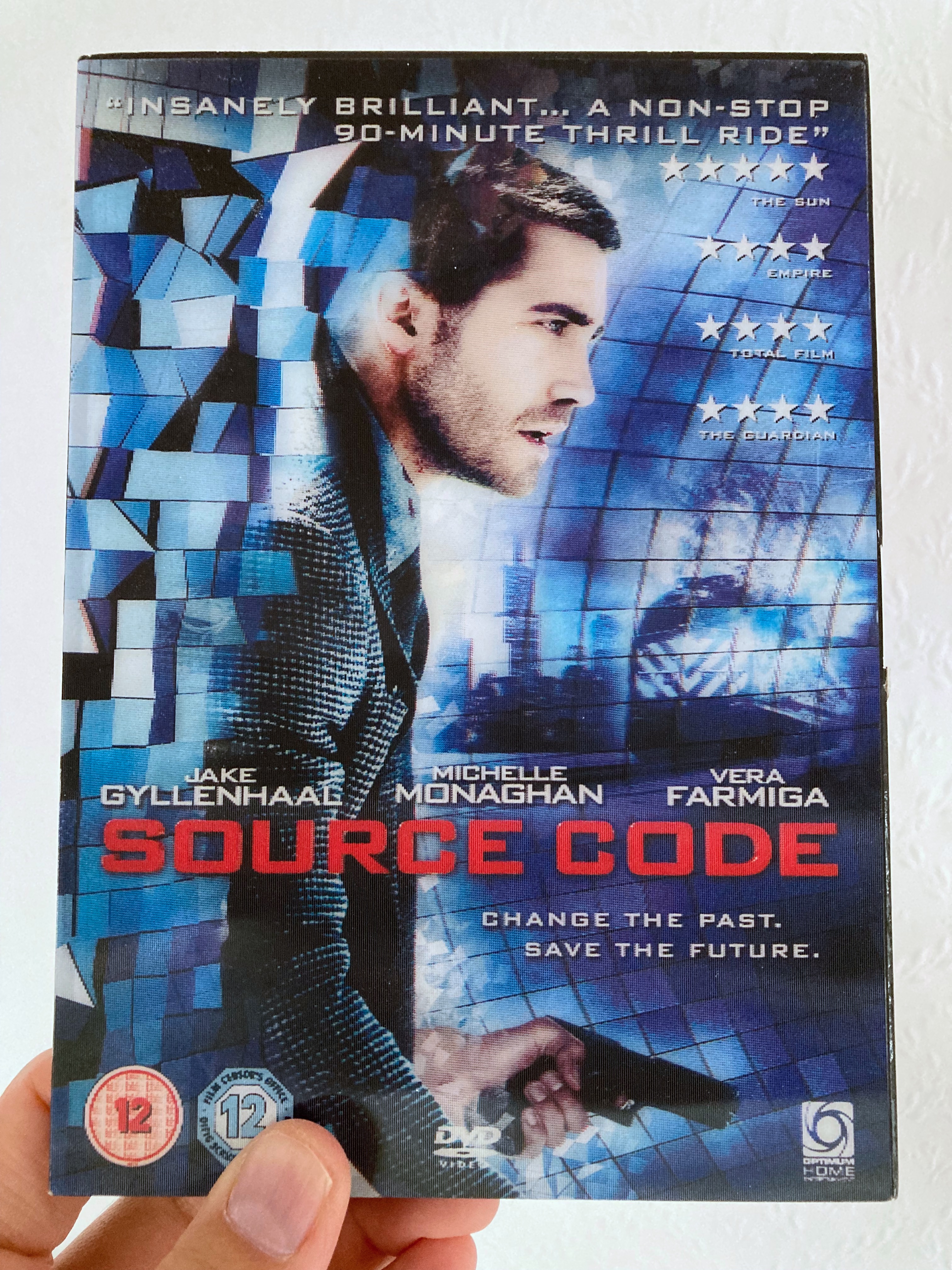
Source Code (2011)

Mind-bending sci-fi thriller. 

The plot is extremely difficult to summarise, but here goes: a U.S. Army Captain Colter Stevens (Jake Gyllenhaal) finds himself on a train journey into Chicago. The eight minutes that he experiences ends in a terrorist explosion that kills all of the passengers on board. He is forced to relive the same eight-minute stretch of time again and again until he can find the bomber and prevent the disaster. Meanwhile, in the intervals between each attempt he comes to in what seems like a helicopter cockpit, where he is advised and manipulated by a mysterious military unit led by Vera Farmiga and Jeffrey Wright, who need him to succeed in his mission to prevent a series of even worse terrorist incidents. 

In narrative terms there’s a Groundhog Day element – the idea of repeating the same moments until you get them right – but the tone and feel are completely different. This is tense, taut and suspenseful, with a humanity that makes it more appealing than you might expect a tech thriller to be. 

Michelle Monaghan plays the woman he’s sat opposite on the train, who he falls for and wants to save. It’s complicated but the storytelling is excellently handled and it’s far more lucid than the summary above might suggest.

In 2018, Very Farmiga would show up again in an oddly similar train-terrorist thriller called The Commuter.

The Painted Veil (2006)

Drama, brilliantly directed by John Curran, based on the 1925 novel by W. Somerset Maugham. 

Bacteriologist Walter Fane (Edward Norton) meets Kitty Garstin (Naomi Watts) in London and they quickly marry. Then Walter accepts a post in China, helping a village amid a cholera outbreak, forcing Kitty to go with him to punish her for her infidelity. 

It’s beautifully shot and extremely poignant. There’s a historical/political thread, but the main focus is on the couple’s complicated relationship and the way it evolves.

The script is subtle and nuanced. Likewise, the graceful and restrained-but-powerful performances.

The Ides of March (2011)

Political drama adapted from Beau Willimon’s play Farragut North. It’s directed by George Clooney, who plays a liberal-minded governor running for president. Stephen Meyers (Ryan Gosling) is his junior campaign manager, reporting to the skilled but cynical Paul Zara (Philip Seymour Hoffman). And Evan Rachel Wood is the young intern whose affair with the governor threatens to bring down the entire campaign. 

It’s a fascinating insight into the politics behind the politics. Because it’s from a play, it’s strong on dialogue and character. There’s an escalating tension that’s brilliantly handled by everyone involved. There’s a theme about idealism being eroded by the cynical realities of the political system, and Gosling is superb as a representation of that conflict. Also at their best are Paul Giamatti as a rival campaign manager, Marisa Tomei as a reporter for the New York Times and Jeffrey Wright as the Democratic Senator from North Carolina.

Gangster Squad (2013)

Gangster thriller set in Los Angeles in 1949.  

Sean Penn is Mickey Cohen, a brutal mobster. Sergeant John O'Mara (Josh Brolin) is a World War II veteran who leads a team of cops (including Ryan Gosling) to hunt him down. Emma Stone is Cohen’s girlfriend and “social etiquette teacher”, who becomes attached to Gosling, putting both of them in great danger. 

It’s exciting when there’s action taking place, and the chase and shoot-out sequences are exceedingly well filmed, but it's let down by a sub-standard script. The characters aren’t really developed, so you don’t see any of these excellent actors at their best. The group scenes are especially flat, with no one seeming to have anything to say. Even the Stone/Gosling pair-up – so potent in La La Land – fails to sparkle. 

There’s an interesting theme about the war not yet being over, and O’Mara not knowing what else to do but fight. Oddly enough, the most three-dimensional character is Connie (Mireille Enos), his pregnant wife, who goes from warning him about the dangers of what he’s doing to hand-picking the “gangster squad” who work with him.

Easy A (2010)

Emma Stone stars in a witty, postmodern teen comedy that references the John Hughes films of the 1980s, Nathaniel Hawthorne’s novel The Scarlet Letter from 1850 and the Demi Moore film adaptation of that book from 1995. 

Olive is a smart, fast-talking 17-year-old student in California who makes up a story about sleeping with a boy. It becomes a rumour that spreads around the school, and this in turn transforms her reputation and leads to a sequence of escalating fictions that threaten the wellbeing of Olive and many others.

It’s extremely clever. Some of the lines are so fast that you miss them. You almost need the script in front of you. Stone is magnetic and vibrant. Stanley Tucci and Patricia Clarkson are funny as Olive’s warm, ultra-liberal parents. Lisa Kudrow has an awkward energy as the school guidance counsellor who only makes Olive’s problems worse. 

On the down side, there are some plot issues. Olive appears to have a happy, stable family life with understanding parents, so nothing explains why she would go to such lengths to derail her entire existence. Also, it’s unclear why the rumour becomes such a major scandal anyway. In a mixed school, with teens of that age, in that part of the USA, was it really such a big deal that someone lost their virginity?

Also, there’s very little in the way of emotion. That’s surely intentional, but it does mean the film makes less of an impact than it might.

Big (1988)

Extremely charming comedy starring Tom Hanks as Josh, a 13-year-old boy who – because of some vague magic that takes place with a fairground fortune/telling machine – wakes up in an adult’s body. His mother won’t believe it’s really him, so he’s forced to join the adult world, working for a toy company. He also begins a romance – his first – with the cynical Susan (Elizabeth Perkins), who is transformed by his good nature and innocence.

It’s an extremely sophisticated film that understands how children and adults think. Hanks is absolutely perfect in the role. His body language and facial expressions uncannily reflect those of a child, so you totally believe in the unlikely scenario. There’s a real poignancy to it, too, because the characters are so well-written. You can feel Josh’s conflict when he wants to return to his childhood world just as he’s laying down roots and finding his way among adults. 

Big explores the idea of the “child” in all of us and asks how we can grow up without losing sight of that. There’s a huge emotional intelligence in the writing and direction, and Hanks – sometimes taken for granted – should be applauded for conveying it so effectively.

I enjoyed the film when I was young, but I got so much more out of it as an adult.

Music from Another Room (1998)

Extremely unusual romantic comedy. 

It’s 1973. The five-year-old Danny (Cory Buck) is with his father, visiting family friend Grace (Brenda Blethyn). Grace is about to give birth and – bizarrely – Danny helps save the baby by freeing the umbilical cord round its neck. When the baby, Anna, is born he announces that one day he will marry her. Twenty-five years later, Danny (now played by Jude Law) is back in the USA and has a chance meeting with the Swan family. (He would have just decided to visit them, but the writers clearly preferred a far more unlikely scenario.) He sees Anna (Gretchen Mol) and falls in love. But Anna is part of a big, complicated family and about to get engaged to a man she doesn’t really love. 

The film is strange in many ways. The plot doesn’t really ring true, but the members of the family are quirky, well-drawn characters and you are quickly drawn into their world. There’s a blind sister, a suicidal sister and a slightly odd sister. 

There’s a thread about Anna Karenina running through it, and the sisters are named Anna, Karen and Nina accordingly. Some of their stories don’t quite work (the suicidal sister actually shoots her husband and nothing more is said about it). A writer such as Nora Ephron or Woody Allen would have done a better job of neatly tying those threads together. But the film exudes charm and all of the performances are hugely likeable. There are genuinely touching parts and a few laughs too.

Rob Roy (1995)

Scotland, 1713. A Highlands clan chief guided by principles of honour (Liam Neeson) is happily married to Jessica Lange, but a financial loan from the Marquess of Montrose (John Hurt) backfires when he’s double-crossed by a nasty nobleman (Tim Roth). 

It’s entertaining fluff – well directed and highly watchable – with a surprisingly intelligent script wrapped around the story’s various twists and turns. 

The landscapes look terrific if you don’t mind the soupy “traditional” music that’s played whenever you see them. 

Neeson has charm and gravitas. Lange just has charm and handles a difficult role with great skill. Roth is compelling as a horribly corrupt schemer.

A Few Good Men (1992)

Directed by Rob Reiner (adapted from a play by Aaron Sorkin), but not up to his usual standards. 

Tom Cruise plays a military lawyer who has to defend a pair of US marines accused of killing a soldier at the Guantanamo Bay Naval Base in Cuba. He spends a lot of time fiddling with his baseball bat. Demi Moore plays Lieutenant Commander Joanne Galloway. Jack Nicholson is a suspicious colonel. Kiefer Sutherland and Kevin Bacon also feature. 

It’s a little like a TV movie in places, and the music seems generic. Tom Cruise is exactly like he is in all his other films – cocky, fast-talking and apparently good at everything. Demi Moore struggles with a role that’s not really fleshed out. Only Jack Nicholson holds your attention, and even he isn’t given much to go on. Unless you’re keen on Cruise and his standard range of tics, it’s oddly unfulfilling.

The Book Thief (2013)

Wartime drama focused on a young girl (Sophie Nélisse) living with adoptive parents (Geoffrey Rush and Emily Watson) in Germany at the time that World War II broke out. Her new family illegally house a Jewish refugee and struggle with the transformations around them. 

It’s an engaging story, elegantly conveyed with plenty of unexpected twists and turns. The acting is first rate (Nélisse and Rush are both exceptional), and – despite excessive use of filters – the film looks impressive, too. 

What spoils it for me is the voice-over narrated by Death, an omniscient character kept unusually busy during the war. It comes across as clunky and awkward, interrupting the story and reducing the emotional impact of what you are seeing.

Slow West (2015)

Odd western directed by John Maclean.  

Kodi Smit-McPhee plays a young Scotsman searching for the woman he loves in the American West. He is guided by a bounty hunter played by Michael Fassbender. The premise is good and the two leads are intriguing, but something about the film doesn’t quite work. 

The characters could have been better drawn. Also, the situation didn’t ring true. Would there really have been a bounty in America for a crime committed in Europe? 

It’s not emotionally involving and probably not trying to be, either. There are a couple of welcome flashes of humour, and more of that would have been nice.

Trouble with the Curve (2012)

Baseball-themed drama starring Clint Eastwood as Gus, an elderly talent scout with failing eyesight and a bad temper. Amy Adams plays Mickey, his daughter – a successful lawyer who puts her career on hold to accompany her dad on a scouting trip to North Carolina to look after him. She also tries to find out why he has always rejected her. Justin Timberlake is a younger scout who seeks Mickey’s affections. 

It’s quite unusual in tone and pace, being a slow-burner that’s gently funny. Eastwood looks incredibly old and his voice is sometimes a barely audible croak. That all works with his character, though, even if it can make for uncomfortable viewing. Adams steals the show by exuding charm. Timberlake is less convincing, and I found his performance a little generic. My heart sank when John Goodman walked on as Eastwood’s boss, but he exercises more restraint than usual. 

All in all it’s a pleasing film that won’t change the world but which achieves what it sets out to.

Cold Mountain (2003)

Truly excellent drama set during the US civil war. It’s a war film, a love story and a historical epic. 

When the war breaks out, the quiet, inarticulate Inman (Jude Law) is one of the young men from North Carolina who has to fight with the Confederate army. But he has just fallen for Ada (Nicole Kidman), the daughter of the preacher (Donald Sutherland), and has to leave her – just as their relationship is beginning. Injured in battle, he attempts to make his way back home to Ada while being hunted for deserting. 

All of the leads are on excellent form. Renée Zellweger plays Ruby, a plucky free spirit who helps Ada salvage her farm and her self-respect. Philip Seymour Hoffman is a crooked preacher. Natalie Portman is a widowed mother. There are also parts for Jack White, Ray Winstone, Brendan Gleeson and Cillian Murphy. 

It’s an emotional and affecting work that avoids cliché, especially since the romance is unconventional to begin with. The couple barely know each other, but their connection is overwhelmingly powerful. As a result, the film is too.

Northern Soul (2014)

Excellent British drama directed by Elaine Constantine. 

Two Lancashire teenagers discover Northern Soul music and dedicate their lives to the pursuit of it, hunting down obscure seven-inch singles and dancing the nights away on amphetamines as an escape from the oppressive traps of family and education. 

In some ways, it’s like an English Saturday Night Fever. It’s a perfect evocation of the grimy, gritty, dour aspects of the early 1970s. Everything looks convincingly grubby and horrible. Most of the film is really dark, to the extent that it’s sometimes difficult to see what’s happening. 

Elliot James Langridge is superb as the alienated John, who finds a meaning to life in the sweaty clubs away from the pressures of his parents (Lisa Stansfield plays his mother) and teachers (Steve Coogan plays the unpleasant Mr. Banks). 

The music sounds fantastic – twitchy and energised – and the film has real energy.

The Breakfast Club (1985)

The famous John Hughes teen drama is another one from the “wanted to see what all the fuss was about” list. 

Five high school kids spend a Saturday together in detention. Initially wary of each other, they begin to bond as they start to understand what they have in common. 

Emilio Estevez, Anthony Michael Hall, Judd Nelson, Molly Ringwald and Ally Sheedy star as the strangers who become friends. It’s made for teenagers and it might seem excruciating if you are any older than that yourself, but the film works because each of the characters is fairly well drawn. Also, the dialogue and settings are like those of a play: it’s essentially composed of people talking in a room – albeit with a few “pop video” sequences.

The only real criticism is that the teacher (Paul Gleason) is a one-dimensional representation of “authority” and “adulthood”. He could have been a far more nuanced character, but – unsurprisingly, given the target audience – the film prefers to build a simplistic us-and-them opposition. Adults are not cool because they don’t care and they don’t understand. That point aside, it’s an engaging 97 minutes. 

The big theme song is Simple Minds’ “Don’t You (Forget About Me)”, which features prominently and which became a number one single in the USA.

Lethal Weapon (1987)

Buddy-based L.A. police drama that’s very much an inferior version of Beverly Hills Cop. I wanted to see what all the fuss was about, but I couldn’t really. 

Mel Gibson plays a “troubled” policeman wrestling with bereavement and mental health issues. He’s teamed up with Danny Glover to investigate the death of a woman who appears to have leaped from an apartment balcony. 

It’s a little hammy, the villains (including Gary Busey) are woefully one-dimensional and it feels very “TV movie” in places. But Gibson and Glover work well together, with a certain chemistry, even though the macho aspects of the plot are ludicrous. At the end, for example, Gibson engages in a lengthy fight with the villain when he could have simply arrested him. 

To some extent, you have to buy into Gibson’s whole style – twitchy and “on the edge” – for the film to work at all. If you can’t engage with his persona, or you find him merely ridiculous, then you’re left with a fairly ordinary thriller. 

My copy is the “director’s cut” but I’ve no idea what was removed or added for this version. 

It’s worth watching if you’re curious about 1980s blockbusters, as I am, but I don’t ever need to see it again.

Wall Street: Money Never Sleeps (2010)

Oliver Stone’s disappointing and unnecessary sequel to his original 1987 Wall Street hit, which was itself patchy. Michael Douglas returns as Gordon Gekko. He’s out of prison and says he wants to reconnect with his estranged daughter (an unconvincing Carey Mulligan). That daughter’s fiancé (Shia LaBeouf) is himself a Wall Street wizard and begins his own wheeler-dealing with Gordon Gekko. Josh Brolin plays a smooth, ruthless banker who gave evidence against Gekko in the past.

It’s a frustrating film that feels slow in parts and plain odd in others. Naff visuals don’t help: sometimes there are fussy split-screen effects, and at a couple of points we see crudely literal representation of “dominoes falling” and “science”. 

Susan Sarandon has a bit part that doesn’t really work, and Charlie Sheen has an awkward cameo purely as a nod to his role in the first film. He wasn’t very good in that either. 

Michael Douglas is always compelling, but it’s a genuinely baffling story that simply did not need to be told. The bolted-on happy ending suggests that Oliver Stone is muddled about how he feels about Gordon Gekko. He seems to be in love with the character and unable to make up his mind about whether he’s a nice guy or a baddie. Instead, he gives him a line about all of us being mixed bags who should give each other a break. After two films, that just seems like a cop-out.

The Informers (2009)

Muddled adaptation of short stories by Bret Easton Ellis about a bunch of loosely associated dysfunctional, alienated Los Angeles people in 1983.

It completely lacks charm or intrigue. The sex, drugs and rock ’n’ roll feels forced and clichéd. None of the characters seems to care about anything, so why should we care about them? It makes the mistake of being every bit as empty, vacuous and depressing as the world it portrays.

There’s an all-star cast including Billy Bob Thornton, Kim Basinger, Winona Ryder, Mickey Rourke and Chris Isaak, and some of the individual performances are reasonable enough. But none stand out and the film doesn’t really hang together. What works well on the page seems flat and even annoying in this jarring, unrewarding mess.

Midnight in Paris (2011)

Charming Woody Allen comedy-drama about an American screenwriter and would-be novelist named Gil Pender (Owen Wilson) on holiday in Paris with his rather superficial fiancé Inez (Rachel McAdams) and her insensitive parents. 

While Gil begins to feel distant from Inez, with whom he evidently has little in common, he finds himself transported to the Paris of the 1920s that he idealises so much. Indeed, every night he travels back in time and begins to mingle with notable Bohemians and artists including F. Scott Fitzgerald, Zelda Fitzgerald, Ernest Hemingway, Gertrude Stein, Salvador Dalí and so on. Should he stay in the past, or is it just a nostalgic distraction from what’s really important in the present?

It’s remarkable how much Owen Wilson takes on the “Woody Allen-type character”. Even his speech patterns and mannerisms are Allen-esque.

If you can accept the fantasy/time travel premise, there’s plenty to enjoy. The film asks some interesting philosophical questions but never becomes too serious or ponderous. There are roles for Carla Bruni and Lea Seydoux as well as Michael Sheen, Kathy Bates and others.

The Intern (2015)

Comedy drama by Nancy Meyers, with interesting adjustments to the same formula she used for Something’s Gotta Give and It’s Complicated. 
Robert De Niro is Ben, a 70-year-old retired widow who goes to work for an internet fashion business run by the brilliant young entrepreneur Jules (Anne Hathaway). He’s smart, wise and generous, and as her unlikely intern he eases her stress – helping her become more efficient in the office. Ultimately, he helps her with every aspect of her life – from childcare to marriage guidance. 

As always with Meyers, it’s an aspirational film obsessively focused on wealthy people and how they live. There are lovingly presented interiors of huge homes and office spaces where everything is new and expensive. The sun-dappled streets of New York also look immaculate (Meyers has a distinctive lighting style). There’s not a hint of true urban living, just as there’s virtually no one who isn’t white, rich and successful. This was made for people of a certain age and with a certain value system. 

It's slightly better than those two previous films, however, because the parts played by De Niro and Hathaway are well written, nicely observed and persuasively performed. But Rene Russo is oddly underused as the masseuse that Ben falls for. And a plot thread about Jules’ mother fizzles out completely after a silly interlude in which Ben and his colleagues break into her mother’s house to delete an e-mail sent to her in error. The other male characters are all awkward and self-consciously drawn. It’s as if an old person wanted to describe what young people are like. The strangest section comes in a hotel room scene (that seems to recall Lost in Translation) when Jules cries because she doesn’t want to be buried alone and the saintly Ben says she can be buried next to him and his former wife. It’s unclear whether this is meant to be touching or funny. I found it a little creepy. 

Despite and because of all of its jarring superficiality, The Intern is fascinating. Nancy Meyers is a highly skilled filmmaker, so it’s a shame she gets distracted by fancy kitchens.

The End of the Affair (1999)

Neil Jordan’s adaptation of Graham Greene’s classic 1951 novel, which had previously been adapted by Edward Dmytryk in 1955, is by far the better of the two films. It’s rare that this is the case with remakes, but if anyone could fashion a satisfying film from this material it was Neil Jordan. 

During World War II, writer Maurice Bendrix (Ralph Fiennes) falls in love with Sarah Miles (Julianne Moore), the wife of a civil servant (Stephen Rea). But other forces keep the couple apart. Whereas the 1955 film is awkward and improbable, this remake comes alive as a psychological drama because the characters are three-dimensional and sympathetic. You can really believe that Sarah and Maurice love each other because the acting is so strong. 

There’s also an excellent performance by Ian Hart as the detective assigned to follow Sarah’s activities. 

Graham Greene’s somewhat overwrought handling of Catholic themes is softened here so that the character motivations become credible.

Two for the Money (2005)

Extremely unusual drama

Al Pacino plays a charismatic gambling addict who has built a career advising other gamblers on which way to bet on American football games. He meets Matthew McConaughey, who is so talented at selecting winners that he gets it right 80% of the time. Meanwhile, Rene Russo plays Pacino’s wife, who forms part of a complicated love triangle with the two men. 

It works on lots of levels. It’s primarily a study of the relationship between the two men. But it’s also about the psychology of gambling and addiction. 

The tone is peculiar. Parts of the film feel like a comedy without jokes. There’s also a homoerotic subtext, with McConaughey’s rippling, sweaty muscles often displayed in close proximity to the adoring Pacino. 

I found it hugely watchable because the three main performances were so strong. It seemed initially trashy but acquired a kind of depth as it progressed.

The Debt (2010)

Remake of a 2007 Israeli film called Ha-Hov. 

In 1965, three young Mossad agents attempt to capture a Nazi war criminal called Dieter Vogel. Their plans go wrong and he escapes. The agents choose to give a false account of what happened and live with that lie permanently. That is, until Vogel shows up 30 years later and their deception risks being exposed. 

This is an excellent drama that successfully tells parallel stories separated by three decades. It’s centred on Rachel, who is believably played by Jessica Chastain in the 1960s scenes and Helen Mirren in the 1990s sequences. Sam Worthington and Ciarán Hinds both play David Peretz, while Marton Csokas and Tom Wilkinson both play Stefan Gold.

Jesper Christensen is suitably creepy as the so-called “Surgeon of Birkenau”.

The Debt asks deep questions about morality, and the plot is pleasingly unpredictable. It's scary, too.

Children of Men (2006)

Co-written and directed by Alfonso Cuarón, this is a remarkable dystopian thriller adapted from a novel by P. D. James. 

It’s 2027 and the world has gone to ruin. For 18 years, humans have been infertile. When the youngest person dies, it’s a major news event. Meanwhile, Theo Faron (Clive Owen) finds himself looking after a girl (Clare-Hope Ashitey) who – miraculously – is pregnant. He attempts to transport her to safety amid anarchy and violent hostility. 

It’s a terrifying drama because it looks and feels so real. Maybe it’s the grim English locations or perhaps it’s the brilliant, deadpan script, but it’s utterly believable. Other details help – the old car that won’t start, or the pair of flip-flops Theo has to wear. The appalling treatment of immigrants doesn’t even seem like a prediction any more, after Donald Trump’s treatment of Mexicans and the UK Conservative government announcing plans to fly people off to Rwanda. 

Clive Owen – always excellent – is really at his best here. Michael Caine is superb as an ageing hippy drug dealer called Jasper. And Julianne Moore is great as Theo’s estranged wife, although I wish she was in the film for longer. 

It’s disturbing and thought-provoking, but with moments of humour too. A masterpiece.

The Talented Mr. Ripley (1999)

Brilliant adaptation of the Patricia Highsmith novel, starring Matt Damon as Tom Ripley, an inventive young man who infiltrates and ultimately ruins the lives of a couple played by Jude Law and Gwyneth Paltrow. 

It’s brilliantly plotted, with Ripley somehow staying on top of the absurd twists and turns of the various crises he creates. Matt Damon is superb in this part – charming enough to be credible as someone the couple instantly like and creepy enough to always present a sense of nervy threat. 

Cate Blanchett and Philip Seymour Hoffman are both excellent in supporting roles. 

The Italian scenery looks stunning too.

The Lord of the Rings: The Return of the King (2003)

Third and final part of Peter Jackson’s (first) Tolkien trilogy. 

It’s ridiculously epic in terms of length (over three hours) and narrative scope (action across multiple kingdoms). There’s a more emotional aspect, too, making this the strongest of the three films. 

As before there’s plenty of soaring choral music and once again it’s probably best not to ask too many questions about the rules behind when, where and how the “magic” can be applied.

I would have liked a better resolution of the plot thread about Éowyn (Miranda Otto) and her love for Aragorn (Viggo Mortensen), who goes off with the elf lady played by Liv Tyler, but the film was long enough already.

The most striking aspect is that it’s extremely unusual to see a film about hetrosexual male love. But if nothing else, this is a study of exactly that. The tender, selflessly generous understanding between Sam (Sean Astin) and Frodo (Elijah Wood) is explored with real sensitivity. It ends up being hugely touching, despite all my cynicism.

The Informant! (2009)

Based on the book by journalist Kurt Eichenwald and directed by Steven Soderbergh, this is a biographical comedy-drama about Mark Whitacre, the whistleblower in the lysine price-fixing conspiracy of the mid-1990s. 

The story is fascinating and Matt Damon is watchable in the lead role. What spoils it is the deliberately “cheesy” tone achieved by Soderbergh, who applies irritatingly chirpy and “comedic” music to nearly every scene. I’ve never known music to be more poorly judged or matched to a film. It only underscores that the story and situations we see unfolding aren’t particularly funny. The Informant! (why the exclamation mark?) could have been far more compelling as a straightforward biographical drama.

The same corny stylings ruined Ocean's Eleven, too, so I’ve come to conclude that this director’s work simply isn’t for me.

Green Zone (2010)

Exciting thriller loosely based on real events and directed by Paul Greengrass, with the familiar, dynamic style that makes his best films so watchable. 

It’s 2003 and Matt Damon is a US soldier in Baghdad, leading a unit in the search for Weapons of Mass Destruction. But working with a member of the CIA (Brendan Gleeson) and a journalist (Amy Ryan), he comes to realise that there aren’t any weapons to find and that the government has acted on false information. 

It’s a thriller, a war film and a conspiracy drama. 

Matt Damon – rarely less than brilliant – is as riveting as he ever was. 

The fast cuts make it especially exciting, and I like the "low-res" visuals (which were no doubt exceedingly expensive).

Ray (2004)

Excellent biopic of the popular musician, starring Jamie Foxx. 

It manages to cram in a lot of song performances as well as back story about the death of Ray's young brother and the loss of his vision as a child. There’s also a fair bit about his complicated personal life and his heroin addiction. Foxx is excellent at playing the wildly talented but conflicted character who is simultaneously worshipped and misunderstood. 

Director Taylor Hackford gets away with sometimes tricksy visuals (neon signs floating across the screen as text, and so on) by making them work in the context of the narrative.

The Lord of the Rings: The Two Towers (2002)

Second part of the trilogy. More running around Middle-earth uttering fairly ludicrous statements and looking serious. 

You simply need to take it at face value that this creature/thing can out-magic that creature thing, or that this mystic power can thwart that one. 

There’s little here that wasn’t done better in the first instalment, which had a more unified narrative. Also, the segments featuring the walking, talking living trees dragged and detracted from the dynamism of the big battle scenes. 

The best thing about the series is Viggo Mortensen as Aragorn Elessar. He’s fun to watch, unlike the loutish Gimli (John Rhys-Davies) and the silly baddie with hair like Cher (Christopher Lee). 

It suffers from “mid-trilogy” problems in that it has to build on or develop themes from the previous film without the luxury of being about to resolve any of them.

Sommersby (1993)

From the back of the DVD: “People remember Jack Sommersby. They know him as a bitter, loutish man. But when Jack returns home after the Civil War, he's tender, caring and resourceful. Has the war changed him. or is the man calling himself Jack Sommersby an impostor?”

This is a brilliant drama starring Richard Gere and Jodie Foster as a married couple living in extraordinary circumstances. There are themes of identity running through it – Jack may or may not be who he says he is – and it also explores issues of race and personal relationships.

Foster and Gere are both excellent, juggling several plot threads: the story about who Jack is, the story of their marriage and the story of the town's agricultural fortunes. It’s moving and it keeps you guessing. 

James Earl Jones has gravitas as a judge, even if I can only hear him as Darth Vader.

Legends of the Fall (1994)

Family saga, domestic drama, western, war film, homage to Native American traditions and mini-history of the USA. 

Three brothers live with their father (Anthony Hopkins) in the wilderness and plains of Montana. The youngest, Samuel (Henry Thomas), is due to marry Susannah (Julia Ormond), but his would-be wife is attracted to the middle brother Tristan (Brad Pitt) and simultaneously yearned for by the older brother Alfred (Aidan Quinn). These conflicting emotions play out against the changing times (World War I, Prohibition), and – in Tristan’s case – against the Native American traditions he embraces. 

This is an unusual, intelligent film that covers a lot of narrative ground but never becomes trite or silly. 

There are excellent performances all round. It’s moving but not sentimental. Hopkins a little wasted in terms of minimal dialogue, but when he’s on he’s very good. Pitt is better than usual, too, rising to the challenge of being at the centre of the story.

Young Guns (1988)

British gentleman John Tunstall (Terence Stamp) employs several youthful cowboys to tend his cattle on the New Mexican frontier. But after Lawrence G. Murphy (Jack Palance) murders Tunstall, those young guns seek revenge...

Directed by Christopher Cain, this is a competent western that doesn’t break any new ground and doesn’t really need to. It was presumably created to show off these popular, good-looking actors (including Kiefer Sutherland and Charlie Sheen) in a group format that justified an ensemble cast.

Emilio Estevez is convincingly unpredictable as William H. Bonney a.k.a. Billy the Kid, although he just made me yearn to re-watch  Sam Peckinpah's superior Pat Garrett and Billy the Kid.

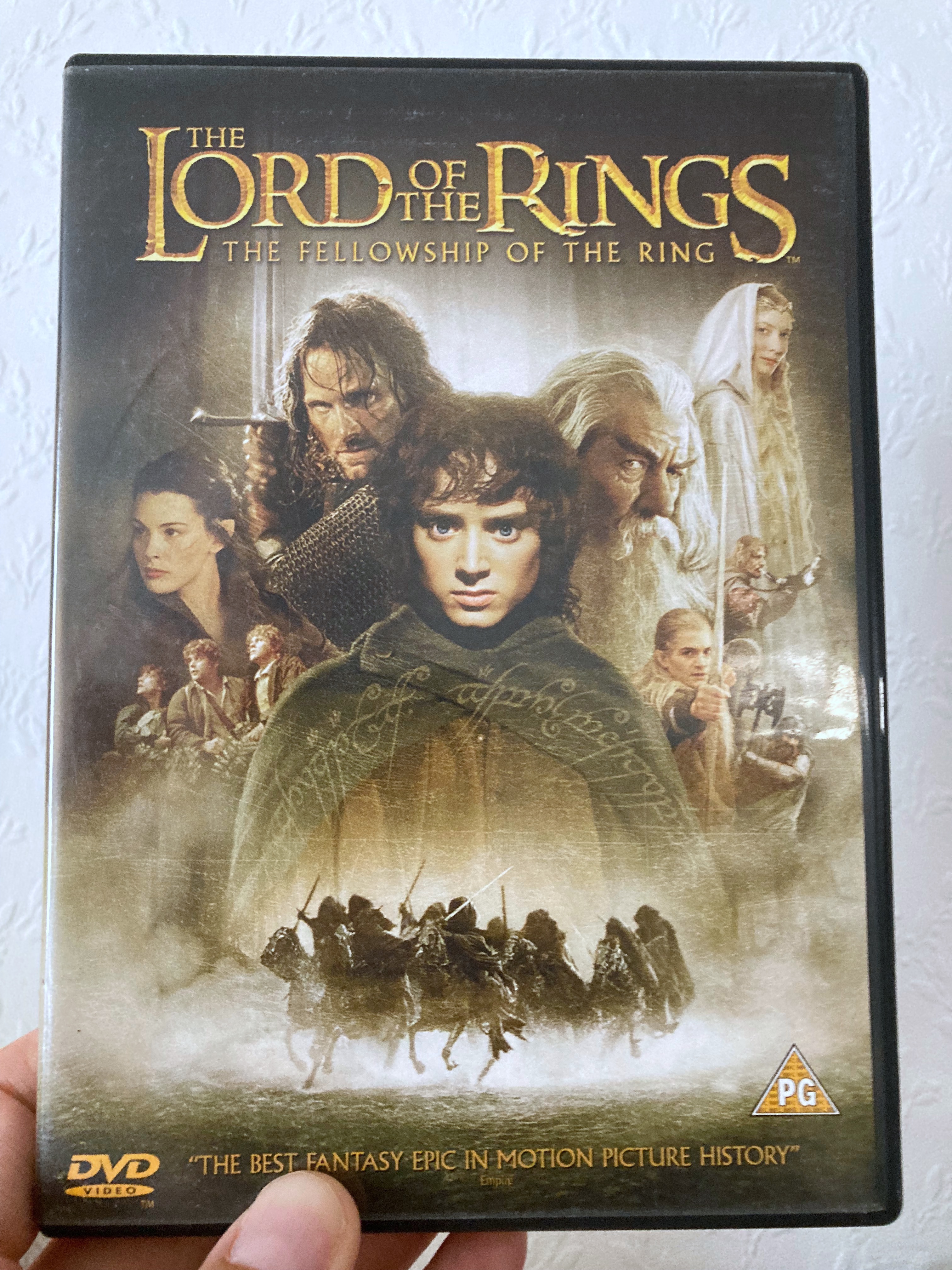
The Lord of the Rings: The Fellowship of the Ring (2001)

First part of Peter Jackson’s version of J. R. R. Tolkien’s fantasy epic. 

A hobbit called Frodo Baggins (Elijah Wood) journeys through Middle-earth to destroy a ring containing immense evil power. Along the way there are battles and mystical happenings that help and hinder his progress. 

I was somewhat dreading watching this – anything with wizards, elves, magic and beards is a big turn-off – but it was better than I thought. The storytelling is coherent and the acting is above par. 

Ian Holm, Ian McKellen, Liv Tyler, Cate Blanchett, Orlando Bloom, Christopher Lee, Sean Bean and Andy Serkis, among others, all do their bit. It’s ludicrous, but they take it seriously enough to make it just about hang together. 

My objection remains the arbitrary-seeming, make-it-up-as-you-go-along “rules” (i.e., this sword will glow blue when orcs or goblins are approaching) that typify fantasy. This thing has this power. That thing can defeat this thing. This other thing can destroy that other thing.

Hot Fuzz (2007)

Police Officer Nicholas Angel (Simon Pegg) is sent away from London, for being too good at his job and showing up his colleagues. Transferred to the sleepy village of Sandford, Gloucestershire, he expects a frustratingly quiet life with his amateurish partner Police Constable Danny Butterman (Nick Frost). But inevitably there’s far more going on there than he realises. 

This is a comedy from the same team behind Shaun of the Dead, and it's almost as sharp. Anyone who’s anyone in British acting/comedy pops up, including Bill Bailey, Jim Broadbent, Steve Coogan, Timothy Dalton, Martin Freeman, Stephen Merchant, Bill Nighy, Rafe Spall and Edward Woodward. 

It’s funny and silly, with a lot of jokes crammed in. Not all of them work, but there are enough that do to keep you entertained.

Invictus (2009)

Directed by Clint Eastwood, this film tells the story of the Springbok rugby team in South Africa and how their profile was boosted with the support and encouragement of Nelson Mandela. They went on to win the 1995 Rugby World Cup, boosting notions of racial harmony in the process. 

Matt Damon plays the team captain and Morgan Freeman plays Mandela.

While Freeman’s impersonation of the president may be accurate, there’s something about this old man playing another old man that ends up being ponderous and extremely dull. It could be his slow speaking manner or the rather flat way the scenes are directed, but the first half feels slow and laboured. Also, Matt Damon’s character is hardly developed at all. He’s highly watchable, but he doesn’t have much to get behind in terms of the role. His girlfriend and family are even sketchier. Also, the racial stuff seems simplistically handled. 

On the plus side, things improve a lot once the actual rugby begins. The final is exciting and dynamic in a way that little else in the film is.

Ondine (2009)

A drama that cleverly keeps you guessing until the end. 

Syracuse a.k.a. "Circus" (Colin Farrell) is an Irish fisherman. While out on his boat one day he catches a young woman in his trawling net. Remarkably, she's alive. 

Director Neil Jordan has fun playing with the ambiguity of Ondine's true essence. He cleverly has it both ways: she is both a mythological sea creature and a very real human with a very real past that inevitably comes back to haunt her. 

It works on multiple levels: as a gentle smalltown love story, as an escapist fantasy in the vein of Local Hero, and as a kind of modern fairytale. 

Alison Barry is absolutely wonderful as Syracuse’s young daughter suffering from kidney failure. It’s rare to see a child actor with such composure, wit and timing. And Alicja Bachleda gets it just right as the troubled, enigmatic Ondine, who never denies being a "selkie". 

The supporting cast are also excellent, including Stephen Rea as the local priest and Dervla Kirwan as Syracuse's alcoholic ex-wife.

Safe House (2012)

Ryan Reynolds plays Matt Weston, a CIA officer stationed at a safe house in South Africa. His relatively quiet life is shattered by the arrival of Tobin Frost (Denzel Washington), a CIA operative gone rogue. Weston plans to deliver Frost to the agency, but slowly becomes aware that his faith in the integrity of that institution may be founded. 

This is a slick, efficient thriller that seems somewhat derivative. Certainly the Jason Bourne films were a major influence. Washington has presence; Reynolds less so. Better than either is Vera Farmiga as Catherine Linklater, the one CIA operative who doesn’t seem to be corrupt.

Plot-wise it’s all a little predictable. Of course the CIA bosses turn out to be baddies – a twist you could guess within just a few minutes. I also didn’t really enjoy the excessively filtered visuals, which at times masked what was actually going on. But it’s an enjoyable romp nonetheless.

You Can Count on Me (2000)

Absolutely brilliant drama written and directed by Kenneth Lonergan.  

Laura Linney and Mark Ruffalo star as Sammy and Terry, a sister and brother who lost their parents in a car crash when they were young. Sammy has stayed in her home town and her family house, living as a single mother with her son Rudy (Rory Culkin). Terry is a troubled drifter who has spent some time in prison. When he comes to stay with Sammy, you see Terry form a bond with his nephew and Sammy’s increasing confusion as she tries to resolve her complicated love life – including a fling with her boss (Matthew Broderick) as well as wrestling with being a mother and a sister to a complicated brother and son. 

It’s tender and extremely moving. There’s gentle humour, and the script is perfectly judged. Linney and Ruffalo deliver astounding performances that feel incredibly real. Ruffalo in particular has such an expressive face that you can’t take your eyes off him.

Roman Holiday (1953)

Hugely charming romantic comedy.

Audrey Hepburn plays a princess from an unnamed country, who has a stifling life of rigid routine and protocol. While on a royal visit to Rome, she escapes her palace security in search of adventure. She meets an American journalist (Gregory Peck), who aims to write up the story and exploit it for money. But inevitably the pair fall in love. 

It’s very funny in places but it’s also tender and touching. Initially light and frothy, it acquires real emotional depth in its later stages – especially since you realise it can’t offer a simplistic happy ending.

Kelly’s Heroes (1970)

Baffling film set in World War II. 

Clint Eastwood and Telly Savalas lead a group of American soldiers in France on a mission to retrieve a stash of Nazi gold, aided by Donald Sutherland. 

It tries to be a comedy, but isn’t funny. It completely lacks dramatic tension, too, so it can’t work as a war film either. The beginning is painfully slow. When the mission finally gets underway it improves a little but the ending is a major disappointment. 

I have no idea what the film was trying to achieve. Clint Eastwood is wasted in his part, and there’s even a fake “Western” scene added in to make the most of his popularity in that field. His 1970 haircut makes no attempt to look like it’s from the 1940s. Likewise, Donald Sutherland’s awkward, embarrassing hippy character is a deliberate anachronism. But why? Is it intended to be a subversive parody of contemporary (i.e., 1970) American culture?

There could have been a decent wartime comedy or satire in there somewhere, but director Brian G. Hutton fails to find it. 

One of the weirdest films I’ve ever seen, and not in a good way.

Melinda and Melinda (2004)

One of the better later-era films written and directed by Woody Allen.

Is life fundamentally comic or tragic? A group of writers sit around a table discussing it. We, the viewers, see their debate explored through two versions of the same story, both centred on the actions of Melinda (Radha Mitchell) – a woman with a complicated history who arrives unannounced at her friends’ New York home.

It’s an odd experiment. I found both of the stories engaging. Will Ferrell is good in the witty, self-deprecating role Woody Allen would have played if he’d cast himself, but Chloë Sevigny and Jonny Lee Miller seem merely wooden as Laurel and Lee. Glossy and a little shallow, parts of the film are a little like an episode of Friends, with relationship-based conversations taking place in luxury apartments.

There are some funny lines and some enjoyable moments. It’s worth watching for Radha Mitchell’s versatile acting and considerable charm.

Shaun of the Dead (2004)

An unambitious salesman named Shaun (Simon Pegg) gets caught up in a zombie apocalypse. He has to save his mother (Penelope Wilton), get back with his girlfriend (Kate Ashfield) and deal with his friends Ed (Nick Frost), Dianne (Lucy Davis) and David (Dylan Moran). 

It has a fresh sense of humour, and the jokes never let up. But it also works as a horror drama, utilising all of the tropes associated with that genre in a witty homage to George Romero’s zombie classics.

Sleeping with the Enemy (1991)

Thriller starring Julia Roberts as a woman married to the controlling, abusive Martin (Patrick Bergin). She fakes her death and escapes to begin a new life, but he pursues her…

It’s a competent thriller with plenty of suspense and some real scares. The main flaw – and it’s a big one – is that Martin lacks charm and magnetism. You can’t imagine her ever having been attracted to him. He doesn't have any presence. The part would be so much more effective if he came across as funny, popular and confident – rather than an obvious weirdo with zero charisma. 

Julia Roberts is excellent, however. I like the understated way she plays her character. 

The title isn’t quite right, but perhaps was intended to give a “sexy” allure to a film with the very unsexy theme of domestic violence.

Deconstructing Harry (1997)

Written and directed by Woody Allen, this is one of his less impressive efforts. Harry (Allen) is a bestselling writer who has angered friends and family by putting them into his stories in only loosely fictionalised form. This indiscretion gets him into trouble again and again. 

The film tells his story, partly through visualisations of the stories he created, and it works on multiple levels in a very post-modern kind of way. As a narrative device, that’s welcome. But there are major flaws. There are some good lines but overall it’s just not funny enough. Some of the fantasy sequences (such as a trip to Hell) fall flat. There’s also something quite distasteful about it. We see Harry take off on a road trip with a prostitute, kidnapping his own child along the way – not exactly hilarious. 

Allen seems out of place against the glamorous Elizabeth Shue and Kirstie Alley, so the benefit of a skilled, all-star cast is diminished by that jarring mismatch. Also featured are Richard Benjamin, Billy Crystal, Paul Giamatti, Mariel Hemingway, Julia Louis-Dreyfus, Tobey Maguire, Demi Moore, Stanley Tucci and Robin Williams.

The most interesting aspect is the unusual editing, with sudden jump-cuts within scenes. As such, it seems to predict the annoying tic later used by countless YouTubers.

Oliver! (1968)

Remarkable musical adapted from the stage show adapted from the Dickens novel. 

Mark Lester plays Oliver Twist, an orphan expelled from a workhouse who falls in with a London group of pickpocket urchins working for the complicated, enigmatic Fagin (Ron Moody). But Bill Sikes (Oliver Reed) threatens the safety of their little society with increasingly violent criminal behaviour.

Lester is an odd choice for the main part. He has a girlish voice and little star quality, but somehow he works because of the way the events of the story revolve around him. Far more impressive is Jack Wild as the charismatic Artful Dodger. And Shani Wallis is perfect as the conflicted Nancy, caught between loving Sikes despite everything and wanting to do what's right for Oliver.

The real star of the film is the music. The songs, by Lionel Bart, are distinctive and memorable, and I was amazed how many of them I already knew simply because of their place in popular culture.

It's also good to see Leonard Rossiter as Mr. Sowerberry, even though he has minimal on-screen time.