Showing posts with label Genre: disaster/survival. Show all posts

The Grey (2011)

Liam Neeson stars as the survivor of a plane crash in Alaska. He and his remaining oil industry colleagues attempt to walk to safety, battling icy storms and very hungry, very predatory wolves.

Director Joe Carnahan is effective at ramping up the tension, but the film – based on the short story “Ghost Walker” by Ian MacKenzie Jeffers – requires you to believe that the wolves are intent on hunting down the men and strategically picking them off one by one. I’m not sure how accurate this is in terms of the animals’ behaviour, but it’s certainly a negative depiction of the species, doing for wolves what Jaws did for sharks.

As it progresses the film takes on a more philosophical dimension, which just about works.

All Is Lost (2013)

Intensely powerful and watchable drama, brilliantly written and directed by J. C. Chandor. 

Damaged by a large container that fell from a cargo ship, a man’s boat starts to sink in the Indian Ocean. He has to escape the doomed craft, only to then drift in a life raft with dwindling hope as he begins to reflect on his life and the decisions that got him to this point. 

Giving arguably his greatest ever performance, Robert Redford is pretty much the film’s only actor and he’s alone for most of the time. There’s hardly any dialogue at all, making his struggle even more elemental and powerful. 

There’s strong music and sound design, making it all seem very real. And there’s remarkable underwater photography, capturing both the beauty and the fierceness of nature. 

I first saw this at the cinema, and when I got home I vowed never to go on a boat again.

Adrift (2018)

Disaster/survival film based on the true story Red Sky in Mourning by Tami Oldham Ashcraft – an account of events relating to Hurricane Raymond in the Pacific Ocean in 1983. 

Directed by Baltasar Kormákur, it’s a compelling drama that interweaves the disaster of a damaged boat, drifting at sea, with the events that led up to this happening.

Shailene Woodley and Sam Claflin star as a young couple whose romantic adventure quickly turns into a nightmare. Woodley is superb; Claflin less so.

The Edge (1997)

Extremely flawed disaster/survival thriller written by David Mamet. 

Anthony Hopkins is the only good thing about the film, and thankfully he’s in virtually every frame. He plays a know-it-all billionaire, Charles, who survives a plane crash in Alaska and attempts to walk back to civilisation. His efforts are hindered by the vain photographer, Bob, who he accompanied (Alec Baldwin), who happens to be having an affair with his wife (a miscast Elle MacPherson). 

For some reason, Charles and Bob are continually saying each other's names.

The situation is exciting enough – there are plenty of showdowns with bears – but the execution is third-rate and even comical. In one laugh-out-loud scene, Hopkins and Baldwin don bear-hide costumes that they have apparently rustled up in mere minutes. They look like Ewoks.

Geostorm (2017)

Disaster film. 

The world has been saved from environmental disaster by a hi-tech space station (the actual science isn’t explained), but when it malfunctions extreme weather takes a deadly hit on Earth. It turns out that the tech has been sabotaged – with suspicion going all the way up to the US President – and it takes the station’s creator Jake (Gerard Butler) to save the world from total climate meltdown. 

The film is utterly ludicrous but quite entertaining if you don’t ask any questions. Jim Sturgess is laughable as Jake’s sweaty, anxious brother Max, who has family “issues” (and looks a bit like Chris de Burgh). Abbie Cornish plays his tough, secret-service girlfriend. Alexandra Maria Lara is the sensitive and appealing space station commander who becomes Jake’s love interest. Ed Harris is the U.S. Secretary of State serving the president, who is played by Andy Garcia. 

The script is wooden and the plotting is entirely predictable. But the CGI scenes of extreme weather are exciting and the action rattles along so quickly that you don’t have time to assess whether any of it makes sense.

The Road (2009)

Brilliantly bleak disaster/survival story adapted from the novel by Cormac McCarthy. 

An unnamed man and his son (Viggo Mortensen and Kodi Smit-McPhee) travel across the wasteland of a post-apocalyptic America following an unnamed disaster. 

It’s horrifying in places (there’s a recurring thread about vigilante bands of cannibals roaming the land), but it’s also a tender drama about the love between a boy and his father. 

The film asks you to consider what value life has after everything else has been lost. I like the way it doesn’t try to explain the event that led to this chaos. Instead, it just puts you straight into the situation and lets you stare it in the face.

Deliverance (1972)

A masterpiece. This is a survival thriller directed by John Boorman, and adapted by James Dickey from his 1970 novel. 

It stars Jon Voight, Burt Reynolds, Ned Beatty and Ronny Cox as four friends who take a disastrous canoe trip in the northern Georgia wilderness before the river is dammed and an entire community is erased. 

It works on multiple levels, like all great art. There’s a theme about poverty and the dispossessed – an entire band of society with no voice and no rights is abandoned and eradicated. Plus, there’s an ecological theme: we can never truly master the environment. There are also various moral questions that arise from their encounters with crazed locals. 

There’s a wonderful and poignant soundtrack. The film is beautifully shot. The characters are extremely well drawn. The dialogue is believable. The acting is uniformly strong. The storytelling is lucid. It’s moving, gripping and profound.

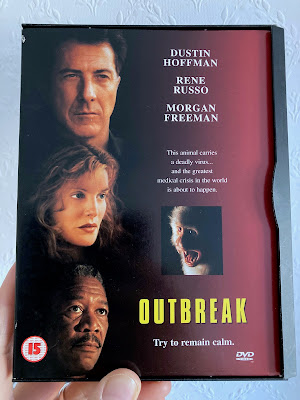
Outbreak (1995)

Disaster film detailing the outbreak of a deadly virus brought from Zaire to the USA by an infected monkey. Army virologist Dustin Hoffman and scientist Rene Russo play a divorced couple who team up again in their attempts to save the world. They are helped by Kevin Spacey but hindered by army generals played by Morgan Freeman and Donald Sutherland. 

It’s a fast-paced thriller that’s a little trashy but nevertheless exciting. A surprising number of helicopters feature, with James Bond-like copter chases providing some of the action. Unlike Contagion, it’s not especially illuminating in regard to the Covid-19 pandemic. The focus is more on the military response to the problem rather than individuals’ experience of it.

Script-wise it could have been stronger, but there’s so much happening, so quickly, that you don’t really notice.

The Happening (2008)

Comically bad disaster film starring Mark Wahlberg and Zooey Deschanel as a couple on the run from a mysterious airborne virus that has something to do with wind and trees. 

The logic doesn’t really make sense. There’s a theme about planet Earth being angry at the way we’ve treated it. But the story can’t seem to tell the difference between the chemistry of trees and the weather that causes the wind that makes them move. 

The two stars are poorly directed and end up seeming laughable. It’s a shame because the premise – people in parks inexplicably kill themselves – could have been an interesting one. 

Somehow, The Happening grossed $163 million worldwide.

Contagion (2011)

A pandemic thriller made fascinating by the real-world events in the era of Covid 19. 

Matt Damon’s wife (played by Gwyneth Paltrow) contracts a mysterious virus and is quickly dead. From this initial beginning spin off a variety of threads and characters as we see the virus spread around the globe, accompanied by panic and social disorder.

The narrative perspective shifts across an ensemble cast also featuring Marion Cotillard, Laurence Fishburne, Jude Law, Kate Winslet, Bryan Cranston, Jennifer Ehle and Sanaa Lathan. Director Steven Soderbergh just about holds it all together. 

Knowing what we now know, it’s almost uncanny to watch scenes in which the “R” number is explained. It also deals with the conspiracy theorists – in this case, Jude Law, who’s told “Blogging is not writing, it’s graffiti with punctuation” – who try to scare people from taking the vaccine.

Flood (2007)

Disaster film. 

A storm surge causes flooding and mass destruction in London. Robert Carlyle has to save the city with the help of his estranged father (Tom Courtenay) and his estranged wife (Jessalyn Gilsig). 

It’s nice to see familiar locations such as the Thames Barrier, but unfortunately – despite moments of genuinely gripping drama – parts of the film are unintentionally funny. There’s something oddly stilted and false about the whole thing, with a TV-like quality to the way it’s filmed and directed. It’s like an extended episode of Casualty. Nigel Planer is especially awkward as a guilt-ridden forecaster for the Met Office.

Enjoyably daft as it is, you're left wondering how the film attracted so many relatively big names. David Suchet, Joanne Whalley and Tom Hardy also pop up with varying levels of success.

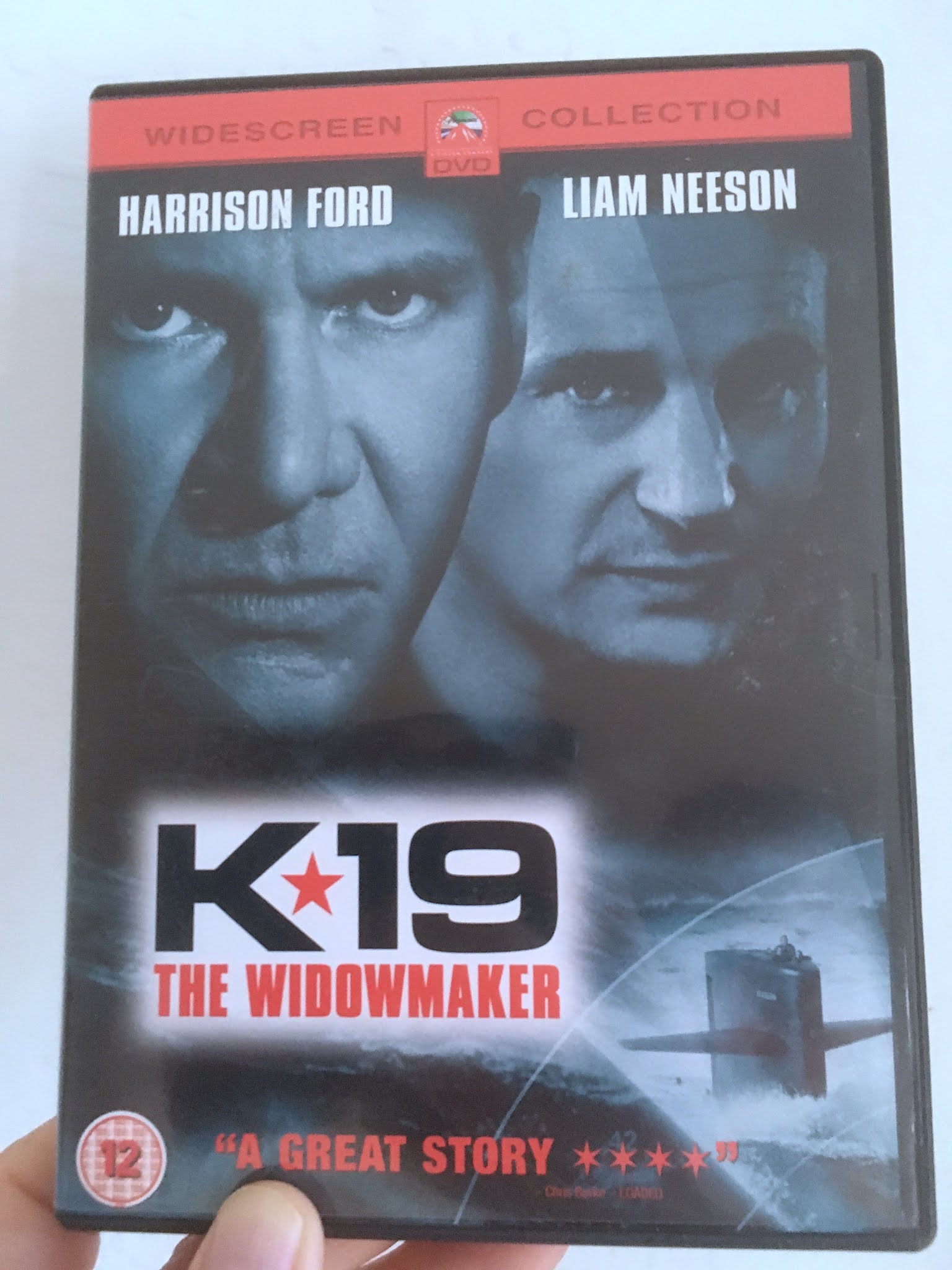
K-19: The Widowmaker (2002)

It’s 1961 and the Soviet Union sends a new nuclear submarine on a test mission. Mikhail Polenin (Liam Neeson) has been demoted from the role of captain and replaced by Alexei Vostrikov (Harrison Ford), who seems unreasonable and needlessly reckless, so tensions are running high from the outset. When a reactor coolant pipe bursts, the sub is in danger of blowing up – and destroying everything around it, including a US destroyer – risking dangerous military escalation and potentially World War III. 

As the drama unfolds and the crisis rapidly accelerates within the claustrophobic interiors of the craft, the two captains have to navigate their own prickly relationship as well as the relationships they have with their men, who clearly favour Polenin’s way of doing things. 

It’s an intelligent film that continually surprises. There are disturbing scenes that change the dynamic from intense Cold War thriller to compassionate human drama. 

The two leads are excellent and exude charisma, even if their Russian accents sometimes come and go.

Apollo 13 (1995)

Ron Howard’s version of the events of April 1970 in which a planned Moon mission goes horribly wrong after an explosion loses vital fuel and oxygen from the craft. Instead of walking on the lunar surface, as they had hoped and dreamed, the three astronauts find themselves in a desperate struggle to return to Earth. 

It’s a taut drama that steadily builds tension. We know that disaster is on the way, so there’s added suspense in waiting for that moment. I especially liked the Mission Control sections, which showed how much of an ingenious team effort the rescue attempt was. 

The casting and acting is spot-on, and makes this film stand out:

• Tom Hanks plays Jim Lovell, from whose memoir this was adapted. Hanks does his usual thing, but it works. His almost bland demeanour seems to match the highly sought after brave-but-calm profile of that of a well-adjusted astronaut.
• Kevin Bacon is perfectly acceptable as backup Command Module pilot Jack Swigert even though this actor is often now seen as a figure of fun.
• Bill Paxton is solid as Lunar Module pilot Fred Haise.
• Kathleen Quinlan is Lovell’s wife, trying to hold it together at home with the kids. The “worried wife” role can’t be a rewarding one for any actor, and too often that part is underwritten (see Deepwater Horizon or The Untouchables), but Quinlan convincingly portrays someone whose personal nightmare becomes a drama watched by the entire world.
• Ed Harris is impressive as the tough but compassionate Flight Director Gene Kranz.
• Gary Sinise is excellent as pilot Ken Mattingly, who misses out on the mission itself but helps the crew by mirroring their predicament in a NASA flight simulator. 

I liked the fact that in the film, as in real life, it wasn’t about luck or heroism or faith or fate. It was science that saved them – a triumph of knowledge and rational thought. A lesson to be learned there for all of us.

Earthquake (1974)

When Los Angeles is hit by a major earthquake, it’s up to a few brave heroes to save as many lives as possible. This film performs the standard disaster-film trick of setting up several diverse characters in different places before the incident kicks off. We get to know them a little, and then we get to see how they fare when everything goes wrong. It works because it actually makes us care.

The drama is fairly compelling. On a couple of occasions it lapses into sensationalism – most notably when a lift plunges in its shaft and animated drops of blood superimposed on the screen indicate that everyone in it died. But the film is generally impressive in terms of the special effects of the time (a bursting dam, burning buildings, semi-collapsed structures) and it successfully conveys the huge scale of the disaster. It feels “real” in a way that The Poseidon Adventure never does. 

Charlton Heston is the former sporting hero who has to save work colleagues and his father-in-law. Geneviève Bujold is the young mum who Heston has fallen for. Will he save her or his semi-estranged wife (an oddly unconvincing Ava Gardner)? George Kennedy plays a tough, cynical cop who proves decent enough to do the right thing. Richard Roundtree is a motorcycle stunt driver whose potential is never quite realised in the plot. (I kept expecting him to have to leap across a crack in the ground or cycle through a ring of fire, but his story just peters out.) There are also roles for Victoria Principal (of Dallas fame), who is nearly the victim of a machine-gunning predator, and Walther Matthau, who gets to be a comedy drunk. It’s not clear why they felt the need for comedy in a fairly serious film.

Gripping and suspenseful, this is well worth seeing.

The Poseidon Adventure (1972)

The SS Poseidon is sailing from New York to Athens when an underwater earthquake creates a huge wave that turns the ship over. A small group of passengers do their best to survive, despite the water coming in and the fires breaking out.

I was curious to see this film, which I had often heard about. It’s trashier than I expected. There’s a shabby made-for-TV quality to it, and it has none of the big-budget grandeur of disaster classics such as The Towering Inferno. The characters are absurdly diverse “types”, including:
• a rogue preacher (Gene Hackman)
• an angry, bad-tempered cop (Ernest Borgnine) and his ex-prostitute wife (Stella Stevens)
• a gee-whiz American kid (Eric Shea) and his older sister (Pamela Sue Martin)
• a woman given no other function than to be “a fat lady” (Shelley Winters) and her thinner husband Jack Albertson (Grandpa Joe in Willy Wonka & the Chocolate Factory)
• a nervous singer (Carol Lynley) whose band of beardy blokes doesn’t make it
• a kindly, injured waiter (Roddy McDowall)
• an absurd-looking runner (he jogs like a parody of a Carry On character), who’s too shy to have any luck with women (Red Buttons)

Meanwhile, Leslie Nielsen plays the captain. After seeing him in Airplane! and The Naked Gun, it’s strange to see him in a straight role: I kept waiting for the gags that never arrived.

The concept is good, but it’s poorly executed and poorly written. There’s a lack of dramatic tension. Too much of the film becomes a logistical challenge of getting a group of people past an obstacle or from one room to another. The ship is meant to be upside down most of the time, but it rarely looks that way. You only see it in close-up, and the lack of contextual shots mean that what you do see looks like a set. It made me respect the action sequences in James Cameron’s Titanic even more than I did already. 

Character-wise, there are sections that are unintentionally comical – ridiculous, even. Often, one person is speaking and everyone else is holding a strange facial expression, such is the lack of dynamism in the group scenes. There’s a lot of unnecessary shouting, too. And you can tell when someone’s about to die because of the conversation they have beforehand. 

Gene Hackman makes the most of the sub-standard material, but he can only do so much. 

All these points aside, it’s entertaining enough.

The Towering Inferno (1974)


A big Hollywood blockbuster disaster film about a fire breaking out in a state-of-the-art skyscraper. Paul Newman (the architect) and Steve McQueen (the chief fireman) lead an all-star cast that includes Fred Astaire, Richard Chamberlain, Faye Dunaway, William Holden, O.J. Simpson, Robert Vaughn and Robert Wagner.

At 165 minutes it’s long indeed, but surprisingly it doesn’t feel slow or laboured. I last saw it as a child and I enjoyed it then, which wouldn’t have been the case if it was a stodgy, ponderous epic.

In places it’s trashy, and there were a few unintentionally funny moments. But there was also real drama and tension. At times it was truly horrifying – such as when Jennifer Jones falls out of the exterior lift and then bounces off the sides on the building on her way down.

The cast is strong. Paul Newman makes for a very likeable hero and manages to rise above the material he’s given. Faye Dunaway does the same, with a cool, restrained intelligence. Richard Chamberlain is just right as the edgy, selfish electrical engineer and son-in-law of the builder. You know it’s not going to end well for him and sure enough he comes to a sticky end.

Only Fred Astaire – playing a doddery old conman who unexpectedly falls in love – seems wrong for his role.  He loses the woman but inherits her cat, which O.J. Simpson has kindly rescued.

I’m not sure this film could have been made now, post-9/11 and post-Grenfell Tower. Intriguingly, it’s adapted from two novels (with both plots and climaxes woven together), but although it’s a work of fiction there’s a dedication at the beginning to all the real-life firemen who died in the course of their duties.

Deepwater Horizon (2016)


Disaster film depicting the true-life events of the 2010 BP oil-rig explosion leading to 11 deaths and one of the world’s worst environmental disasters. As the closing text puts it: “The blowout lasted for 87 days, spilling an estimated 210 million gallons of oil into the Gulf of Mexico.”

It’s to the film’s credit that it doesn’t sensationalise these events. Mark Wahlberg plays the Chief Electronics Technician, with admirable restraint. Likewise, Kurt Russell as “Mr. Jimmy”, the Offshore Installation Manager. John Malkovich plays Donald Vidrine, one of the BP managers keen to cut corners despite the risk of compromising the rig’s safety. Gina Rodriguez is the likeable Dynamic Position Operator, who has to dive with Wahlberg over the burning ocean oil to safety. And Kate Hudson plays Wahlberg’s worried wife back home.

It’s a tense drama that also makes some good points about technical expertise coming into conflict with corporate might, but without getting bogged down in engineering detail or industry politics. An efficient, intelligent script builds character, offers flashes of wit and keeps the emphasis on the human side of the tragedy.

Touching the Void (2003)


Documentary film version of Joe Simpson’s 1988 memoir detailing Simpson and Simon Yates's 1985 climb of the 6,344-m (20,813-ft) Siula Grande in the Andes.

After reaching the summit, disaster strikes when Simpson breaks his leg on the way down. Yates heroically winches him down but when Simpson falls and is left dangling, Yates fears him dead and – about to plummet himself – considers he has no choice but to cut the rope...

The film tells the improbable story of how both men survived. It’s even more remarkable in the case of Simpson, whose leg was badly mangled and who was dangerously dehydrated as well as suffering hypothermia. He lost a third of his body weight during the ordeal.

It’s riveting to see the two climbers being interviewed about what happened, interspersed with convincing actor reconstructions of the climb. The psychology of their relationship is fascinating. They start out as casual friends. Then become colleagues who depend on one another for survival. When events take a darker turn, their relationship has to take on bigger ethical/existential aspects and seems to become simultaneously both intimate and remote.

The highlight, for me, was the section in which Simpson recalls being tormented by snatches of “Brown Girl in the Ring” going round and round in his head and remarking “I remember thinking, bloody hell, I'm going to die to Boney M.”

The DVD extras, unusually, are just as fascinating as the film – if not more so. One mini-film examines what happened next: the complex process by which they got down from base camp to eventual medical assistance. The other takes Simpson and Yates back to the Siula Grande as consultants on the making of the film and observes their reactions to returning to the site of the drama. Yates is very matter-of-fact about it all, or claims to be – you suspect he’s more affected than he lets on after all these years of notoriety as “the man who cut the rope”. Simpson, meanwhile, is profoundly disturbed by being forced to relive the moments in which he was absolutely certain he would soon die. It’s both moving and upsetting to watch him in this extraordinary situation.

The Revenant (2015)


Unrelentingly grim and bloody tale of North American frontiersman Hugh Glass (Leonardo DiCaprio) trying to survive against all the odds. It’s 1823, and desperate, isolated communities of trappers and hunters battle it out in the frozen wilds. Everything horrible you can imagine happening to Glass happens to him. He witnesses his wife’s murder. He’s attacked and badly maimed by a bear. He’s nearly smothered to death by a crazed colleague. He’s buried alive. He witnesses his son’s murder. He’s swept away in river rapids. He’s shot at. He falls off a cliff into a tree. And he has to sleep inside his dead horse (after pulling out the innards). Plus, he’s intent on exacting his revenge – whatever the cost.

It’s not exactly cheerful. But the film has a primal intensity that keeps you hooked. The scenery is stunning. And DiCaprio is watchable, even beneath the beard, blood, filth and fur. Ultimately, though, it’s too harrowing and brutal to constitute entertainment. It’s unclear what you’re meant to take away from it. I was left feeling troubled and disturbed.

The Perfect Storm (2000)


Based on the true story written by Sebastian Junger, The Perfect Storm details the drama of the Andrea Gail, a fishing boat from the small town of Gloucester, Massachusetts, that was caught in a storm of vast proportions in 1991.

It begins by setting out the characters of the crew, and the domestic backstory is strong. You get to know their hopes, problems and motivations, so that when they finally go to sea the real action plays out with individuals you actually care about. The relationships within the team on the boat are also explored. George Clooney plays the captain and Mark Wahlberg is the inexperienced fisherman with the most to lose.

On the plus side, the storm looks amazing. Whether CGI or models were used, the disaster scenario – tiny boat dwarfed by huge waves – looks completely real. On the down side, the classical music score is intrusive and self-consciously “epic” – even corny at times. That’s a shame, because wiser decisions had been made for a bar scene near the start that’s greatly enhanced by Bruce Springsteen, Bob Marley and Tom Waits on the jukebox. Plus, there are some ethical issues. The film made a lot of money at the box office but as far as I’m aware none of that went to the survivors’ relatives. In fact, two families of crew members sued the filmmakers over issues of accuracy. Much of the plot is conjecture anyway. No one will ever know what really happened.

All things considered, it was worth seeing. Would I watch it again? Probably not. But it did inspire me to read the book.