Showing posts with label Genre: romantic comedy. Show all posts

The Mirror Has Two Faces (1996)

Barbra Streisand directs and stars as a middle-aged academic, Rose, who begins a relationship with a fellow professor (Jeff Bridges). Both are determined that it will stay platonic, based on mutual respect and with no physical complications, but of course it isn’t that simple. 

Like most Streisand films, it’s a rich source of material for anyone wishing to psychoanalyse her. There’s lots about her childhood, her relationships with her parents (Lauren Bacall plays Rose’s stern mother), and her body image. 

It’s flawed but fairly entertaining – especially if you’re already a Babs fan.

While You Were Sleeping (1995)

Described as a romantic comedy, this OK film directed by Jon Turteltaub isn’t really funny at all. 

Sandra Bullock stars as Lucy, a Chicago Transit Authority token collector. She has a crush on a commuter, Peter (Peter Gallagher), who she sees every morning. One day he’s pushed in front of a train and she saves his life. He goes into a coma, and in a blaze of confusion she allows Peter’s family to believe she’s his fiancé. But then she starts falling in love with Peter’s brother (Bill Pullman). 

Whenever Bullock is on screen, she shines. Pullman is also pretty good. The problem is the ensemble case of family and friends – poorly drawn characters with too much screen time. It’s just not very well written. For example, when Peter’s actual fiancé shows up you expect all sorts of amusing misunderstandings, but that event is thrown away and a potentially interesting plot thread merely fizzles out.

Say Anything... (1989)

The first film directed by Cameron Crowe is a highly enjoyable and satisfying romantic comedy starring a very young John Cusack.  

Following high school graduation, Lloyd pursues Diane (Ione Skye), who is cleverer and more “successful” than him. She lives with her pushy father (John Mahoney, of Frasier fame), who has strong ideas about her future. 

As a 1980s teen saga, it’s in the general vein of the films by John Hughes. But there’s far more nuance and sophistication here, with Crowe developing the father character and his complex relationship with his daughter. (In Hughes’ films, adults are merely a one-dimensional “enemy”.)

Cusack and Skye both have a lot of charm and the scenes with the two of them working out their feelings for one another are sweet and endearing. Mahoney comes across weirdly, but we later learn why that is.

Sabrina (1954)

Light romantic comedy directed by Billy Wilder. 

Audrey Hepburn stars in the title role. She thinks she’s in love with the wealthy Long Island next-door neighbour David (William Holden) but really she’s falling in love with his brother Linus (Humphrey Bogart). 

There are some nice moments but it’s not really funny enough to justify the slightly contorted plot. Hepburn and Bogart are both charismatic and charming, but you wish they had been given sharper, wittier lines to deliver. 

The film was remade in 1995 with Harrison Ford, Julia Ormond and Greg Kinnear.

Addicted to Love (1997)

Deeply flawed rom-com. 

Photographer Maggie (Meg Ryan) and astronomer Sam (Matthew Broderick) team up to spy on and torment their former lovers, who have become a couple. This unlikely and mean-spirited premise sees the pair squatting in a New York City apartment opposite their exes and watching them by using Sam’s astronomy equipment for surveillance. 

The story doesn’t work for a number of reasons, but mainly because it’s built around cruelty. Are we really meant to relate to them destroying the lives of the people who wronged them? 

There are so many silly aspects:

1. Maggie is a revenge-crazed grungy biker/artist with perfect make-up. The film can’t decide how we’re supposed to feel about her. 

2. Neither Maggie nor Sam have anything else they need to do, such as earning a living. They can spend all of their time dismantling other people’s lives. 

3. The Frenchman Anton (Tchéky Karyo) who steals Sam’s sweetheart Linda (Kelly Preston) doesn’t sound French at all. I kept thinking that the plot would reveal him to be an American, but no, he was just acting badly. 

4. There’s an absurd scene in which a bunch of kids are persuaded to spray perfume on Anton via water pistols. This sort of thing just doesn’t ring true.  

It’s fascinating in a way, but the tone is all wrong and it’s simply not funny. You wonder why Ryan and Broderick ever got mixed up in something so misjudged.

Two Weeks Notice (2002)

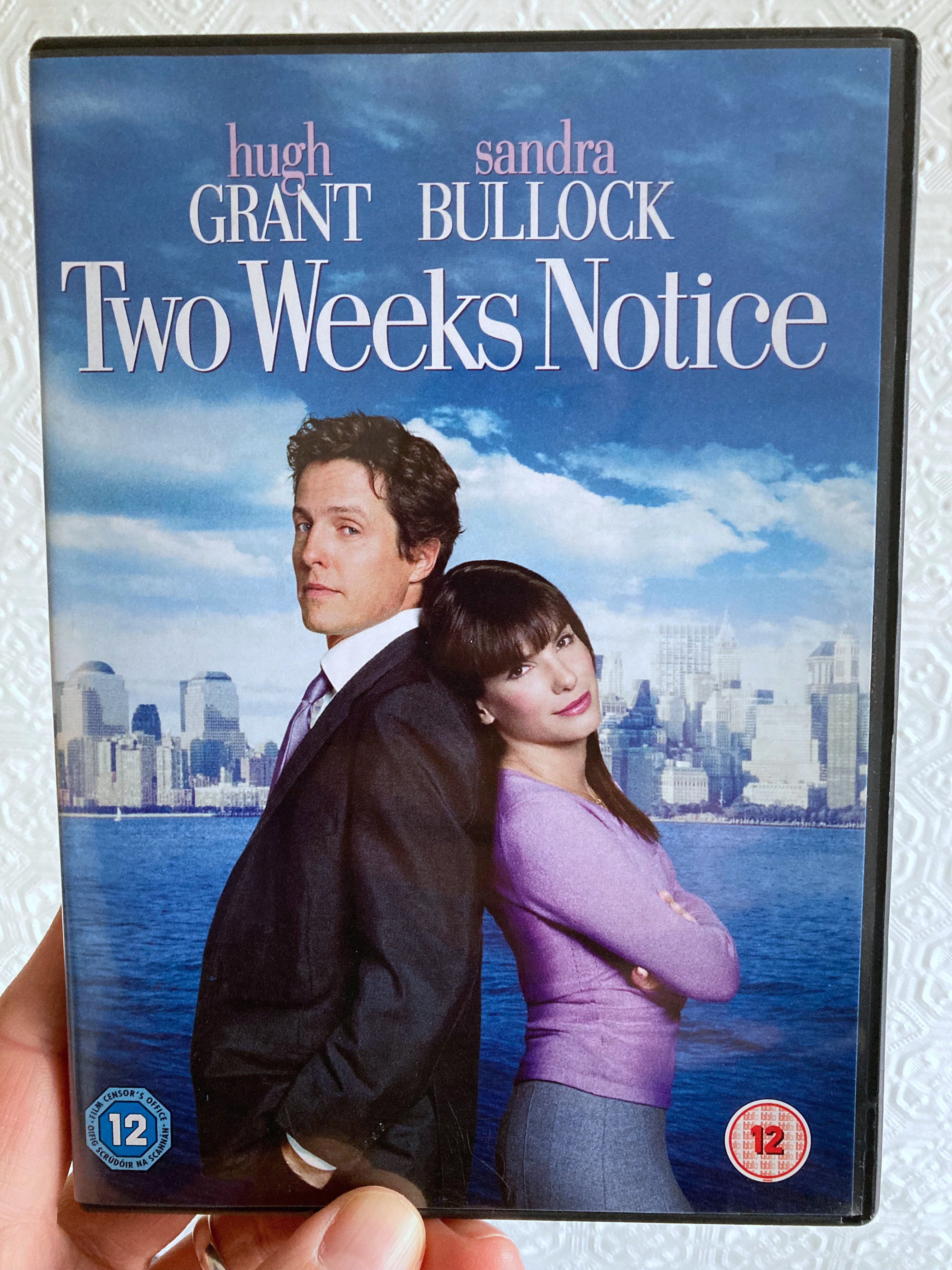
An idealistic liberal New York lawyer (Sandra Bullock) wants to protect a community centre. But her new boss – a womanising billionaire real estate developer (Hugh Grant) – wants to use the land for new property. The pair see the world differently, but soon hit it off. 

Troublingly, there’s no apostrophe in the title (which should be Two Weeks’ Notice). That aside, this is a charming rom-com. Hugh Grant and Sandra Bullock have great chemistry together, and a sharp script lets both of them deliver some funny lines. I like the fact that the pair have so much screen time together. Often in rom-coms the story is all about getting the couple together, leaving you feeling that you've missed out on enjoying their relationship. 

Donald Trump has a slightly bizarre cameo, and indeed Grant’s empire seems loosely based on Trump’s own. Singer Norah Jones also briefly pops up as herself.

Chalet Girl (2011)

Enjoyable romantic comedy directed by Phil Traill. 

Kim (Felicity Jones) is a former skateboarding champion whose mother died in a car accident. Since then, she has been living in semi-poverty with her depressed father (Bill Bailey). She takes a job as a chalet girl in an Austrian ski resort, where her working-class origins place her in stark contrast with her posh co-worker (Tasmin Egerton) and the wealthy family they both work for. Meanwhile, Kim rediscovers her sporting mojo and enters a snowboarding competition…

It’s frothy and very silly, but Felicity Jones is extremely charming. Brooke Shields and Bill Nighy play the parents of the fairly lame male lead (Ed Westwick). 

The issues of class aspiration are never really resolved, but despite that there’s a reasonably satisfying progression to the plot. The script features some witty lines and it’s engaging enough to keep you watching.

The Cutting Edge (1992)

A sort of romantic comedy, although there could have been a lot more comedy, directed by Paul Michael Glaser. 

Prima-donna figure-skater Kate (Moira Kelly) rejects a series of male partners until she gets paired-up with a former ice hockey player named Doug (D. B. Sweeney). Kate ’n’ Doug aim to compete at the Olympics, but tensions run high between them. She’s wealthy. He’s not. Inevitably, they begin to fall in love…

The low budget is evident but that cannot explain the strangeness of the locations and the script. Their coach is a “comedic” Russian (Roy Dotrice, with a dodgy accent). Kate’s father Jack (Terry O’Quinn) doesn’t have much to do and is a complete void in terms of character. 

There’s a lot of music crammed into the film and used at every opportunity. And there’s a strange “misty” quality to the ice-skating scenes – either in the name of “atmosphere” or to disguise the fact that the actors aren’t the ones doing the skating. Even the main couple seem strange. Kate, low on charm, isn’t good at the expressive scenes. And yet despite all this, there’s lots to enjoy about The Cutting Edge. It’s a simple story that gets you rooting for the young couple, however preposterous they might seem.

Music and Lyrics (2007)

Enjoyable romantic comedy directed by Marc Lawrence. 

A 1980s pop idol named Alex (Hugh Grant) is tasked with writing a song for a Shakira-like pop star of the present day (Haley Bennett). To achieve this he ends up collaborating with Sophie (Drew Barrymore), the slightly eccentric woman who comes round to water his plants. 

Plot-wise it might sound silly (and indeed it is), but Hugh ’n’ Drew have real chemistry. Also, they get to reel off some genuinely funny lines. 

The film seems to lose its way a little about two thirds of the way through, with a couple of rather misjudged scenes. For example, why does Sophie take a box of biscuits to the party? It seems to be setting up a joke, but there’s no pay off. Was a vital bit of the script cut at the last minute?

Thankfully, the film recovers before the end. 

Kristen Johnston is easy to like as Rhonda, Sophie’s sister. Grant is surprisingly effective as a pop star, and his song and dance routines are all quirky and enjoyable.

Leap Year (2010)

Romantic comedy. 

An American woman (Amy Adams) travels to Ireland to propose to her boyfriend, who after four years hasn’t asked her to marry him. (She’s honouring an old tradition in which it becomes acceptable for the roles to be switched every four years.) Once in Ireland she meets the unrefined but free and independent Declan O'Callaghan (Matthew Goode) and inevitably they fall in love. 

The film tries to trade on Irish clichés but doesn’t even do that very well. The focus-grouped checklist gives you nice scenery (admittedly excellent), an Irish wedding (visually and tonally flat: a missed opportunity), Irish music (sometimes replaced by American music: another missed opportunity) and an Irish castle (which doesn’t look real and may be just a matte painting). 

There’s very little wit in the script, and dialogue that might have sparkled simply falls flat. The main couple are watchable and likeable, and Amy Adams is always a delight, but there’s very little here for them to go on.

I Could Never Be Your Woman (2007)

Witty romantic comedy directed and written by Amy “Clueless” Heckerling.

Rosie (Michelle Pfeiffer) is a TV scriptwriter. Adam (Paul Rudd) is an actor who comes to work on the show she writes. There’s a big age difference between them. 

There are some funny lines and there’s obviously a lot of intelligence in the Hollywood satire. Overall, though, it doesn’t quite work. The “magical” thread in which Tracey Ullman plays Mother Nature isn’t funny enough to work, and seems like a leftover from a different kind of story concept. Also, it sometimes seems too knowingly crammed full of industry in-jokes and references that aren't directed at the wider public. A cameo by Henry “Fonz” Winkler is thrown in with little effect.

It's visually distinctive, with super-bright, bleached-out lighting. It's notable, too, for the number of British actors, from Graham Norton to Sarah Alexander, and also for the inclusion of several songs on the soundtrack by The Cure.

It Could Happen to You (1994)

Highly unusual and enjoyable romantic comedy drama. A New York cop called Charlie (Nic Cage) wins the lottery and – honouring a promise – donates half of the money to a waitress called Yvonne (Bridget Fonda) who he’d never met before. 

As with A Simple Plan, in which Fonda also featured, it explores what happens to poor people who suddenly have money. The twist this time is that Charlie and Yvonne are such kind people that – unlike their selfish spouses – they cannot be corrupted by their windfall. 

The big flaw is Rosie Perez gratingly hamming it up as Charlie’s wife Muriel. She’s almost unbearable to watch. The character is clearly meant to be annoying, but maybe they took it too far. Cage and Fonda, however, are both tremendous. There’s great chemistry between them, and their gentle romance is sweet and charming. 

All in all, it's refreshingly different.

Tootsie (1982)

Strikingly unusual romantic comedy. 

New Yorker Michael Dorsey (Dustin Hoffman) cannot hold down work as an actor because he's too opinionated to accept his directors' instructions. Out of desperation, he pretends to be a woman (reshuffling his name as Dorothy Michaels) and is hired to play a hospital administrator on the popular TV soap opera Southwest General. While on the set he meets and falls in love with another member of the cast, Julie Nichols (Jessica Lange), who believes he is both her new best friend and also a woman.

Hoffman is at his best – pushy but vulnerable, quirky but sharply witty. Lange is also excellent. Bill Murray, as Michael's long-suffering friend Jeff, pretty much does his usual thing. Teri Garr, meanwhile, has an intriguing role as his other friend Sandy. 

In the film's oddest moment, Sandy catches Michael in a state of undress in her bedroom where he hopes to find new clothing ideas for his Dorothy persona. But hoping to hide this from her, he pretends he wanted to sleep with Sandy and then goes ahead and does exactly that. Moments like this make it quite revealing in terms of the gender politics of the late 1970s/early 1980s, and the film would certainly have turned out differently if it had been made now.

Four Weddings & a Funeral (1994)

The best of the romantic comedies written by Richard Curtis. The script and narrative are tighter and sharper, so there’s not the messy sprawl of Love Actually. 

The story revolves around a group of friends, who we only meet via the sequence of formal rites-of-passage events alluded to in the title. It’s expertly constructed, with what seem like throwaway lines thrown in early on ending up having a neat pay-off later. 

Hugh Grant is extremely watchable – at his charming-but-nervous best. Has anyone ever done “flustered” better than him? Andie McDowell is suitably aloof and exotic as the mysterious American visitor who attracts his attention. 

The only character that doesn’t quite work is Scarlet (Charlotte Coleman). I assumed she was Charles’ sister but it turns out she’s only his flatmate. On the plus side, Kristin Scott Thomas, Simon Callow, John Hannah and Rowan Atkinson are all excellent.

Bridget Jones’s Diary (2001)

Romantic comedy directed by Sharon Maguire and starring Renée Zellweger, Hugh Grant and Colin Firth. It’s co-written by Richard Curtis and adapted from the popular 1996 novel by Helen Fielding. It’s also a sort of reinterpretation of Jane Austen’s Pride and Prejudice. 

It’s funny in places, although Hugh Grant is given all the best lines. Colin Firth seems less well catered for in terms of the script, with the unfortunate result that you aren’t rooting for him when the plot suggests that you should be. Zellweger has a bumbling charm, and is perfect as the heroine everyone can relate to, even if her English accent doesn’t sound quite right. 

Some of the references wouldn’t have made it to a modern-day film, which makes it all the more interesting now. 

Gemma Jones is absolutely awful as Bridget’s mother – a misconceived role, badly handled. Jim Broadbent is marginally better as her father, but he’s not given a great deal to go on.

Serendipity (2001)

Romantic comedy directed by Peter Chelsom and starring John Cusack and Kate Beckinsale. 

John and Sara meet by chance in a shop in New York and hit it off. Both are involved with someone else, but they cannot ignore their mutual attraction. For reasons not fully explained, Sara won’t give John her full name or number. Instead, she says they can trust it to fate to bring them back together – if that’s what’s “meant to be”. It’s quite a forced premise, but it would have worked better if the film had Meg Ryan, Tom Hanks and a better script. You can imagine Woody Allen doing great things with the same material. 

In addition to the lack of sparkle in the script, Serendipity falls down on several levels. In particular, for the pair’s one evening together to have been so life-changing it would have needed to be more remarkable than the rather ordinary set of events we saw them share (shopping, some chat, ice skating). Cusack does his best but Beckinsale seems barely present in certain early scenes. Also, her boyfriend – a silly rock star who has got into “eastern” self-discovery – is a ludicrous figure who she would never have been drawn to in the first place. You know that the film has to make him unappealing so that you’re rooting for her to get together with Cusack, but they could have at least made him credible. Cusack’s fiancée, meanwhile, is too blandly sketched out to prompt any kind of response at all. Again, that must be deliberate – the plot won’t work if we side with her – but it does make for some two-dimensional characterisation. 

All that said, the film slowly grew on me as it progressed. I like the way the intricate plotting shows destiny always pushing the pair together without them even realising. I also liked the escalation towards their inevitable reunion. It’s actually quite romantic, if you overlook the shortcomings, and makes for a fairly entertaining 91 minutes.

Confessions of a Shopaholic (2009)

Flawed romantic comedy. 

Rebecca Bloomwood (Isla Fisher) is a New York journalist who is addicted to buying fashionable clothes. She ends up working as a finance columnist for Successful Saving magazine in a role where her lack of knowledge or pretension is welcomed as a refreshing asset. Meanwhile, she also falls in love with her boss (Hugh Dancy, as a sort of fifth-rate Hugh Grant) and tries to avoid a debt collector. 

The film has many failings and it’s a bit of a muddled mess in terms of its views on consumerism. It can’t decide whether it’s a critique or a celebration. That said, it’s a little unfair that it was criticised for being tone deaf to the fall-out of the global financial crisis. Is it really the film’s job to reflect the changing economic and political landscape?

Pretty much everything about Confessions of a Shopaholic is clumsy and awkward, and in particular Rebecca’s parents – annoyingly and bizarrely portrayed by John Goodman and Joan Cusack. Kristin Scott Thomas seems out of place, too. The major plus is Isla Fisher, who has a real radiance. Each time she smiles, she lights up the whole film and transforms a mediocre scene into something full of charm and charisma.

One Fine Day (1996)

Rom-com about two single-parent New Yorkers. 

Journalist Jack (George Clooney) meets architect Melanie (Michelle Pfeiffer) and – across a hectic day involving career and childcare challenges – the pair have to put aside their differences and help each other. 

It’s nearly brilliant, but the script just isn’t sharp or funny enough. The two leads are both excellent, and there’s plenty of chemistry, but even with their considerable talents the dialogue cannot sparkle and the humour cannot hit home. For example, a thread about the couple accidentally switching mobile phones isn’t sufficiently mined for comic effect. A more skilled writer (such as Nora Ephron) would have done so much more with it. 

It’s a shame because Clooney and Pfeiffer exude charm and their performances are worthy of a better film than this.

French Kiss (1995)

Lame, tepid rom-com that’s neither romantic nor funny. 

Meg Ryan plays Kate, an extremely annoying American living in Canada. She flies to France after her oddly charmless fiancée ditches her for a French “goddess”. Kevin Kline plays Luc, a small-time French crook who offers to assist Kate in getting back her fiancée, but who – inevitably – falls in love with her. 

There’s a good idea for a film in there somewhere, but the characters’ actions simply don’t ring true. Also, the convoluted “crime” sub-plot fizzles out somewhat. You see a few French locations, but it doesn’t even work as a “tourist brochure” kind of film. It’s a teeny bit racist, too. 

It’s badly in need of a sharper, wittier script to make more of Ryan and Kline’s considerable talents.

Roman Holiday (1953)

Hugely charming romantic comedy.

Audrey Hepburn plays a princess from an unnamed country, who has a stifling life of rigid routine and protocol. While on a royal visit to Rome, she escapes her palace security in search of adventure. She meets an American journalist (Gregory Peck), who aims to write up the story and exploit it for money. But inevitably the pair fall in love. 

It’s very funny in places but it’s also tender and touching. Initially light and frothy, it acquires real emotional depth in its later stages – especially since you realise it can’t offer a simplistic happy ending.