Natasha Kinkski is mesmerising in the lead role. She says little but conveys great presence.
Long and luxurious, it looks fantastic and the 186-minute running time never seems excessive.
Another almost-obsolete format, DVDs – like CDs – are cheaper than ever in charity shops. One pound or 50p for two hours of entertainment represents amazing value for money. Here are my brief reviews of some of the films I saw...
Natasha Kinkski is mesmerising in the lead role. She says little but conveys great presence.
Long and luxurious, it looks fantastic and the 186-minute running time never seems excessive.
Michael Winterbottom’s skilful adaptation of Thomas Hardy’s Jude the Obscure is a powerful and moving saga.
Christopher Eccleston plays Jude Fawley, the self-educated stonemason who falls in love with his well-to-do cousin Sue Bridehead (Kate Winslet). In addition to the scandal of the couple being related (and both married to someone else), the story also addresses their conflicting class backgrounds.
There’s real gravitas in the performances and it ends up being moving without resorting to sentimentality.
June Whitfield is excellent as Jude’s elderly mother.
In the weeks following the US Civil War, Colonel Morsman Carver (Liam Neeson) and a team of men attempt to hunt down a man he wants to kill (Pierce Brosnan).
Both leads are excellent. It’s probably the most actual acting Brosnan has ever done.
There’s a relentless quality as they survive a sequence of grim fates, but unlike its spiritual cousin Revenant it doesn’t become ridiculous or unbelievable.
Al Pacino stars as famed forensic psychiatrist Dr. Jack Gramm, who is suddenly faced with a new murder that resembles the ones from his past that led to him putting away serial killer Jon Forster (Neal McDonough), who is now on Death Row. Then Gramm gets a phone call telling him he has 88 minutes to live…
The premise is a strong one, and Pacino cannot help but be anything except extremely charismatic, but the film just doesn’t work. The action is meant to occur in almost real time, but so many of the episodes shown would have taken much longer than the narrative allows them. Crossing a concourse, driving across town, going up in a lift: all of these things take more time than the few minutes the plot allows for them. And for some of that time, he doesn’t even seem in a hurry.
The story logic is pushing it, but just about holds together. But it’s still deeply odd, and only works if you accept that Pacino hangs around with young girls all the time.
Scudder, who now works as a private detective, begins investigating a series of brutal kidnappings.
It’s a little gruelling in places – there’s a theme about chopping people up, so there’s some gore. There’s a degree of tension from the suspenseful plotting, and the film is highly watchable without ever quite dazzling.
The “Y2K” panic references stand out. It’s a story that’s preoccupied with the millennium in a way that seems baffling now.
A free-thinking art teacher named Katherine Watson (Julia Roberts) starts working at a private school where women are trained to be good wives who will obey their husbands. Watson encourages them to think beyond those boundaries and question the roles that have been selected for them.
It’s nearly brilliant. The four main students are excellently played by Kirsten Dunst, Maggie Gyllenhaal, Julia Stiles and Ginnifer Goodwin. Roberts is somehow less convincing – a rather po-faced character, drawn in the broadest strokes. Also, Roberts somehow seems like she’s from the 1990s rather than the 1950s, so you can never quite believe in her. It’s almost like a time travel film in which she’s a social visionary from the future who comes to enlighten the girls of the past.
The film makes lots of points about social roles but it’s just too simplistic to carry any real weight. Instead, it ends up being a rather wishy-washy compromise about doing what’s right and following your heart.
Tori Amos has a cameo as a wedding singer. Juliet Stevenson has an intriguing role as a rebellious lesbian, but she’s cast out of the school and the film too early.
Witty romantic comedy directed and written by Amy “Clueless” Heckerling.
Rosie (Michelle Pfeiffer) is a TV scriptwriter. Adam (Paul Rudd) is an actor who comes to work on the show she writes. There’s a big age difference between them.
There are some funny lines and there’s obviously a lot of intelligence in the Hollywood satire. Overall, though, it doesn’t quite work. The “magical” thread in which Tracey Ullman plays Mother Nature isn’t funny enough to work, and seems like a leftover from a different kind of story concept. Also, it sometimes seems too knowingly crammed full of industry in-jokes and references that aren't directed at the wider public. A cameo by Henry “Fonz” Winkler is thrown in with little effect.
It's visually distinctive, with super-bright, bleached-out lighting. It's notable, too, for the number of British actors, from Graham Norton to Sarah Alexander, and also for the inclusion of several songs on the soundtrack by The Cure.
As with A Simple Plan, in which Fonda also featured, it explores what happens to poor people who suddenly have money. The twist this time is that Charlie and Yvonne are such kind people that – unlike their selfish spouses – they cannot be corrupted by their windfall.
The big flaw is Rosie Perez gratingly hamming it up as Charlie’s wife Muriel. She’s almost unbearable to watch. The character is clearly meant to be annoying, but maybe they took it too far. Cage and Fonda, however, are both tremendous. There’s great chemistry between them, and their gentle romance is sweet and charming.
All in all, it's refreshingly different.
Directed by Angelina Jolie, this is a long and slow true story of American Olympic runner Louis Zamperini (Jack O'Connell).
Zamperini survives two plane crashes, several weeks floating on a raft and two Japanese POW camps – and yet the film detailing these events somehow ends up plodding and dull.
O'Connell is OK, but he has few lines and little actual character. Even less well drawn is Sgt. Mutsuhiro "The Bird" Watanabe (Miyavi), who is sadistic in a way that’s never really explained – despite the seemingly endless scenes of torture.
A good story, badly told, it's further proof that actors don't usually make for great directors.
Strikingly unusual romantic comedy.
New Yorker Michael Dorsey (Dustin Hoffman) cannot hold down work as an actor because he's too opinionated to accept his directors' instructions. Out of desperation, he pretends to be a woman (reshuffling his name as Dorothy Michaels) and is hired to play a hospital administrator on the popular TV soap opera Southwest General. While on the set he meets and falls in love with another member of the cast, Julie Nichols (Jessica Lange), who believes he is both her new best friend and also a woman.
Hoffman is at his best – pushy but vulnerable, quirky but sharply witty. Lange is also excellent. Bill Murray, as Michael's long-suffering friend Jeff, pretty much does his usual thing. Teri Garr, meanwhile, has an intriguing role as his other friend Sandy.
In the film's oddest moment, Sandy catches Michael in a state of undress in her bedroom where he hopes to find new clothing ideas for his Dorothy persona. But hoping to hide this from her, he pretends he wanted to sleep with Sandy and then goes ahead and does exactly that. Moments like this make it quite revealing in terms of the gender politics of the late 1970s/early 1980s, and the film would certainly have turned out differently if it had been made now.
Directed by Stephen Frears, this is the compelling true-life story of a wealthy New York heiress who was generally regarded as a terrible singer, yet who became a recording artist and even performed at Carnegie Hall because her social set encouraged and applauded her.
Meryl Streep is excellent as Florence Foster Jenkins, singing technically challenging opera in a way that’s just about good enough to be credible but also strange enough to be surreally comic.
Simon Helberg is ideally cast as Cosmé McMoon, a wildly talented pianist who – against his initial misgivings – agrees to work as her accompanist.
In what is perhaps his most fully rounded and satisfying role, Hugh Grant is remarkable as her lover and manager St. Clair Bayfield. The unusual nature of the couple's relationship and the depth of his feelings really came across. I was slightly wrong-footed because I thought the plot was leading to Bayfield being exposed for scamming Florence and promoting the whole "emperor's new clothes" circus around her efforts, but touchingly the film turns out to be a true love story after all.
Thriller.
Ex-IRA soldier and expert bomb-maker Ryan Gaerity (Tommy Lee Jones) escapes from prison in Northern Ireland. He travels to Boston to seek revenge on his former colleague Lieutenant James “Jimmy” Dove (Jeff Bridges), who is now a hero in the bomb-disposal unit. But Dove is also ex-IRA and the secrets of his past threaten to destroy both his career and his marriage.
Directed by Stephen Hopkins, this is a fairly average thriller with some exciting moments. Every time Jimmy has to defuse a bomb that’s about to go off, the tension increases considerably. Bridges has a certain charm, as does Forest Whitaker as Officer Anthony Franklin. But Dove’s wife Kate (Suzy Amis) and uncle Max (Lloyd Bridges) are less well drawn as characters and threaten to tip it into B-movie territory.
Poignant account of Laurel and Hardy’s UK tour of 1953, directed by Jon S. Baird.
The duo were very much on a decline, career-wise, but there was still enough affection for their old routines for them to be able to perform in theatres. This is set against Hardy’s declining health, and also the evolution of their long and complex relationship.
Steve Coogan and John C. Reilly are superb in the lead roles, really nailing the mannerisms and voices. It’s touching to see how they interact after years of friendship and as a working unit. It’s also quite funny.
Punningly titled biopic of Dick Cheney, the US vice president in 2001–2009, during the period that George W. Bush was in power.
There is a fascinating story to be told here, but director Adam McKay chooses a gimmicky, tricksy approach, breaking the fourth wall, adding text on screen and inserting surreal skits that constantly remind you you’re watching a film, rather than allowing you to become absorbed in it. There’s even a “false ending” about halfway through, with the production credits rolling up the screen.
Cheney emerges as a complete enigma and the film cannot get inside his character enough to explain the motivations behind his various abuses of power. In reality he was an extreme figure, responsible for introducing torture, abolishing the FCC fairness doctrine (leading to the rise of biased, politicised TV news reporting), rebranding “global warming” as “climate change” to make it more palatable to the masses, and focus-grouping reactions to September 11th in order to further America’s geopolitical interests. It’s all especially relevant in the era of Donald Trump.
There’s no shortage of strong material, and the key performances by Christian Bale, Amy Adams and Steve Carell are outstanding. But Vice is hugely frustrating nonetheless.
This compelling drama works like a play, mostly based around dialogue rather than action. There’s plenty of warm, subtle humour but it’s also very moving and it looks mortality in the face with an honesty that few films manage. The acting is top-notch, with both leads at their very best.
The music is perfect, too. I was surprised and pleased to hear Karen Dalton on the soundtrack.
Excellent war drama directed by Joel Schumacher and starring Colin Farrell.
It details the training process for soldiers who will be sent into the Vietnam War. Farrell is absolutely perfect as the rebellious Private Roland Bozz, who has a different outlook that gets him in trouble but makes his colleagues trust him.
It’s a more even and satisfying Vietnam training film than Full Metal Jacket.
Written, directed by and starring Christopher Weekes, this is a brilliant Australian drama with flashes of comedy.
A couple struggle to come to terms with the death of their son, whose brother and ex-lover have also been profoundly changed by the bereavement.
It’s terribly sad: you see a family trying and failing to make sense of the inexplicable, losing themselves in overeating and off-the-rails behaviour. It’s a low-budget affair that works brilliantly because the script is so sharp.
The acting is superb. The only thing that doesn't quite work is the title, which somehow isn't right.
There’s strong acting, and the singing by Rose (Miri Mesika) is particularly good. The plot has a few holes, or rather moments that risk tipping it into “trashy soap-opera” territory. For example, it’s hinted that a death was actually a murder, but then the plot continues as if nothing especially unusual has happened.
On the plus side, the modern day vs. flashback elements are handled extremely well, with both timelines sustaining equal interest. This isn’t usually the case in now-and-then film scenarios.
Samuel Jones (Tommy Lee Jones) tries to reconcile with his estranged daughter Maggie (Cate Blanchett), who resists his efforts. But when Maggie’s daughter is abducted, she allows her father to help her rescue the girl.
The main two leads are excellent, with a degree of chemistry, and the scenery looks stunning. But it could’ve been better. It’s workmanlike where it should have sparkled. Long, too. It dabbles with a watered-down mysticism but doesn’t really deliver on that front. Also, the main villain is comical and silly rather than terrifying and the ending seems oddly abrupt. The alternative endings on the DVD make more sense, suggesting that something went a little askew in the edit.
Eastwood is ideal in this role, which is perfectly tuned to his career-long preoccupations with violence, machismo and protocol.
Bee Vang and Ahney Her are excellent as the Hmong teenagers living next door to him in Michigan. There’s humour and compassion in the way that Kowalski first clashes with them and ultimately wants to defend them from the forces of oppression that he sees taking over America.
Early on it detours into a history of life on Earth (perhaps influenced by 2001), showing dinosaurs and the meteorite that forced their extinction. It then returns to the story of the family. Brad Pitt and Jessica Chastain play the parents of three boys, while Sean Penn plays one of those boys as an adult in the present day and struggling to come to terms with his past.
There are so many impressionistic elements that you’re often unsure what to think and what, if anything, is actually happening in narrative terms. That can be frustrating if you are expecting anything close to a regular drama. Indeed, the dinosaur segment borders on the ludicrous.
If the job of the film is to take you on an emotional journey, then it’s too muddled to succeed. But if you embrace the sheer ambition of the project – in terms of its visuals, music, editing techniques and production – it’s unlike anything else you will see.
Tyne Daly of Cagney & Lacey fame plays Inspector Kate Moore and is wonderful in the role. She endures sexism and scepticism from Harry before eventually winning his respect.
Directed by James Fargo, the film is very nicely shot, with clever, well-judged framing of scenes making for satisfying visuals throughout. The villains seem unnecessarily hammy and one-dimensional, but the real theme of the film is Harry’s developing relationship with Kate and that more than makes up for it.
Woeful musical that has dated very badly.
Grace Kelly plays Tracy, a wealthy divorcee who is about to remarry a new sweetheart. Bing Crosby plays her ex. When a journalist (Frank Sinatra) comes to her home, she is torn between the three men.
It’s extremely wooden. The songs aren’t very memorable and there aren’t even very many of them. They seem like last-minute hackwork. Likewise, the script appears to have been written on the day they shot it.
Louis Armstrong plays himself as a band leader and – despite the half-baked material – his singing, along with Crosby’s and Sinatra’s, is probably the best thing about the film. Otherwise, it completely lacks artistry.
It’s erratic and uneven. Early on, there’s the suggestion that it could become a farce or a comedy of manners when a father and uncle have to switch places. But this thread is quickly abandoned and no comedy ensues. Likewise, Tracy’s young sister is active for the first third and then drops out of the film, perhaps because the writers didn’t know what to do with her. It’s not funny or romantic and it doesn’t even really work as a musical. What a mess.
Touching family drama.
Two estranged sisters (Diane Keaton and Meryl Streep) get to know each other in the context of an elderly, unwell father and a troubled teenage son (Leonardo di Caprio).
It’s based on a play by Scott McPherson, and you can tell because the writing is so strong. Each of the characters is extremely well drawn and the relationships between them are explored with depth and empathy. Keaton is particularly strong as a woman with leukemia.
Crime drama directed by Mike Newell.
It’s loosely based on the true story of Joseph D. Pistone (played by Johnny Depp), an FBI agent who infiltrates the New York mafia of the 1970. He befriends Lefty Ruggiero (Al Pacino) but finds himself torn between doing his job as an agent and becoming part of the shady world he is attracted by.
It’s engaging, but somehow not quite as good as it should have been. You wonder if in the hands of Martin Scorsese the same material could have been more skilfully handled. Depp and Pacino are both excellent.
My favourite scene is when the various meanings of “Forget about it” are discussed. If only there had been more of this subtle, nuanced character-based comedy.
This film is marginally better. Chuck Barris (played by Sam Rockwell) is a successful TV producer who also kills people for the CIA. He’s recruited by George Clooney, works alongside Julia Roberts and is in a relationship with Drew Barrymore.
The story is interesting, and Rockwell and Barrymore have real chemistry together, but Clooney’s direction is awkward and gimmicky. He regularly changes filters and keeps reminding you that you’re watching a film, rather than simply letting you become immersed in it.
The film dodges perhaps the most interesting aspect of Rockwell’s life – the possibility that all of his CIA deeds were completely invented and never took place. That would have made for a whole extra dimension to the story, but it seems that Clooney is a hamfisted director who just couldn’t quite handle the material.
Drama starring Jane Horrocks as “Little Voice”, a talented singer who – following the death of her father – hides away in her room owing to her intimidating mother Mari (Brenda Blethyn). But when Mari takes up with shifty promoter Ray Say (Michael Caine), the latter sees a fortune to be made by exploiting the reclusive young vocalist.
Horrocks and Blethyn are both excellent. Jim Broadbent is suitably seedy as club owner Mr. Boo. And Ewan McGregor is more likeable than usual as the telephone engineer Billy. It's appealing and gritty, like Brassed Off, but I found the styling of LV's father (a sort of ghost or imagined visitor) oddly naff. I can see why he was portrayed in black and white – it was how he was shown in LV's treasured photo – but as a visual treatment it looked silly.
That point aside, it's engrossing and Horrocks' vocal impersonations of Marilyn Monroe, Shirley Bassey, and so on are compelling. Likewise, it's fascinating to hear Michael Caine's desperate, deranged version of "It's Over" by Roy Orbison when he realises that his various problems have all caught up with him.
Taut thriller directed by Robert Schwentke and later seemingly echoed by Non-Stop (2014).
The oddly named Kyle Pratt (Jodie Foster) is a recently widowed aviation engineer. She is transporting her husband’s body from Germany back to the USA, with her six-year-old daughter Julia, travelling on a plane she herself helped to design. When Kyle wakes from a sleep, her daughter has gone missing. Has she been kidnapped? Or is Kyle delusional? Was Julia ever actually on the flight? And if she was, how can anyone go missing on a plane anyway?
The film is stylishly filmed, with some refreshingly unusual angles and visual treatments. The luxurious-but-claustrophobic environment is expertly rendered in the set design. It avoids cliché, and – unusually – even the slow-motion sequences work. Always watchable, Foster is good in “anxious mother” and “tech expert” modes.
The ageless Sean Bean plays the pilot. Peter Sarsgaard plays a somewhat creepy air marshall. Greta Scacchi has a brief and slightly odd role as a therapist.
Unfortunately, there are at least three major plot holes, which could have been avoided with slightly more sophisticated writing. But if you try not to think about them, it’s a hugely enjoyable film that keeps you hooked until the end.
The singer’s success is based on the patronage of Martin Snyder, who simultaneously nurtures and hinders her. Unfortunately, Cagney seems ridiculous in most of his scenes. It’s unclear how you’re meant to feel about him, but he comes across as so ludicrous that he’s neither the scary gangster initially hinted at, nor the likeably vulnerable character a more charitable viewer might perceive. Cameron Mitchell is weedy and unimpressive as the pianist/arranger Johnny Alderman – a bland character whose appeal to Etting is never explored. Doris Day is much better, and her singing is at least enjoyable.
It’s a “proper” musical in the sense that the songs are performed by a singer within the storyline rather than merely bolted on. But with such thin characterisation and an usually unsatisfying ending, you do wonder if any of the actors come out of this very well.
Disaster film.
The world has been saved from environmental disaster by a hi-tech space station (the actual science isn’t explained), but when it malfunctions extreme weather takes a deadly hit on Earth. It turns out that the tech has been sabotaged – with suspicion going all the way up to the US President – and it takes the station’s creator Jake (Gerard Butler) to save the world from total climate meltdown.
The film is utterly ludicrous but quite entertaining if you don’t ask any questions. Jim Sturgess is laughable as Jake’s sweaty, anxious brother Max, who has family “issues” (and looks a bit like Chris de Burgh). Abbie Cornish plays his tough, secret-service girlfriend. Alexandra Maria Lara is the sensitive and appealing space station commander who becomes Jake’s love interest. Ed Harris is the U.S. Secretary of State serving the president, who is played by Andy Garcia.
The script is wooden and the plotting is entirely predictable. But the CGI scenes of extreme weather are exciting and the action rattles along so quickly that you don’t have time to assess whether any of it makes sense.
Grim drama set in New York, adapted from a 1966 novel by James Mills and with a screenplay by Joan Didion.
A very young Al Pacino (in his first role) plays a heroin addict, Bobby, who introduces his girlfriend Helen (Kitty Winn) to his world of dealing and using drugs. Plot-wise, that’s pretty much it.
We see horrible, lingering shots of the couple injecting, and we see how the drugs ruin the lives of the addicts. It’s sad and disturbing, and it’s clearly intended to be. I’m not sure why you’d want to watch the film – I certainly don’t need to see it again – but it’s expertly filmed, acted and edited.
Adapted by David Mamet from his own 1984 play, this is a remarkable film that transfers amazingly well to the screen.
The plot deals with four real estate salesmen engaged in conning their clients. Although the details of the con are never fully explained, the real point is the relationships between the characters and the way they talk to each other as their situation intensifies across two days. These dynamics are explored with unusual intelligence.
I’ve never known so much swearing in a film. Also, there is a huge amount of dialogue with machine-gun-fire speech between the characters as they interact. Jack Lemmon, Al Pacino, Ed Harris and Alan Arkin are all superb, in their own ways, reflecting the tension that goes with their illegal work. And Alec Baldwin is more powerful than usual, playing a motivational salesman sent to inspire the others.
Directed by Clint Eastwood, this is a surprisingly dull biopic given the rich source material.
J. Edgar Hoover (Leonardo DiCaprio) looks back on his life and work as the head of the FBI. Along the way we learn about his repressed homosexuality and a series of world events as presidents come and go.
Naomi Watts is wasted as a secretary with little to go on in terms of a fleshed-out character. Judi Dench is much better as Edgar’s domineering mother. Much of the story is told in flashback and the worst aspect is the prosthetics used to age the character. DiCaprio and Watts look OK, but Armie Hammer as Clyde Tolson looks comically awful in his rubbery “older” face, and it’s a major distraction.
In a very brief appearance only, Adam Driver makes his film debut.
Swiss drama directed by Ursula Meier.
A boy named Simon (Kacey Mottet Klein) lives in poverty with his self-destructive older sister Louise (Léa Seydoux). Every day he steals equipment from the local ski resort and sells it to support the two of them. But this increasingly leads him into danger, and we learn that there’s more to their relationship than we first think.
It’s a brilliant slice of social realism. There are some funny moments amid the bleak and heartbreaking ones.
It’s beautifully shot, too. The film makes a point of the contrast between Simon and Louise’s poverty and the wealth of the resort visitors. The latter are represented by Kristin (Gillian Anderson), who Simon forms a desperate attachment to.
Written, produced, and directed by Andrew Niccol, this is a superb crime drama with flashes of black comedy.
Nicolas Cage plays Yuri Orlov, an arms dealer who becomes hugely successful while turning a blind eye to the damage caused by the weapons he sells. He has a cocaine-addicted brother (Jared Leto) and a fashion-model wife (Bridget Moynahan). Meanwhile, he is being pursued by Interpol agent Jack Valentine (Ethan Hawke).
The deadpan, almost satirical quality gives the subject matter even greater gravitas.
There’s a remarkable opening sequence filmed from the perspective of a bullet.
There’s a lot of gore but very little dramatic tension, partly because you see way too much of the werewolf. No mystery or suspense can survive close-up scenes of a monster that looks slightly ridiculous.
A far better film is American Werewolf in London (1981), in which director John Landis addresses similar subject matter with wit and imagination.
Michael Douglas plays a New York cop assigned to escort a Japanese assassin back to Japan. When that ruthless killer outwits him, he’s plunged into the criminal underworld.
Andy Garcia has a certain charm as his colleague, and he should have been featured more prominently. Douglas himself looks unwell and it’s unclear whether he’s just being “method” about the character or whether the actor himself is going through a difficult patch. The charisma is unchanged, however – Douglas always has a certain presence, whatever the film.
The film is arguably quite racist, peddling quite a few clichés about Japanese culture.
Eastwood plays a US Marine who served in Korea and Vietnam. It’s now 1984 and he’s reaching the end of his career. He’s tasked with training a platoon of seemingly useless young marines who he will eventually end up leading into battle in Grenada.
It’s quite uneven but there’s lots to enjoy. There’s a wry sense of humour. And the thread dealing with Eastwood and his estranged wife (Marsha Mason) adds a welcome dose of human drama. I like the way the tough-as-nails exterior slowly reveals the vulnerability within, even if his croaky voice is difficult to hear.
Mario Van Peebles is good as the cocky young singer who eventually develops a begrudging respect for his leader.
John Travolta and Christian Slater are military pilots testing a stealth plane armed with two nuclear missiles. But Travolta seizes the weapons and holds the world to ransom. The action plays out in the Utah desert (the scenery is stunning), where Travolta is helped by a gang of henchmen and Slater is joined by a friendly park ranger (Samantha Mathis).
The action is unrelenting. There are plenty of James Bond tropes – a ticking timer on a bomb, fighting on top of a train, macho feuding and plenty of helicopter explosions – but it’s all done with John Woo’s sense of heightened reality. Everything is turned up to 11, with a deliberately absurd element. It’s made even more exciting by Hans Zimmer’s soundtrack, which incorporates motifs from westerns and clanking industrial interludes.
The plot is a little tricky to explain, but here goes... Rankin Fitch (Gene Hackman) is a consultant who gets paid off to rig juries in court cases. Wendell Rohr (Dustin Hoffman) is a morally upstanding lawyer who believes in truth, justice, decency and so on. The two men are pitted against each other during a trial against a gun manufacturer following an office shooting. But one of the jurors (John Cusack) and his girlfriend (Rachel Weisz) appear to hold all the cards about the real outcome of the court ruling. And, inevitably, nothing is quite what it seems.
It ought to work, and it very nearly does, but you are deliberately left in the dark about Cusack and Weisz’s real motivations until about 10 minutes before the end. By the time everything suddenly makes sense, you feel a little cheated that the film did so little to guide you through the various twists of the plot. Plus, their relationship isn’t fully explored. When we first meet them they appear not to know each other, but then it transpires that they’ve known each other for years. So were they pretending to be strangers as part of the scam? If so, why, when they were merely talking in an empty candle shop and this had nothing to do with manipulating the court case? If there was an explanatory cue here, it wasn’t clear enough.
All four of the leads are good, if not exactly stretched in the acting department, but there’s still something missing. Plus, Hackman’s hi-tech centre of operations – a flashy surveillance crime hide-out that no one seems to know about – is almost as implausible as the elaborate dens of villains in the 1960s Batman TV series.
Russell Crowe stars as Terry, a former SAS man tasked with rescuing Meg Ryan’s husband from the guerrilla rebels of the Liberation Army of Tecala.
It’s morally all over the place, with one American’s life apparently worth so much more than the lives of all the locals from the fictional South American country.
It’s also clumsily written, with a couple of plot threads not satisfactorily resolved. For example, why does Terry’s sister Janis (Pamela Reed) drop out of the narrative about halfway through? And what happened to the story about the oil pipeline funded by a US conglomerate? Also, the story has you hoping that Crowe and Ryan will get together as a couple, somewhat limiting your wish to see Ryan’s husband safely delivered home – the entire purpose of the mission.
Crowe and Ryan are both charismatic and watchable, and they lift the sub-standard material, but it’s still poor. And while no one would wish to deny the right of Meg Ryan’s character to wear nice make-up and clean white vests all of the time, you do wonder why she never once looks tired, nervous or unkempt despite the living hell she has to endure.
A pre-teenage boy called Trevor (Haley Joel Osment) is inspired by his new school teacher Mr. Simonet (Kevin Spacey) and his alcoholic mother Arlene (Helen Hunt) to start doing more good in the world. He creates a scheme based on passing on kind deeds, which ends up having a profound effect on others around him and beyond.
The film works because you can believe in the characters, who are given depth and complexity. In particular, Spacey and Hunt are credible as emotionally (and in Simonet’s case physically) scarred adults doing their best to hold things together.
It’s different enough to be thought-provoking, unpredictable, touching and memorable. My only real criticism was that it seemed a little too easy for Arlene to stop drinking after she decided to do so.
Daniel Craig stars as the detective Benoit Blanc, who is hired to investigate the suspicious death of a hugely successful crime novelist named Harlan Thrombey (Christopher Plummer). All of Harlan’s family stand to gain from his will, and all of them have a motive for killing him. So who actually committed the murder?
Craig’s “deep south” accent takes some getting used to, but he’s compelling in the role nevertheless. Ana de Armas is perfect as Marta Cabrera, Harlan’s kindhearted nurse who becomes inextricably mixed up in the events and who – in a surreal twist – cannot tell a lie without vomiting.
It works because alongside the mystery needing to be unravelled there’s also an intriguing portrait of a dysfunctional family. And in a surprisingly old-fashioned way, the film seems to offer a simple moral about kindness.
A sequel followed in 2022.
The story revolves around a group of friends, who we only meet via the sequence of formal rites-of-passage events alluded to in the title. It’s expertly constructed, with what seem like throwaway lines thrown in early on ending up having a neat pay-off later.
Hugh Grant is extremely watchable – at his charming-but-nervous best. Has anyone ever done “flustered” better than him? Andie McDowell is suitably aloof and exotic as the mysterious American visitor who attracts his attention.
The only character that doesn’t quite work is Scarlet (Charlotte Coleman). I assumed she was Charles’ sister but it turns out she’s only his flatmate. On the plus side, Kristin Scott Thomas, Simon Callow, John Hannah and Rowan Atkinson are all excellent.
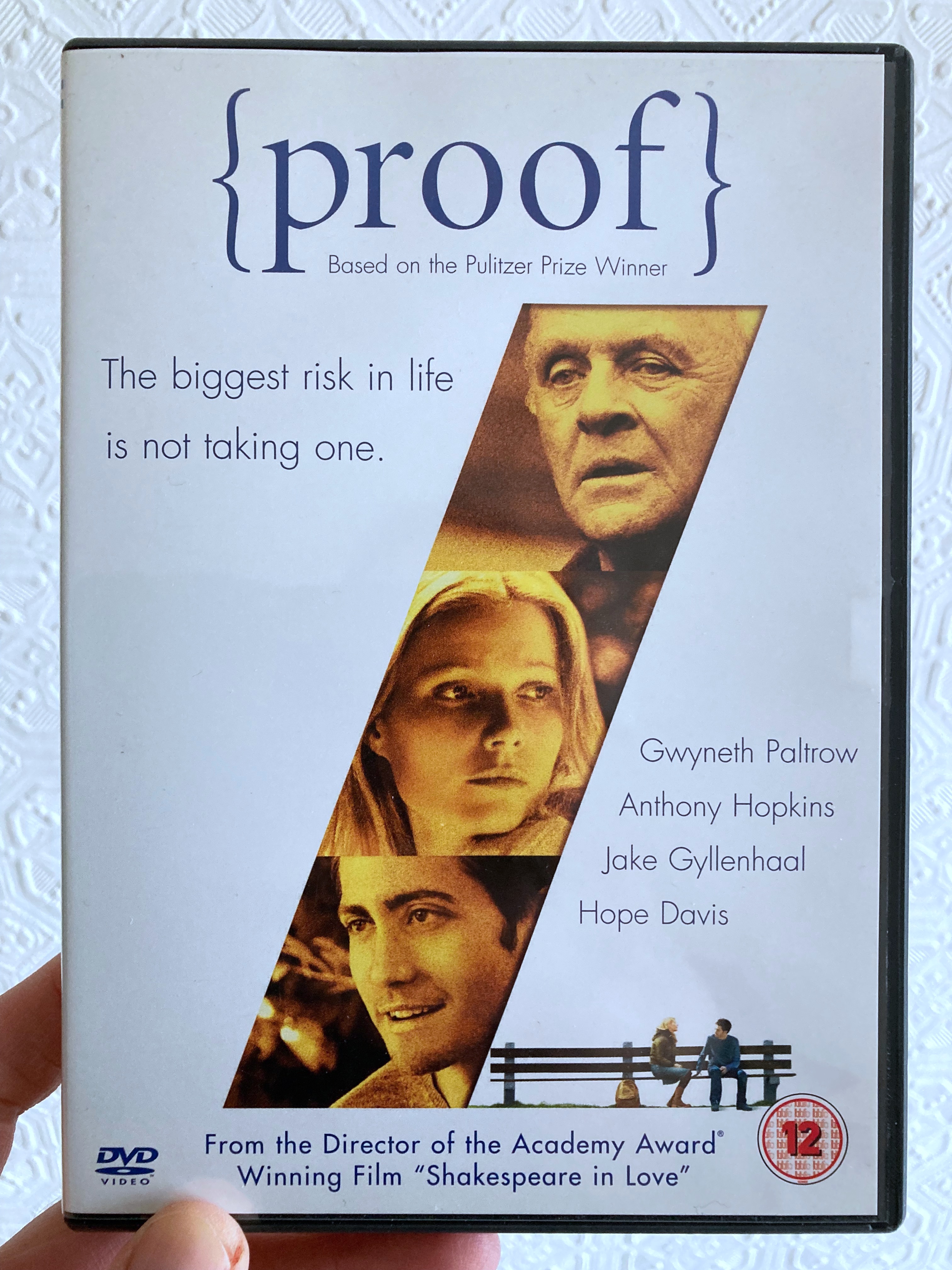
A brilliant mathematician, Robert Llewellyn (Anthony Hopkins), suffered mental problems and has recently died. His daughter Catherine (Gwyneth Paltrow) – also a genius with numbers – appears to suffer a similar condition. She has been caring for him in his troubled final years. After Robert’s death, Catherine’s controlling sister (Hope Davis) arrives from New York and tries to organise her. Meanwhile, Hal (Jake Gyllenhaal) is a former graduate student of Robert’s who wants to go through his papers and find out if he left anything else of worth.
All four characters are brilliantly drawn and portrayed. The dialogue is plausible.
The “troubled maths genius” trope recalls Ron Howard’s 2001 film A Beautiful Mind, but there’s strong enough acting and a compelling enough premise to make this well worth watching.
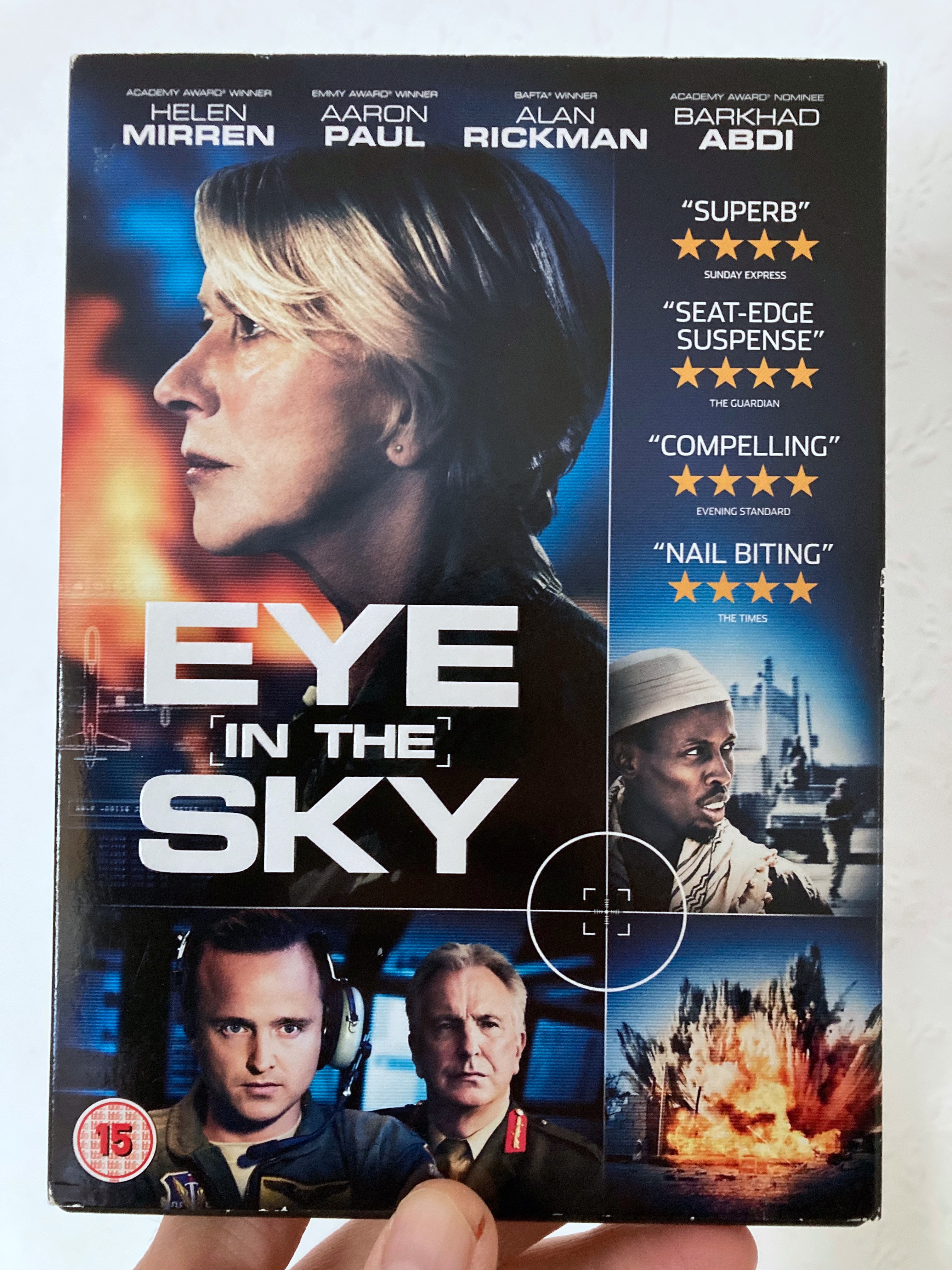
The story dwells on one single operation in Kenya – primarily focusing on the moral questions regarding whether or not an international anti-terrorist strike team should destroy a building in which suicide bombers are preparing an attack. A little girl who lives locally is selling bread for her mother within the proposed impact zone and would be harmed if the strike went ahead. But refusing to act might allow the loss of many more civilian lives.
It’s a little hammy – especially Alan Rickman, who only ever seems able to act one kind of character. In fact I wondered if it was drawn from a play, such is the oddly stagey way it’s written and filmed.
Helen Mirren is passable as UK military intelligence officer Colonel Katherine Powell, but she doesn’t get to spark off anyone because – like the other stars – she’s filmed in isolation at a different location from everyone else. Perhaps it’s this “remote” feeling that denies the film dynamism. That said, the simple question of whether or not the little girl will be harmed keeps you hooked until the end.
Sigourney Weaver plays Ripley, a warrant officer on the cargo ship Nostromo. The ship picks up a signal from a moon, indicating unexpected life. While investigating, the crew accidentally adopt an alien creature that threatens not just all of them but humanity itself.
Weaver is great in the main role – tough but compassionate, and smart and intuitive in a way that her colleagues aren’t.
It works because it’s mostly about the suspense rather than the monsters, although what you do see of the aliens is terrifying enough.
A long line of sequels and prequels would follow as Alien developed into a franchise, but none of them came close to this original.
Al Pacino plays Carlito Brigante, a Puerto Rican ex-con who is trying to make a fresh start. But his post-prison efforts to clean up are thwarted by a corrupt, drug-addicted lawyer friend (a suitably sleazy Sean Penn) and other remnants of his former criminal lifestyle.
The story is told in flashback so we know what happens from the very beginning – which is a shame, in a way – but it’s fascinating to see how the plot winds back around to that point.
Penelope Ann Miller is superb as Pacino’s love interest, who helps to redeem him. Brian DePalma’s direction is imaginative, utilising unusual angles and a fresh feel. Pacino as usual is hugely watchable – magnetic even – and oddly funny at the same time. It’s a masterful performance – one of his best.
Mads Mikkelsen stars as a nursery school teacher wrongfully accused of abusing one of the children in his care.
It’s harrowing to watch his life fall apart as a result of a story made up by a child. Mikkelsen is extremely compelling in this heartbreaking role, which can’t have been easy to film.
The almost documentary quality makes it seem even more real. It's a mark of the sophistication of the filmmaking that there's space for humour and warmth while addressing such a difficult topic.